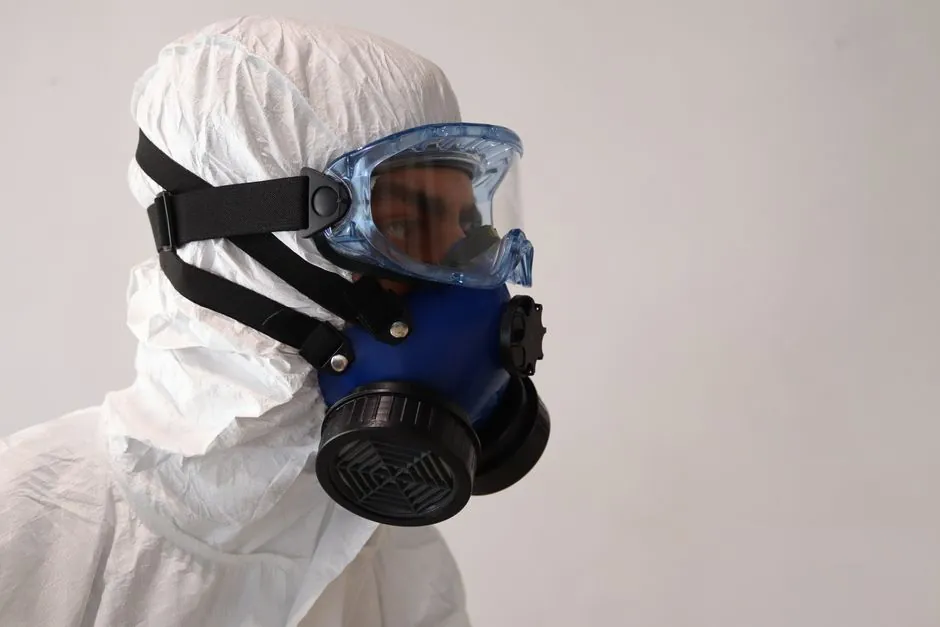
Under 29 CFR 1910.134 the employer must pick a respirator that keeps the worker's outside-the-mask exposure at or below the occupational exposure limit, using the assigned protection factor of the device class as the divisor against the maximum use concentration (MUC) [S2]. For permit-required confined spaces under 29 CFR 1910.146, that calculation sits inside a written program that also names attendants, entry supervisors, and rescue capability for anyone wearing a respirator inside the space [S1].
The decision is mechanical, not discretionary: identify the contaminant and its concentration, compare to the IDLH threshold, pick the respirator class whose APF brings the MUC down to the exposure limit, and verify Grade D breathing air, fit testing, and standby rescue. SCBA pressure-demand units at APF 10,000 in IDLH, and SAR or APR combinations at APF 50 to 1,000 in non-IDLH atmospheres, are the canonical pairings the standard expects [S2][S5].
What counts as a permit-required confined space
OSHA 1910.146(b) defines a confined space as one that is large enough for bodily entry, has limited or restricted means of entry or exit, and is not designed for continuous employee occupancy, with examples including tanks, vessels, silos, storage bins, hoppers, vaults, and pits [S1]. A space becomes "permit-required" when it contains or has the potential to contain a hazardous atmosphere, contains a material with engulfment potential, has an internal configuration that could trap or asphyxiate, or contains any other recognized serious safety or health hazard [S1].
The standard also names four roles that must be filled before entry: authorized entrant, attendant, entry supervisor, and the employer, with attendant coverage and rescue timing specified in paragraph (k) [S1]. For respirator wearers, the attendant requirement is explicit: OSHA 1910.146(k)(1) requires standby persons capable of immediate action to rescue employees whose respiratory protection may be inadequate, which is why combination airline respirators with escape cylinders are listed among the recommended device classes for entry [S1][S3].
Respirator classes and the APF/MUC math
OSHA 1910.134 Table 1 assigns protection factors to device classes, with full-face pressure-demand SCBA at 10,000, full-face pressure-demand SAR at 1,000, full-face demand SAR at 100, full-face APR at 50, and half-mask APR or SAR at 10 [S2]. The MUC is the maximum use concentration, calculated by multiplying the assigned protection factor of the selected respirator by the relevant occupational exposure limit, and OSHA requires the calculated MUC to be used as the ceiling that the respirator is selected to handle [S6].
Engineers typically compare the options on four criteria: atmosphere-supply type (SCBA vs SAR vs APR), APF (10 to 10,000), IDLH suitability, and required Grade D breathing air. A pressure-demand SCBA carries the entrant's own air at 2216, 3000, 4500, or 5500 psig with 30, 45, or 60 minute cylinders, runs on positive pressure to prevent inward leakage, and is the only class permitted for IDLH entry without exception [S2][S5]. SAR with escape cylinder pairs a Grade D airline (primary air) with a small SCBA cylinder reserved only for egress, and the cylinder cannot be drawn on during entry [S5].
IDLH versus non-IDLH: which device, which rules
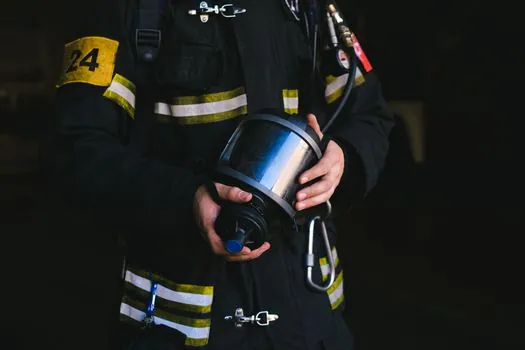
OSHA 1910.134(g)(3) requires pressure-demand or other positive-pressure full-facepiece SCBA, or a pressure-demand SAR with an auxiliary self-contained air supply, for any IDLH atmosphere, and the respirator must remain in positive-pressure mode throughout the entry [S2]. Common IDLH conditions inside permit spaces include oxygen below 19.5%, oxygen above 23.5%, combustible gas above 10% LEL, and specific toxic thresholds such as 100 ppm for hydrogen sulfide [S8].
For non-IDLH atmospheres where the contaminant and concentration are known, half-mask APR with the correct cartridge, full-face APR, or SAR become available options, and the choice narrows to fit factor, cartridge chemistry match against the contaminant, and end-of-service-life indicator presence [S2][S4]. Cartridge selection follows the contaminant family: organic vapor, acid gas, multi-gas, or particulate, and an end-of-service-life indicator is required for any cartridge on an OSHA-mandated list where one exists for that chemical [S2].
Comparison: SCBA versus SAR versus APR for confined-space entry
Side by side on the four criteria that drive selection: SCBA delivers APF 10,000, runs on Grade D cylinder air at 2216 to 5500 psig, is the only OSHA-accepted IDLH device, and gives 30 to 60 minutes of service [S2][S5]. SAR with escape cylinder delivers APF 1,000 on Grade D airline plus a short egress cylinder, is acceptable for IDLH when the airline is positive-pressure, and allows extended work duration bounded by hose length and compressor capacity [S5]. APR delivers APF 10 (half-mask) or 50 (full-face), runs on ambient air filtered through cartridge or canister, is limited to non-IDLH atmospheres where oxygen is 19.5 to 23.5% and the contaminant is known, and is the lightest, lowest-cost option when the math closes [S2][S4].
The decision tree is therefore: can the atmosphere be continuously monitored and kept above 19.5% oxygen, below LEL, and below the toxic threshold. If yes and the contaminant is characterized, APR may suffice. If the space is suspect, has variable atmosphere, or could go IDLH during the work, specify pressure-demand SCBA or pressure-demand SAR with escape cylinder from the start [S4][S5][S8]. For the broader APR vs SCBA cartridge and OSHA-matching logic in plant environments, see respirator selection in chemical plants.
Respirator program elements that decide what you can legally specify
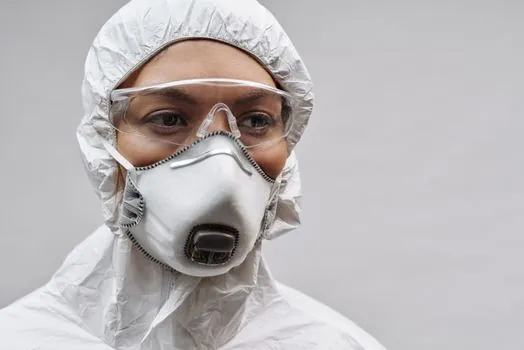
29 CFR 1910.134(c) requires a written respiratory protection program covering selection, medical evaluation, fit testing, training, use, cleaning, maintenance, storage, and program evaluation, and the program must cover every employee required to use a respirator [S2]. Medical evaluation must occur before fit testing, fit testing must be qualitative or quantitative per Appendix A, and training must be retaken annually or whenever workplace conditions or respirator type change [S2].
For confined-space work, three program elements carry the most selection weight: Grade D breathing air per ANSI/CGA G-7.1 for SAR and SCBA supplies, written cartridge change schedules for APR where no ESLI exists, and a documented rescue plan timed to the worst-case entrant condition [S2][S5][S9]. A review of fixed gas detection selection criteria for plant atmospheres, which feed the MUC calculation, is covered in fixed gas detector selection for chemical plants and oxygen detector selection: sensor tech, alarm setpoints, and IP ratings.
What respirator selection is NOT for
A respirator is not a substitute for ventilation, atmosphere monitoring, or lockout/tagout of the permit space, and OSHA 1910.134(a)(1) ranks engineering controls (enclosure, general and local ventilation, less toxic material substitution) above respirator use as the primary control method [S2]. Specifying an APR for a space that could become oxygen-deficient fails the IDLH rule, and specifying any tight-fitting respirator without a current qualitative or quantitative fit test fails the program rule [S2].
Escape-only respirators are explicitly not for entry under 29 CFR 1910.134, and airline respirators without an auxiliary self-contained air supply are not for IDLH atmospheres [S2][S3]. For lab-scale work that often runs on APR or ASR with strict APF matching and cartridge chemistry, the calculus is different and is detailed in lab respirator selection: APR vs ASR, APF match, and cartridge chemistry.
Standards and references anchoring the selection
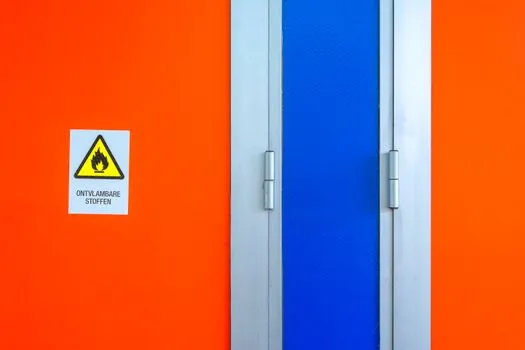
The selection chain is grounded in 29 CFR 1910.146 (permit-required confined spaces) and 29 CFR 1910.134 (respiratory protection), with ANSI/CGA G-7.1 cited by OSHA for Grade D breathing air, 29 CFR 1910.134 Appendix A governing fit-test protocols, and 29 CFR 1910.134(g)(3) fixing the IDLH device class [S1][S2][S5]. NIOSH certifies the respirators themselves at the component level (NIOSH 42 CFR Part 84), and the assigned protection factor values used in the MUC calculation come from 29 CFR 1910.134 Table 1 [S2].
For day-to-day specification, pull the contaminant, concentration, and IDLH status, compute MUC as APF x OEL, match the device class to the resulting MUC and to the IDLH yes/no answer, then confirm Grade D air, medical clearance, fit test, and rescue plan. With those boxes ticked, the respirator selection is defensible against an OSHA inspector and against the attendant who has to pull the entrant out.
Detailed specification references: respirator, pressure transmitter, and flow meter.