
A compressed-air-header safety relief valve is sized to the receiver or pipe MAWP, not the compressor discharge, and most plant builds land in the 1-10 barg set-pressure band with 1/2" to 2" NPT or flanged inlet connections [S2][S4].
Specifying one correctly on the RFQ line means writing the five data points a vendor cannot guess — set pressure, capacity, inlet size, material, and code basis — because every other parameter (lift, blowdown, bellows, lifting lever) is a consequence of those five [S2][S6].
Set Pressure, Overpressure, and Capacity: The Three Numbers That Drive Sizing
Set pressure is the inlet pressure at which the valve starts to lift; for compressed-air service a common practice is to set it at 1.10 x the header MAWP so a normal regulator swing does not chatter the seat, and ASME Section VIII conventionally allows a 10% accumulation over MAWP for non-fire air-service valves [S2][S6].
Required capacity is the second hard number, expressed as SCFM or Nm³/min at the relieving pressure (set pressure + allowable overpressure), and is calculated from the upstream compressor free-air delivery plus any receiver volume that could discharge downstream of a failed regulator [S4].
Published industrial listings on CENS in 2026-07 show safety relief valves in the 1-4 bar set range with 1 1/2" flanged connections, confirming that 1-10 barg with 1/2"-2" inlets covers the bulk of header-duty RFQs [S3][S4].
Inlet, Body, and Trim: Material and Connection Choices
For dry compressed air, brass or stainless steel bodies are standard; for oil-flooded rotary-screw compressor discharge headers, carbon steel with SS316 trim is more common because condensate carries trace oil that can foul a soft seat over time [S2][S6].
End connection is the single biggest cost driver after size: 1/2"-1" NPT or BSP screwed ends are cheap and common on smaller receivers, while DN50-DN100 flanged connections (ANSI 150# or PN16) are the norm once the header exceeds 2" line size [S3][S4].
A 2026-03 buyer RFQ on go4worldbusiness showed exactly that pattern — a UK buyer asking for a 1-4 bar, 1 1/2" flanged stainless safety relief valve for compressor oil-line duty, with a sample of 2 units and bulk follow-up, illustrating the typical line-by-line fields an air-system RFQ has to cover [S4].
Spring-Loaded vs Rupture-Disc Combo vs Balanced Bellows
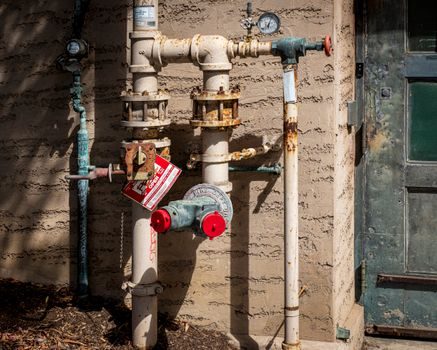
Spring-loaded direct-acting safety relief valves are the default for compressed-air headers below DN50 because they are cheap, simple, and field-adjustable; the standard 5% blowdown is acceptable on air where backpressure is essentially atmospheric [S2][S6].
Balanced-bellows designs are specified when the discharge is piped into a common manifold with significant backpressure, because the bellows isolate the spring from the backpressure effect and keep set pressure stable within ±3% [S2].
A rupture-disc + safety-relief-valve combination (RD+SVR) is the right call when the relieving fluid is contaminated oil carry-over, because the disc protects the soft seat from fouling; a single SRV on a clean dry-air header is the cheaper, lower-maintenance choice [S6].
Standards and Compliance Lines the RFQ Must Carry
The two compliance clauses that gate European compressed-air work are the Pressure Equipment Directive 2014/68/EU (PED) for CE-marked assemblies and ASME BPVC Section VIII for vessels and attached overpressure protection; the RFQ should name the governing one explicitly, because a "PED-compliant" valve and an "ASME-stamped" valve are not interchangeable [S2][S6].
For oil-and-gas or chemical co-located plants, ATEX 2014/34/EU category 2 (zone 1) may apply if the header runs through a classified area; otherwise an unclassified industrial valve is fine and avoids the 15-30% material-cost premium that ATEX certification typically adds [S2].
For any header that is part of an air system feeding pneumatic tools downstream, the auxiliary spec — receiver volume, dryer type, filter class — should be written on the same RFQ line, because dryer failure can dump desiccant dust onto the valve seat and a matched pre-filter solves more failures than reseating the valve (see the inline pipeline pump RFQ spec map for the parallel "auxiliary utility" pattern in cooling-water loops).
Options That Inflate Quote Price vs Options That You Will Regret Omitting
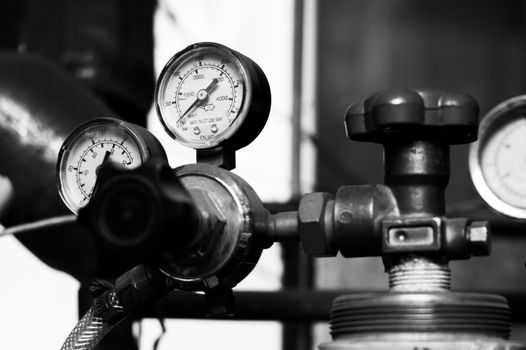
Three options are cheap to add at the RFQ stage and expensive to retrofit: a test lever (manual lift to verify the valve is not stuck — a few percent of price), a field-adjustable ring (lets the plant trim blowdown after commissioning), and a drain plug or tapped boss at the inlet (lets condensate be bled before it sits on the seat) [S2][S6].
Three options inflate the quote and should be omitted unless justified: lifted-face flanges (only needed for high-cycle air service), NACE MR0175 compliance (only for H₂S exposure, not standard air), and special trim such as Monel or Alloy 20 (only justified when trace chemicals in the air stream are documented) [S2].
A plain carbon-steel body with SS316 trim and EPDM soft seat covers roughly 80% of industrial compressed-air-header RFQs and is the baseline most vendors stock; specifying deviations from this baseline should be a deliberate line, not a forgotten default [S3][S6].
Acceptance Test, Documentation, and Reject Criteria
Standard acceptance is a hydrostatic bench test at 1.5 x set pressure (cold) plus a pop-test at set pressure on air, and the RFQ should require the vendor to ship a calibration certificate with set pressure, blowdown, and leak-rate values — a leak rate above 20 bubbles/min at 90% set pressure is a typical reject threshold in API 527 / ASME bench practice [S2][S6].
Documentation that has to be on the packing list for a PED project: Declaration of Conformity, PED category marking, material certificates (EN 10204 3.1) for body and spring, and a nameplate showing set pressure, capacity, and CE mark; missing any of these turns a 5-day commissioning into a 5-week paperwork chase [S2].
Plan a reseat test on air at 0.9 x set pressure during commissioning and record the value in the plant's vibration meter or pressure-trend log if the header is instrumented; a valve that does not reseat cleanly to within 5% blowdown should be tagged and replaced before the receiver is signed over.
Common Spec Mistakes That Force a Requote

The three errors that turn a one-week quote into a three-week chase: writing only "safety valve for air header" without set pressure and capacity, naming a body material without naming a trim material, and asking for a CE mark without naming PED category [S2][S4][S6].
A second tier of errors — fixing the inlet size to the existing pipe without confirming flange class, asking for a set pressure equal to (not 110% of) the MAWP, and omitting the fluid state (dry air, oil-contaminated air, or oil-flooded) — each costs a round of clarification email and resets the vendor's engineering clock [S4].
The cleanest RFQ line item reads: "Spring-loaded safety relief valve, set pressure [X barg], capacity [Y Nm³/min air], inlet DN[Z] PN16 flanged, body carbon steel, trim SS316, soft seat EPDM, PED 2014/68/EU category 1, with test lever and calibration certificate" — and that single line is enough for three of four vendors on a shortlist to return like-for-like quotes within five working days [S2][S6].
For component-level specifications, see air solenoid valve, and air pick.