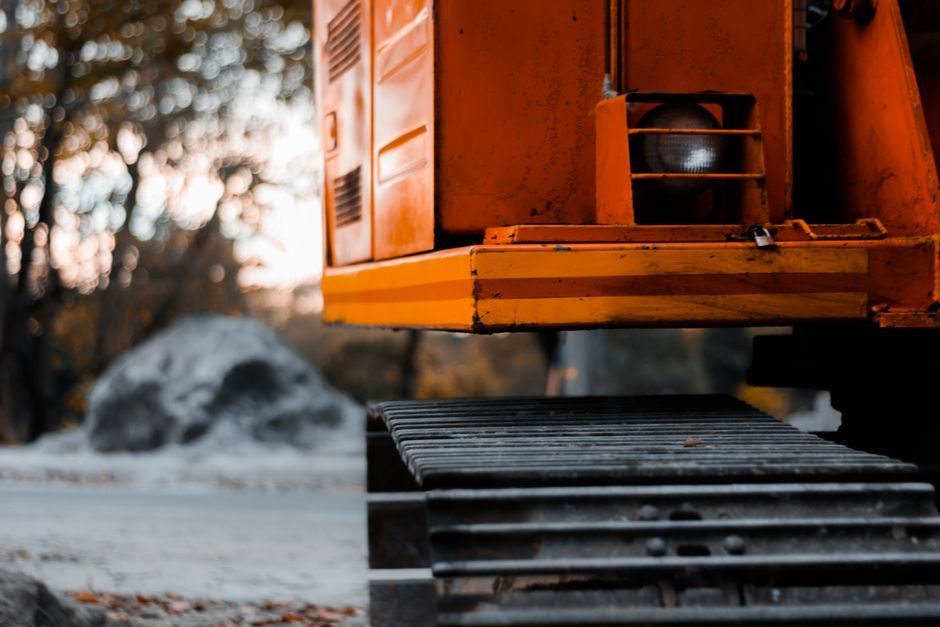
Road roller list prices on Made-in-China.com as of 2026-05 ranged from about USD 1,200 for a 0.8 t walk-behind double-drum unit to USD 75,000 for a 26 t pneumatic-tired static roller, with the 3-12 t vibratory single-drum class the most heavily quoted SKU family at 10,889 active supplier listings [S1][S3].
The category is a compaction workhorse — a vehicle equipped with heavy wide smooth drums for compacting roads and pavements, used on asphalt, base-course and embankment work [S2][S4]. A standard road roller buys mass plus amplitude plus frequency; everything else on the price sheet is a derivative of those three.
Price Bands by Operating Class
Made-in-China.com's 2026-05 snapshot of 55,310 compactor listings grouped road rollers into five commercial bands [S3]. Walk-behind and 0.5-1 t mini units (single-drum, double-drum, reversible plate) cluster at USD 1,200-3,500, typically 3-5 kW diesel or 4-8 hp petrol, 1-2 t shipping weight, MOQ 1 unit [S1].
Ride-on 1-3 t tandem rollers sit at USD 4,000-9,000, fully hydraulic, with 3-cylinder Kubota/Laidong-style engines, 800 mm drum width, and 30-50 kN centrifugal force [S3]. The 4-12 t vibratory single-drum class — the volume segment — is quoted at USD 8,000-28,000 with all-wheel drive, dual amplitude/frequency (typically 28/35 Hz at 0.35-0.85 mm), and Tier 3 / EU Stage V engine options [S1][S3].
14-20 t three-wheel static rollers for highway sub-base work run USD 25,000-55,000; 20-30 t pneumatic-tired rollers (used for chip-seal and asphalt sealing) top the catalog at USD 45,000-75,000+ with 7-11 rubber wheels, 25-35 t ballasted weight, and water-spray ballast systems [S3].
What Drives the Delta Inside One Class
Three specs swing price more than any others in the 2026 quoting window: drum drive (mechanical vs hydrostatic vs full hydraulic), vibration system (single amplitude/frequency vs dual), and engine emission tier [S1][S3]. A mechanical-drive 4 t single-drum lists near USD 8,500; the hydrostatic twin from the same factory typically lands at USD 12,000-14,000, roughly +35-65% for the same operating weight [S3].
Dual-amplitude / dual-frequency (e.g. 28 Hz × 0.35 mm for thin lifts, 35 Hz × 0.85 mm for thick granular lifts) carries a 10-20% premium over fixed-amplitude machines on the same chassis [S3]. Tier 3 / EU Stage V engine compliance, where specced, adds 5-8% to a Chinese export unit, and Tier 4 Final / EU Stage V with diesel particulate filter (DPF) can add 12-18% [S1].
Buyer-side procurement levers are also visible on the platform: audited suppliers with ISO 9001 / ISO 14001 / ISO 45001:2018 certificates show in 2026 with a 4-10% premium over non-audited equivalents, and trading-company listings run 6-12% below direct factory quotes at the same MOQ [S1][S3].
Configuration Comparison: Which Sub-Type for Which Job
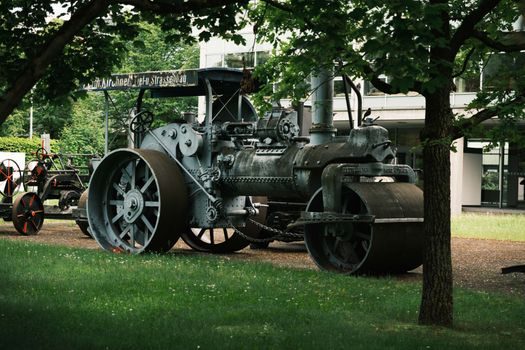
Three sub-types dominate 2026 fleet-buying decisions, and they line up against four decision criteria [S1][S3]. A road roller choice maps to lift type, layer thickness, surface area and crew skill.
Mini double-drum tandem (0.5-3 t): suited to walkways, driveways, patchwork, indoor warehouse slabs; lift thickness 50-150 mm; production 200-600 m²/h; crew 1 operator with no vibration certification needed. Vibratory single-drum (4-12 t): the universal earthworks pick, handles 200-500 mm lifts of granular sub-base, 150-300 mm of cohesive fill, with a roller bearing drum hub rated for sustained 30-50 Hz excitation; production 800-1,800 m²/h [S1][S3]. Pneumatic-tired static (16-26 t): the asphalt-sealing and chip-seal choice, kneading action rather than vibration, lift 40-80 mm, production 1,200-2,000 m²/h on a sealed surface.
For buyers pairing rollers with graders on the same fleet, the Road Roller vs Motor Grader 2026 spec cut breaks down where each earns its depreciation.
Total Cost of Ownership Levers in 2026
Sticker price is roughly 55-65% of delivered 5-year cost; the rest is freight, fuel, drum wear, vibration-bearing service and resale. A 12 t vibratory single-drum shipped from Qingdao to Jeddah ran USD 1,800-2,400 in 40'HC ocean freight in 2026-05 quotes, or 8-12% of FOB value [S1].
Fuel burns 4-8 L/h on a 6-12 t class (Tier 3) at full vibration, so 1,200 h/year × 6 L/h × USD 0.90/L = roughly USD 6,500/year in fuel alone. Drum-bearing service interval sits at 2,000-3,000 h on factory roller bearing sets; replacement runs USD 800-1,500 per drum as a 2026 spare-parts reference [S3].
Resale is class-driven: 3-6 t ride-on tandem rollers hold 55-65% of value at 3 years / 3,000 h, while 20 t+ static three-wheel units typically retain 45-55% on the same clock. For procurement teams building a fleet around a motor grader 2026 buying guide workflow, a 4-12 t vibratory single-drum is the standard pairing.
Standards, Certification and Sourcing Constraints

EU-bound machines need CE marking under the Machinery Directive 2006/42/EC and, since 2014, EU Stage V engine emissions per Regulation 2016/1628 (replacing Stage IIIB / Tier 4 Interim) [S1]. US-bound units face EPA Tier 4 Final; Australian buyers typically require ADR-compliant ROPS/FOPS structures.
Factory audits visible on Made-in-China.com 2026-05 listings include ISO 9001 (quality), ISO 14001 (environmental) and ISO 45001:2018 (occupational health and safety) — three separate certificates, not interchangeable [S1][S3]. Buyers should verify each certificate number directly with the issuing accreditation body, as platform badges are self-declared.
MOQ defaults to 1 unit for stocked Chinese-export models and 5-10 units for OEM/ODM paint-and-badge jobs; lead time is 7-15 days ex-stock for catalog units, 25-40 days for custom configurations [S1][S3]. Payment terms visible on 2026 listings are 30% T/T deposit + 70% balance against B/L copy, with L/C at sight accepted on orders above USD 50,000.
Failure Modes and Constraints to Spec Against
Three failure modes drive most warranty claims in this class: drum-bearing failure from impact compaction on rocky fill, hydraulic-pump cavitation in cold-start conditions below -10 °C, and vibration-system isolator cracking on units run at maximum amplitude below 15 Hz. The first is mitigated by a 2-stage filter on the bearing-hub grease line; the second by a mandatory 5-minute warm-up ramp before vibration engagement; the third by avoiding operation below the manufacturer's amplitude/frequency envelope [S3].
Drum static linear load is the figure buyers most often misread. A 12 t single-drum with a 1.7 m wide drum at full ballast puts roughly 35 kg/cm² under the drum; if your lift design exceeds the bearing capacity of the layer below, you'll see rutting, not compaction. Pair drum width and amplitude to lift thickness, not to production rate.
Sourcing Channels and 2026 Pricing Signals
The Made-in-China.com 2026-05 listing set — 10,889 active suppliers, 55,310 products, with verified ISO 9001/14001/45001:2018 badge filters — is the dominant English-language B2B index for new Chinese road rollers [S1][S3]. The platform's filter surface (MOQ ascending, price ascending, audited-supplier toggle) is the practical way to set a 2026-07 budget envelope.
Trackable signals for the next 90 days: EU Stage V 2026 stock turnover at Chinese factories, 12 t hydrostatic vs mechanical-drive spread, and audited-supplier premium trend. A reasonable procurement decision tree for an unspecified earthworks fleet: define lift thickness and material → pick class (mini / single-drum / pneumatic) → fix engine tier → fix drive type → fix audit requirement. That sequence, in that order, typically trims 8-15% off the sticker relative to skipping straight to the lowest FOB quote.
For component-level specifications, see crossed roller guide.