
Replacing a single vibratory-drum bearing on a road roller costs $510.09 for the Blue Diamond roller bearing alone, while the matching drum bearing lists at $17.97 and a full Blue Diamond replacement drum assembly runs $11,238.00 [S1]. These are the published 2026 parts-only numbers from a US attachment-parts distributor running free-shipping promotions through October 15, 2026 on Lower-48 orders [S1].
The road roller market sits in a strange pricing gap: passenger-vehicle wheel bearing work runs $300–$1,000 per wheel all-in (parts plus labor), but a compacting drum operates at eccentric-shaft speeds and radial loads that passenger hubs never see, so the bearing itself is a different commodity [S3][S5]. For a process engineer or fleet manager budgeting a drum rebuild, the realistic total-cost envelope spans roughly $500 per bearing up to several thousand dollars once pressing, seal kits, and labor are layered on.
Vibratory-Drum Bearing Anatomy and Why It Costs More Than a Car Hub
A vibratory road roller uses an internal eccentric shaft rotating inside the drum to generate compaction energy, with the shaft supported by two heavy-duty bearings that simultaneously carry radial load, the eccentric moment, and thermal cycling from continuous operation [S6]. Blue Diamond parts separate the bearing ($510.09) from the drum bearing ($17.97) because the $510 part is the main eccentric-shaft support, while the $17.97 part handles a secondary support location on the drum shell [S1]. This is a fundamentally different load case from an automotive hub, which only carries radial load from the vehicle weight plus cornering forces [S3].
For comparison, the national average for fixing a passenger-car wheel bearing is about $350 at one wheel, and luxury brands push that figure higher [S3]. Single-wheel replacement on common domestic and import vehicles (Toyota, Honda, Ford, Chevrolet, Nissan) typically falls in the $400–$800 range, including both parts and labor [S5]. The automotive bearing-and-seal kit itself budgets at $40–$80, mid-range at $80–$150, and premium at $150–$280; labor runs 1–3 hours at $100–$450 depending on shop tier [S5]. The Blue Diamond $510 bearing already sits above the premium automotive tier before any pressing work is added, which reflects the heavier section, larger rolling elements, and sealed-for-contamination design demanded by vibratory service.
Published 2026 Part Prices and What They Cover
Blue Diamond's published vibratory-roller parts catalog for 2026 lists three reference data points that any rebuild budget should anchor to [S1]: roller bearing $510.09, drum bearing $17.97, and replacement drum $11,238.00. The roller bearing is the primary eccentric-shaft support and is the part most likely to fail first under sustained vibration; the drum bearing is a secondary support much closer to the drum shell; the replacement drum is the full assembly including both bearings, the shaft, and the welded steel shell, which is the option a buyer specifies when the drum itself is also worn or cracked.
Spare-parts economics for Chinese-made compactors sit in a different band entirely: a 3-ton mini road roller is listed at USD 2,000 per unit, and a 5-ton ride-on roller suitable for highway and county-road repair is positioned as a comparable low-cost procurement option [S4]. For fleet buyers, the practical question is whether to source the bearing as a $510 catalog part, source an equivalent Chinese-made taper or cylindrical roller through industrial bearing channels, or replace the full drum assembly at $11,238.00. A tapered roller bearing is the typical choice for eccentric-shaft service because it handles the combined radial and axial loads generated by the rotating weight, while a cylindrical roller bearing is sometimes used on the non-driven side where the load is purely radial.
Cost Drivers Beyond the Bearing Sticker
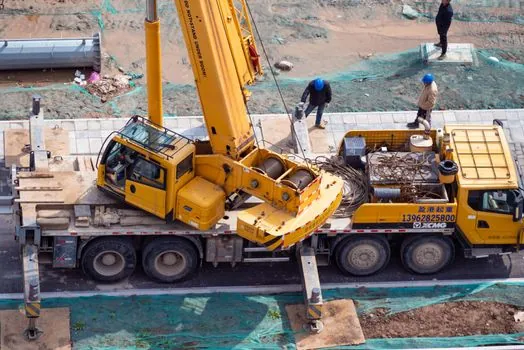
Four variables move the final invoice more than the bearing price itself. First, pressing equipment: removing and installing a pressed-in drum bearing requires a hydraulic press rated for the shaft diameter, and many independent shops add a 10–20 percent surcharge for the press work versus a bolted-cartridge automotive bearing [S5]. Second, seal kit and grease: vibratory service demands high-temperature, water-resistant grease and double-lip seals; the automotive-equivalent budget line is $20–$40, mid-range $30–$60, and premium $50–$100 in supplies alone [S5]. Third, related discoveries during disassembly: technicians frequently find worn brake rotors, damaged wheel seals, or contaminated eccentric-shaft housings once the drum is open, and the same pattern applies on rollers, where a spalled race often scores the shaft and forces a shaft-replacement decision. Fourth, OEM versus aftermarket: original-equipment bearings typically cost 60–100 percent more than quality aftermarket alternatives but carry the manufacturer's full warranty and guaranteed fitment [S5].
Regional labor spread is similar to the automotive market. Independent shops in the US typically charge $80–$150 per hour for suspension-class work, dealerships $120–$250 per hour, and rural areas run 20–30 percent below metropolitan centers [S5]. For a road roller drum rebuild, the comparable labor envelope is heavier because the drum must be removed from the frame, the eccentric shaft extracted, and the bearings pressed out and in, a sequence that runs 4–8 hours per drum in most shop estimates. At $120/hr mid-range, that is $480–$960 in labor before parts.
Decision Matrix: Bearing-Only, Bearing-Plus-Seals, or Full Drum
The repair scope decision is driven by drum-shell condition, shaft condition, and hours-since-last-rebuild. If the vibration sensor or vibration analyzer readings show elevated envelope acceleration at the eccentric-shaft frequency but the drum shell is still within concentricity spec, the $510 bearing plus a $30–$60 seal kit is the minimum-cost repair and totals roughly $540–$570 in parts [S1][S5]. If the bearing has spun in the housing and the bore is scored, the shaft must be inspected and possibly replaced, which moves the job into the $1,500–$3,000 envelope once shaft machining is added.
If the drum shell itself is cracked, out-of-round, or has lost its balance-weight geometry, the only sensible option is the $11,238.00 full replacement drum, plus 4–8 hours of labor at $120–$250/hr, which puts a complete drum-swap between $11,718 and $13,238 [S1][S5]. For a fleet running multiple compactors, the $11k drum cost is also the trigger to consider full machine replacement against a $2,000 mini-roller baseline [S4], a comparison that depends entirely on hours, residual value, and the cost of the downtime a failed drum creates during peak paving season.
Total Cost of Ownership and Failure-Mode Watch-Outs
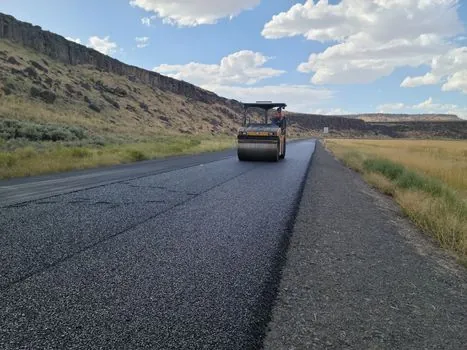
The cheapest bearing is rarely the lowest total cost. A $50 budget bearing may save $460 upfront versus the Blue Diamond $510 catalog part, but contaminated or under-greased bearings in vibratory service typically fail in 1,200–2,000 hours rather than the 4,000–6,000 hours expected from a sealed, properly-packed OEM-spec unit [S5]. At a typical paving-season utilization of 200–300 hours per month, that is the difference between a 4-month service interval and a 16–30 month service interval, and each rebuild event carries the same $480–$960 labor and 1–2 days of machine downtime.
Warning signs specific to vibratory-drum bearings mirror the automotive hub failure list but with different thresholds: a humming or growling noise that rises with engine RPM and falls when the vibratory system is disengaged points to eccentric-shaft bearing wear, while a metallic click per drum rotation indicates a spalled roller or race [S3]. Operators also report measurable vibration meter readings: ISO 10816-style velocity RMS above 7.1 mm/s on the drum-bearing housing is the typical "unsatisfactory" boundary for machines of this size, and readings climbing month over month at constant operating conditions are the cleanest early indicator that a bearing replacement window is approaching. Ignoring these signs risks secondary damage to the eccentric shaft, the drum-bearing seat, and the vibratory motor coupling, each of which can multiply a $510 bearing job into a $5,000+ repair.
Standards, Sourcing, and What to Verify Before Purchase
No single ISO or AGMA standard governs vibratory-roller bearing selection directly; the practical engineering check is that the replacement bearing matches the dynamic load rating (C), the limiting speed (rpm at the eccentric-shaft operating point), and the seal design of the original equipment. Aftermarket bearings sold below $100 for this service should be treated with skepticism unless the seller publishes the C-rating in kN and the limiting speed in rpm, since vibratory eccentric-shaft service typically runs at 1,800–3,000 rpm continuous, well above the speed range of most general-purpose industrial bearings. The Blue Diamond $510 part carries an implied OE fitment because it is sold against a specific roller model [S1], which removes the cross-reference risk that comes with cheap aftermarket alternatives.
Two verifiable signals to track into Q4 2026 and 2027: the Blue Diamond free-shipping promotion ends October 15, 2026, so any buyer sourcing through that channel should order before that date to avoid $50–$150 in freight on a heavy bearing [S1]; and the Chinese mini-roller export price band around USD 2,000 for a 3-ton unit and a comparable figure for 5-ton machines remains a useful reference floor for full-machine replacement versus drum-rebuild economics [S4]. For a deeper dive into the spherical-bearing alternatives sometimes used on misaligned drum pivot points, see this spec comparison of spherical plain bearings versus cylindrical bushings on a misaligned pivot, and for the rotor and wear-plate side of dry-mix shotcrete machines (which share the heavy-drum maintenance pattern), see the rotor wear plates and rubber pads on dry-mix shotcrete machines field report.