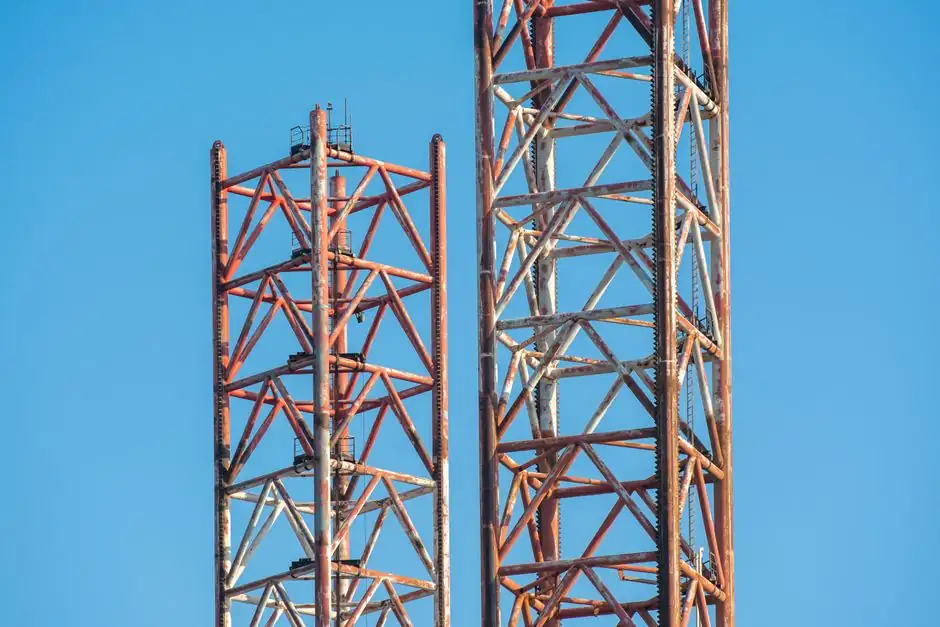
The headline rule for lifts north of roughly 1,000 t: pick the crane class that matches the lift geometry and site footprint, not the highest published chart capacity. Ring cranes (sometimes called superlift-class pedestal units) and crawlers fitted with a ringer attachment are both proven on reactor, bridge, and power-generation modules, but they win on different axes, and a wrong pick burns mobilization budget fast [S1].
Engineers in heavy-civil tenders now treat the choice as a structured comparison: stationary circular track with even load distribution vs. tracked undercarriage with a modular ringer frame that extends the crawler's capacity envelope. The remaining sections line the two options up against capacity, footprint, ground pressure, mobility, and project fit, with a per-use-case recommendation at the end.
Why a Ring Crane Wins at a Fixed, Long-Radius Footprint
Ring cranes rotate around a fixed center point on a circular track, distributing loads evenly around an engineered foundation, which lets them hold extremely high capacity at long radii while staying stationary [S1]. Lampson International's published ring-crane configurations are routinely scaled for ultra-heavy civil construction lifts where the lift point is a single, repeating location, such as a reactor build or a turbine hall column grid [S1].
For projects with predictable, repeated lifts in one place, the stationary design cuts two big soft costs: no repeated assembly/disassembly cycles, and no engineered haul roads between lift points. The trade-off is civil-work scope: the ring foundation is itself a permanent or semi-permanent structure that must be designed into the project schedule, which is a planning risk if the lift geometry moves late in the project.
Why a Ringer Attachment on a Crawler Fits Single-Event or Travel-Heavy Lifts
Crawler cranes are mounted on tracked undercarriages, so they can move around a jobsite while carrying suspended loads within defined limits, and that mobility is the whole point of fitting a ringer: extend the crawler's capacity and radius envelope without giving up the ability to walk the machine to the next pick [S1]. Modern crawler platforms cover a wide range of capacities, from several hundred tons to well over a thousand tons depending on configuration, and a ringer attachment pushes the upper end of that envelope further still [S1].
For projects with multiple lift locations, evolving construction phases, or a single-event heavy pick followed by demobilization, the ringer-crawler combo avoids the permanent-foundation commitment of a ring crane. The trade-off is higher ground-bearing pressure per track compared with a ring's distributed circular footprint, which is why soft-soil and congested urban sites often push planners toward engineered crane mats or a different concept altogether [S1]. When lift planning sits alongside rotating-equipment spec work, the industrial valve and pressure transmitter sub-supply chains are usually on the same critical path, and they rarely tolerate a late crane re-spec.
Selection Criteria: Capacity, Radius, Footprint, Mobility, Schedule
The two systems overlap in headline capacity, but they diverge sharply on the four decision variables that actually drive cost and risk: capacity at working radius, ground footprint and bearing pressure, mobility between lifts, and foundation/assembly time on site. A ring crane is a stationary, foundation-engineered system optimized for extreme capacity at long radius; a ringer-attached crawler is a mobile, modular system optimized for flexibility and a tighter site envelope [S1].
A side-by-side read for typical ultra-heavy civil work looks like this:
1) Capacity at long radius: ring crane favored. The circular track and even load distribution let ring configurations hold chart capacity at radii where a crawler-ringer combination has already stepped into reduced-chart zones [S1].
2) Ground footprint and bearing pressure: ring crane favored on soft soils, provided the foundation is engineered; crawler-ringer favored where the foundation work itself is the schedule killer, because tracked pressure (managed with mats) is often easier to permit than a permanent ring foundation.
3) Mobility between lifts: ringer-attached crawler wins. Tracked undercarriages let the unit walk between pick points and reduce disassembly cycles; a ring crane does not travel across the site [S1].
4) Schedule and reusability: ring crane wins on long, fixed-location campaigns (multi-year reactor or refinery builds); ringer-crawler wins on shorter campaigns with shifting lift geometry.
A useful sanity check before committing: run the lift-planning geometry against the project's flow meter and pressure sensor commissioning windows, because ultra-heavy picks frequently gate the hydrotest and instrumentation hand-off dates on the same network.
Use-Case Recommendations: Pick by Project Shape
For a multi-reactor new-build where each module lift occurs at the same footprint for 18 to 36 months, specify a ring crane; the stationary design's load distribution and the elimination of repeated mobilization cycles pay back the foundation cost within the first year of operation [S1].
For a single-event lift on a remote or linear jobsite, such as a bridge segment, a wind-energy installation, or one-off heavy module placement, specify a ringer-attached crawler; the tracked undercarriage handles the access roads and the ringer frame extends the chart at the working radius, with no permanent foundation commitment [S1].
For brownfield industrial work inside a live plant, the ringer-crawler typically wins because erection often must share space with running equipment and existing PLC and servo motor cabinets; a permanent ring foundation is rarely acceptable to the operations team. For greenfield civil work where the foundation is already in the BOQ, a ring crane is almost always cheaper per lift once the cycle count is high enough.
Constraints, Failure Modes, and What Trips Projects Up
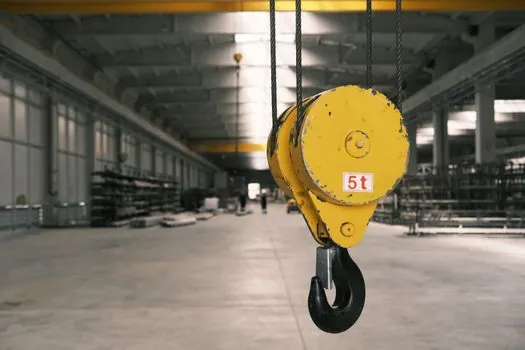
The most common failure mode on ring-crane projects is late changes to lift geometry, which force foundation redesigns and reset the mobilization clock. The most common failure mode on ringer-crawler projects is underestimating ground-bearing pressure, which shows up as mat settlement, track damage, and weather-day losses; this risk is highest on soft soils and reclaimed land, and the only honest mitigation is engineered crane mats and a pre-lift bearing-capacity survey, not a stronger chart [S1].
Both systems share one constraint that engineers regularly underweight: rigging geometry. Lift engineering must account for load weight, center of gravity, and swing clearance while staying inside the rated capacity envelope, and that envelope is sensitive to boom length, ringer frame geometry, and outrigger or track configuration. For background on how boom attachments change the envelope on related equipment, see the boom-lift attachment overview (2024-06), which walks through the same load-chart sensitivity on a smaller scale.
Standards, Sourcing, and the Spec You Actually Write
There is no single harmonized standard that names one ultra-heavy lift system over another; the spec is built from project-specific lift engineering, OEM rated-capacity charts, and site geotechnical data. The defensible procurement language is to require the contractor to demonstrate rated capacity at the governing working radius, on the actual ground conditions, with a documented rigging geometry and a contingency factor that matches local code [S1].
Track these two signals before signing the lift plan: (a) whether the lift point is fixed for the duration of the campaign, which favors the ring crane, and (b) whether the site can accept engineered ground improvement for a tracked unit, which makes the ringer-crawler viable. A clean decision on those two points will resolve the crane-class question on most heavy-civil tenders without revisiting capacity charts.