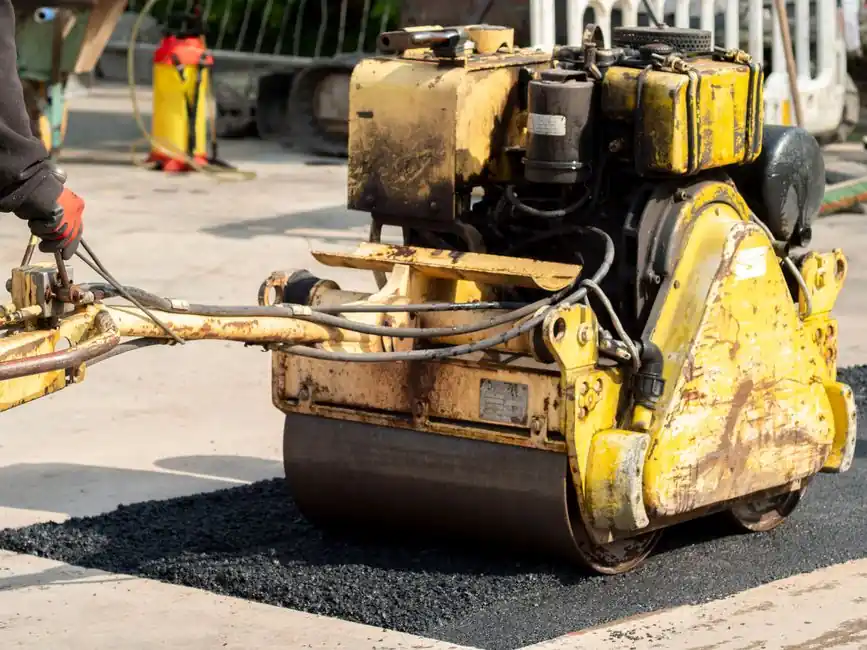
A road roller is a compaction machine built around a steel drum (or drum + tire pair) that delivers static weight plus, on most current models, vibratory or oscillatory excitation to densify soil, aggregate, and asphalt layers to spec.
A skid steer loader is a compact, four-wheeled, skid-steer carrier with a quick-change front coupling that drives a wide range of hydraulic attachments (buckets, forks, breakers, augers, brooms, trenchers, snow blowers), with operating capacities typically from 350 kg on small platforms to over 1,500 kg on large-frame 100 hp-class units [S2][S5].
Where each machine actually wins on the jobsite
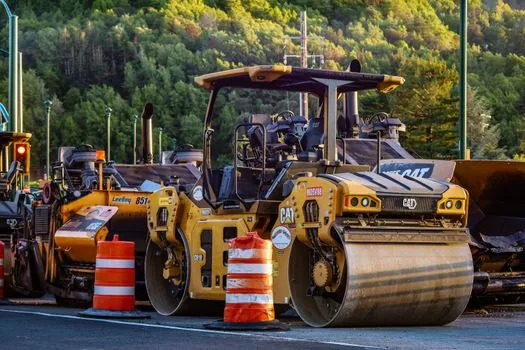
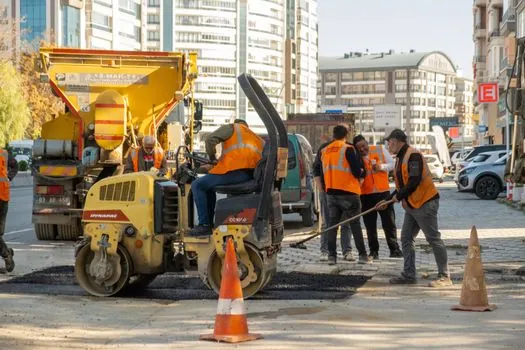
Road rollers own the compaction step: sub-base lift compaction, asphalt breakdown, intermediate and finish rolling, and trench re-compaction, with single-drum soil compactors typically 5–12 ton and tandem asphalt rollers 1.5–4 ton for the 2026 spec range [S5][S2]. Skid steers own material handling, site prep, and finish work: loading trucks, backfilling trenches, grading with a laser/GPS box, snow removal on paved lots, and indoor demolition where a steel drum cannot fit [S1][S4].
The two machines overlap on small road repair, parking lot builds, and utility trench backfill, where a contractor often runs both: a skid steer excavates and backfills, a tandem or padfoot roller compacts the lift. A skid steer cannot meet a spec density on cohesive soil without a dedicated compactor, and a roller cannot dig a trench or load a truck, so the choice is rarely either/or on real jobs.
Selection criteria: weight class, drum type, lift capacity, and hydraulic flow
For a road roller, the four spec gates are: static operating weight (1.5–4 ton tandem for asphalt, 5–12 ton single-drum for soil), drum type (smooth for asphalt, padfoot/sheepsfoot for cohesive soil, pneumatic-tire for finish seal), vibration frequency/amplitude (typically 30–50 Hz, high amplitude for soil lifts, low amplitude for thin asphalt lifts), and drum width matched to lane width [S2][S5].
track undercarriage choice that actually determines most field performance differences [S1][S2][S5]. Standard flow under ~20 GPM rules out high-demand attachments like cold planers and large hydraulic breakers; high-flow kits are mandatory for those.
Who the road roller is for, and who it is not
A road roller is the right call for any crew doing asphalt patching, driveway rebuilds, parking lot construction, or any lift-by-lift soil compaction to a target density (commonly 95% Modified Proctor on sub-base). It is the wrong call for digging, loading, or any task where the work is moving material rather than densifying it, and it is a poor fit for finished turf work because a steel drum destroys lawn [S4][S6].
For landscapers, utility crews, and demolition contractors who need to dig, load, and carry more than they compact, a roller is a secondary purchase at best. Fleet owners running municipal road repair typically pair a 3–4 ton tandem with a skid steer, with the skid steer on backfill and the roller on the steel.
Comparison: road roller vs skid steer loader on five decision axes
On terrain, a single-drum soil roller with padfoot drum handles cohesive clay and wet subgrade that a wheeled skid steer cannot climb without losing traction, while a wheeled skid steer on concrete or asphalt outperforms a steel-drum roller in speed and turning radius [S1][S3][S5]. On primary function, a roller compacts by applying controlled pressure and vibration; a skid steer lifts, digs, grades, and carries by means of quick-change hydraulic attachments, so the two are complements, not substitutes.
On operating cost, wheeled skid steers win on tire replacement versus rubber track replacement and on simpler undercarriage maintenance; track loaders (the tracked variant of the skid steer platform) cost more upfront and more to maintain, but ride smoother and float better on soft ground [S1][S3][S4]. On speed, a skid steer on hard ground cycles faster than a vibratory roller rolling a pattern, but the roller finishes a full lift pass in fewer total cycles on cohesive soil. On purchase price, a small-frame skid steer and a 1.5 ton tandem roller overlap in entry-level pricing; large-frame 100 hp skid steers with high-flow hydraulics and 10+ ton soil rollers sit in different budget tiers, and contractors should size each to its real workload, not bundle them.
Attachment and integration: hydraulic flow, quick couplers, and telematics
Skid steers are defined by their attachment ecosystem: buckets, pallet forks, hydraulic breakers, augers, trenchers, brooms, snow blowers, and cold planers all share a common quick-coupler interface, with attachment performance gated by auxiliary hydraulic flow rather than carrier type [S2][S5]. A cold planer or large hydraulic breaker requires 25–40 GPM high-flow; a bucket, auger, or standard broom runs on the standard 17–20 GPM circuit.
Road rollers have a narrower option set: smooth vs. padfoot drum shell, a cab or canopy, an offset drum for trench work, and an infrared or sonic compaction meter for real-time density feedback on premium 2026 models. GPS-based compaction mapping and telematics are now common on 5+ ton soil compactors for proof-roll documentation; entry-level tandem rollers still ship with analog gauges. For mixed-material sites, contractors should specify rollers with selectable single-drum vibration frequencies (typically 30–50 Hz) so the same machine can compact a granular sub-base and a thin asphalt lift without reballasting.
Limitations, failure modes, and standards to verify
Road roller failure modes are drum bearing failure, vibrator motor wear from over-amplitude use, and water-system clogging on asphalt models; ISO 20474 covers earth-moving machinery safety including rollers.
For tandem asphalt rollers, vibratory amplitude and frequency must be matched to layer thickness to avoid crushing aggregate or leaving the mat under-densified. For soil rollers, over-compaction of cohesive clays can shear the soil structure and reduce bearing capacity, so pass count should be set by nuclear density gauge or sand cone, not by feel. Fleet managers should also verify ROPS/FOPS cab certification on both machine types for any operator working near excavations or overhead hazards.
Sourcing and 2026 market signal
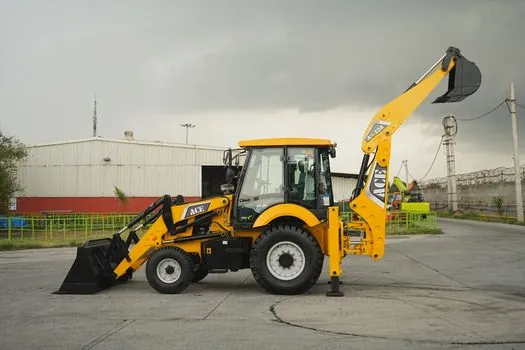
Compact equipment demand in 2026 is split between rental fleet replacement and electric-drive pilot orders, with Chinese OEMs (Rippa, Liugong, XCMG, SDLG) competing on price in the 1–3 ton roller and 50–75 hp skid steer segments, while Cat, Bobcat, Case, and Kubota hold the high-flow 100 hp and large-roller tiers [S1][S5]. For buyers cross-shopping a backhoe loader as a third option, the same rule applies: match the machine to the dominant task, not the loudest spec sheet.
Contractors evaluating a wheel loader instead of a large-frame skid steer should note that wheel loaders carry more per cycle but cost more upfront and need more transport space, a trade-off detailed in our road roller vs backhoe loader spec map. For pure compaction specs, a vibratory soil roller at 8–12 ton with padfoot drum and frequency-selectable vibration will densify cohesive subgrade to 95% Modified Proctor in 4–6 passes, which no skid steer attachment can match. Spec the roller to the soil, spec the skid steer to the attachment list, and run both on any job that has more than one lift to compact.