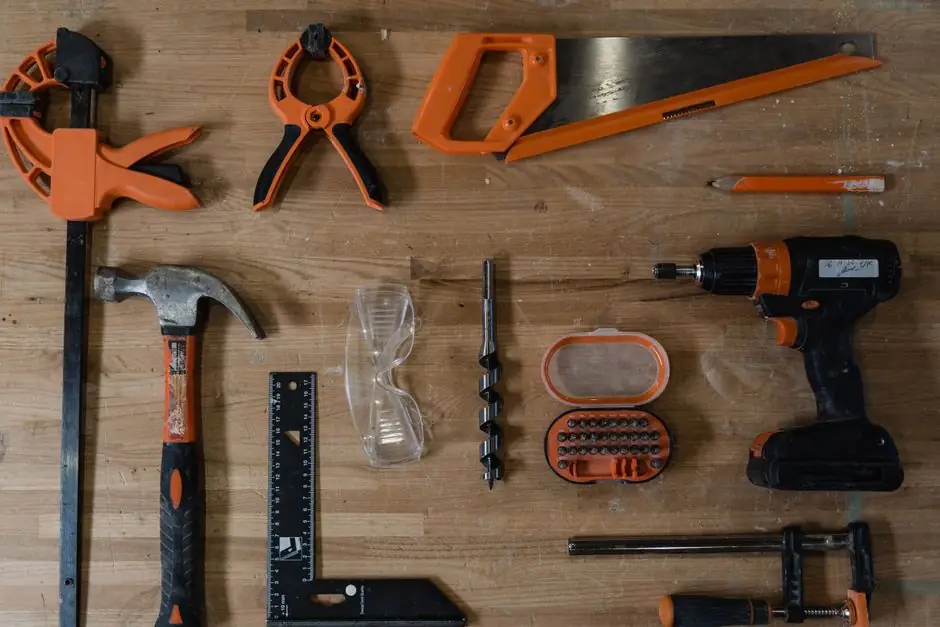
A rotary hammer inspection checklist is a shift-by-shift procedure that verifies personal protective equipment, electrical supply, chuck and bit seating, carbon brush wear, lubrication and SDS-plus/SDS-max function before the tool enters concrete or masonry [S1][S3].
For portable hand-held rotary hammers the form is operator-led and runs in 5 to 10 minutes, while the larger rotary drilling rig flow adds mast, hydraulic, outrigger and engine checks that take 20 to 30 minutes per shift [S3].
Pre-Operation PPE and Power-Source Checks
Disconnect the plug, or remove the battery pack on 18 V / 36 V cordless platforms, before any chuck, bit or guard adjustment, per the MaintainX portable-drill procedure [S1]. Inspect the entire power cord for cuts, exposed copper and missing earth pins, and confirm the chuck key has been removed from the keyed chuck before re-energising [S1].
Operators must wear ANSI Z89.1 Class E or EN 397 industrial hard hats, ANSI Z87.1 / EN 166 impact-rated eye protection, FFP2 or N95 dust masks for silica work, and anti-vibration (AV) gloves rated to ISO 10819 when daily trigger time on a rotary hammer exceeds 2 hours [S2][S4]. Confirm two accessible emergency stop devices are present on the rig-class tool, one for the operator and one for the helper, and verify the unit is posted with an electrical-hazard warning [S2].
Mechanical Walk-Around: Chuck, Bit, Grease and Brushes
Select a bit matched to the chuck system, SDS-plus for 4 to 28 mm holes in concrete, SDS-max for 30 to 52 mm demolition work, and confirm the bit shank is clean, undeformed and fully seated in the chuck before trigger pull [S1]. Apply only manufacturer-approved hammer grease (Bosch 1 615 430 010 or equivalent lithium-based EP-2 with MoS2); a 50 g shot every 20 operating hours is the typical service interval for an SDS-plus gearbox.
Measure carbon brush length through the service hatch; brushes below 5 mm on 1100 to 1500 W class machines must be replaced in pairs, never singly, to avoid commutator damage [S1]. Run the tool for 30 seconds unloaded and listen for bearing growl, smell for winding-hot insulation odours above 70 degC surface, and feel for excessive AV transfer at the side handle, any of which triggers a "remove from service" tag per the OSHA-aligned daily checklist [S3].
Electrical, Cord and Battery Subsystem
For 110 V to 120 V or 220 V to 240 V corded units, megger the line-earth at 500 V DC and reject any reading below 1 megohm; GFCI/RCD trip must be verified at 30 mA within 30 ms per IEC 61008-1 [S2][S3]. Battery packs on cordless rotary hammers are pulled from service when pack voltage under 1 A load sags more than 15 percent below nominal, or when cell temperature exceeds 60 degC during a 1 C discharge test.
Keep all electrical cords clear of the rotating bit and the auxiliary handle pivot, and never route a cord across a wet slab or through standing water, a hazard specifically called out in the portable-drill inspection form [S1]. For demolition hammer class work where the cord carries 1.5 to 1.8 kW continuous, sleeve the cord in a heavy-duty rubber jacket rated to 300/500 V per IEC 60245-4 and inspect every shift for jacket cuts within 50 mm of the strain-relief grommet.
Hydraulic, Mast and Outrigger Checks (Rig-Class Only)
Drill-rig-class rotary equipment extends the checklist with a full hydraulic pass: engine oil, hydraulic oil with all cylinders retracted, coolant when cold, fuel for the shift, transmission fluid, DEF/AdBlue, grease points, and water/foam/polymer injection tanks if fitted [S3]. Inspect hydraulic hoses for leaks, cracks and abrasion along their full length, confirm fittings are wrench-tight with no weeps, and verify the hydraulic-filter restriction indicator is in the green band.
Outriggers must be deployed per the manufacturer's load chart with full cribbing on soft ground, and the mast pivot, crown sheaves and feed chains/cables need a hands-on check for cracks, deformation and free rotation [S3]. Open boreholes must be capped and flagged, excavations barricaded, and augers cleaned only with the rotating mechanism in neutral and the auger fully stopped, mirroring the U.S. Army Corps of Engineers EM 385-1-1 section 18.H.11 requirements [S2].
Functional Test, Documentation and Stop-Triggers
Functional pass criteria are concrete: forward/reverse selector must snap positively, mode collar must lock between rotation-only, hammer-only and rotary-hammer positions, depth-stop rod must feed without binding, and auxiliary handle must clamp to within 0.2 mm slip on the gearbox neck [S1]. Log hour-meter reading, operator name, supervisor name, project, shift and any NO or N/A items in the remarks column, the same Yes / N/A / No / Remarks layout that CESO Checklist 18-04 enforces for federal drilling work [S2].
Stop the tool and tag out immediately on any of: visible cord damage, chuck runout above 0.3 mm on a 100 mm test bar, brush length under 5 mm, AV handle reading above 2.5 m/s² RMS, or hydraulic fluid leak above 1 drop per minute [S1][S3]. For pneumatic-rotary maintenance on adjacent systems, the Air Solenoid Valve Installation guide gives the upstream spec, while the Pneumatic Valve Actuator Selection for Pharma map sets the control-side reference frame.
Comparison: Portable Hammer vs Rig-Class Rotary Inspection
Portable rotary hammer and demolition hammer inspection runs in 5 to 10 minutes, needs no mast or outrigger pass, and uses 1 power source (mains or battery); rig-class rotary inspection needs 20 to 30 minutes, an engine bay, full hydraulic pass, and at least a 2-person crew with a spotter [S2][S3]. Acceptance limits scale with mass: hand-held units trip on AV above 2.5 m/s² and brush length below 5 mm; rig-class units trip on hydraulic weep above 1 drop/min, mast cracks visible at 10x magnification, and outrigger pad deflection above 25 mm on the rated load.
For a 1100 to 1500 W corded hand-held rotary hammer, plan a 30-day deep service: replace brushes, regrease the SDS chuck, meg the cord, and recalibrate the clutch to within plus or minus 10 percent of the manufacturer's torque setpoint. For a 50 to 80 kW rotary drill rig, the same deep service runs every 500 operating hours and adds hydraulic-oil sampling for ISO 4406 cleanliness code 18/16/13 or better.
Track the next service node as the 20-hour grease interval after the current shift and the 500-hour hydraulic-oil sample due counter; if either comes up while the unit is still inside a warranty window, file the claim before the 30-day mark. Watch for the next revision of OSHA 29 CFR 1926.1153 silica rule and any update to the EM 385-1-1 section 18.H series, both of which directly re-shape this checklist.