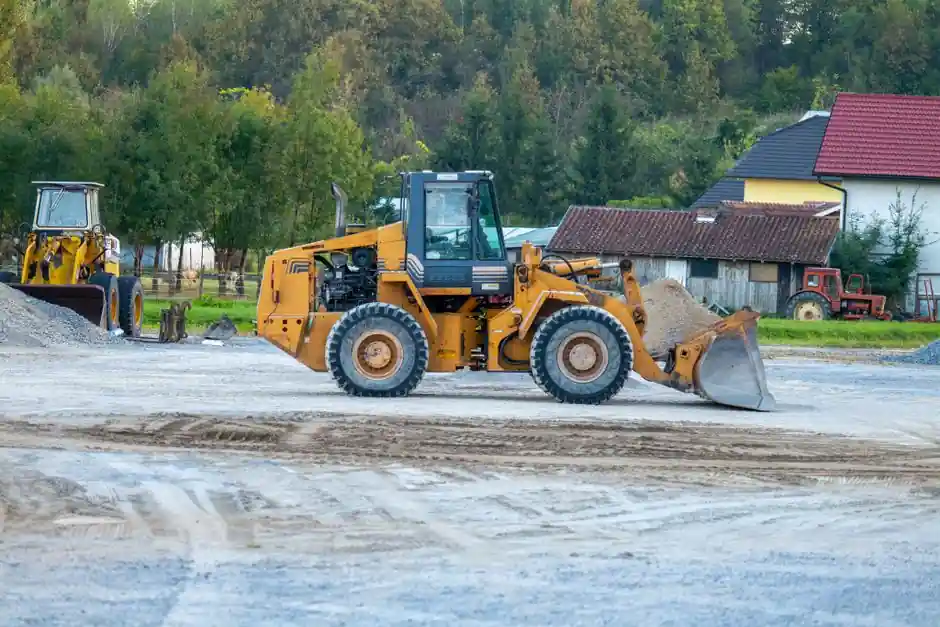
Wheel loader safety is governed by the interaction of four controls: the machine, the operator, the load, and the site, with struck-by and rollover events dominating the fatality record across construction, mining, and scrap-recycling fleets [S1][S5].
The U.S. construction sector recorded 1,008 fatal work injuries in 2020, of which 74 involved construction vehicles including wheel loaders, while struck-by incidents account for roughly 8.1% of all construction fatalities [S1]. The four primary hazards catalogued by the recycled-materials industry resource are falling and ejected objects, slipping and falling, cutting, and pinching and crushing, with burning and explosions added for fuel and hydraulic failures [S5]. A practical wheel loader safety programme is built on pre-operation inspection, qualified operators, personal protective equipment, and disciplined load and slope handling.
Pre-Operation Inspection: The Walk-Around That Stops the Day Going Wrong
A pre-shift walk-around is the single highest-leverage safety control on a wheel loader, because it surfaces the failure modes that cause the rest of the day's incidents: tyre deflation, hydraulic leaks, inoperative backup alarms, and loose structural fasteners [S1][S3].
The minimum check list covers visible damage, fluid levels (fuel, hydraulic oil, coolant), tyre condition and inflation, brake and steering response, lights, mirrors, cameras, horn, and backup alarm function, plus bucket and attachment hardware [S1][S3]. For loaders that carry a fire extinguisher, the unit must be present and charged [S1]. On entry, the operator must use a three-point stance on the provided ladders, steps, and handholds, and the steering wheel or joystick must never be used as a handhold [S4][S5]. The machine must be rejected from service if any safety-critical defect is found, with the industry guidance stating explicitly: "Never operate a defective or damaged machine" [S5].
Operator Qualifications, Training, and Fitness to Operate
Only designated, authorised, certified personnel may operate a wheel loader, and the operator must be mentally and physically fit with good vision, spatial perception, adequate hearing, and quick reaction time [S5].
Training has to cover the specific make and model, not generic loader theory, and must be reinforced with regular refresher courses, competency assessments, and documented certification records [S1][S2][S3]. Operators must be completely familiar with every control, monitor, indicator, the precise lifting capabilities, the emergency exit, and the site-specific hazards including the location of all underground and above-ground utilities [S5]. For fleets that handle maintenance in-house, the tunneling forklift maintenance discipline under OSHA 1910.178 provides a useful template for shift-change handover documentation, since the same pre-use inspection logic applies to any lift truck on a worksite.
Personal Protective Equipment and Cab Access

The minimum PPE set for any wheel loader operator is hard hat, safety glasses, high-visibility vest, steel-toed boots, and gloves, with hearing protection added whenever the operator is inside the cab or working in the immediate noise envelope of a running machine [S1][S2][S3].
Cab access is treated as a fall hazard, not a courtesy: the operator must maintain three points of contact and use the designated steps and handrails on every entry and exit [S3][S4]. Slips, trips, and falls are listed by industry safety guidance as a primary hazard class, and the three-point rule is the documented mitigation [S4][S5]. Modern OEM machines supplement this with seat belt reminders, beacon alerts, rear-view cameras, object detection, and speed limiters, but the in-cab seat belt itself is still the primary restraint and must be fastened before the engine starts [S2][S3].
Load Capacity, Bucket Handling, and Stability
Exceeding the rated load capacity is the direct cause path to tipover and loss of control, and operators must know the machine's precise lifting capabilities and limits before every shift [S2][S5][S6].
Loads must be distributed evenly and secured, with the bucket kept low during travel to lower the centre of gravity and to keep the load visible to the operator [S2][S3]. Sudden steering, sudden braking, and over-raising the bucket during truck loading are the three stability events operators are told to avoid, and approach angle to a truck or stockpile should be set for efficient loading rather than maximum reach [S3]. Attachments (buckets, forks, grapples) must be fully pinned and locked, and visually re-checked at every shift change because a loose attachment can detach in service and become a thrown-object hazard [S2][S3][S5]. For a wider comparison of loader classes and their typical operating envelopes, the same load-and-stability logic applies across the loader family, only the rated capacity and tipping-load figures change.
Slope, Terrain, and Visibility Discipline
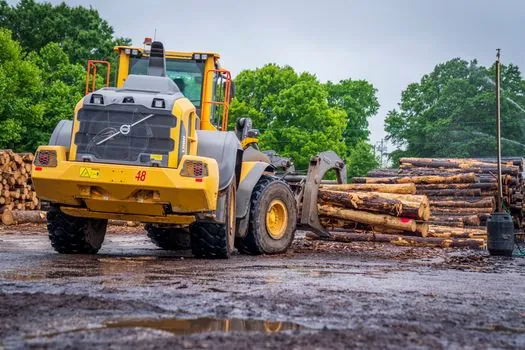
On inclines the rule is straight up or straight down, never across, with the bucket low, steady throttle, and no abrupt turns, and on soft or unstable ground a spotter is required when visibility is limited [S3].
Visibility is maintained by keeping mirrors, windows, and cameras clean and correctly adjusted; if visibility is still obstructed after that, the operator must use a spotter or a camera system rather than proceed by guesswork [S2]. Communication with ground workers uses standardised hand signals or radios, and the operator is responsible for confirming everyone is clear of the swing and reversing envelope before any movement [S2]. For broader heavy equipment fleet context, the same visibility and communication protocols recur across graders, dozers, and articulated trucks, so a site-wide standardisation of signals is the cheapest single safety improvement a contractor can make.
Maintenance, Inspection Records, and Hazard Reporting
Maintenance must follow the manufacturer's schedule, and routine inspections must surface loose wheel lug nuts, incorrect tyre inflation, tyre damage, clutch or brake failures, and frayed or damaged fuel or hydraulic lines, hoses, or hose assemblies [S5].
Every shift change requires an inspection per the manufacturer manual, and any identified defect must be recorded, reported, and cleared before the machine returns to service [S1][S2][S5]. Maintenance completion must be documented, because paper-trail gaps are the most common root cause when incidents are reviewed after the fact [S5]. Operators are explicitly required to report any abnormality promptly rather than continue to operate, since a machine that is "running fine" with a weeping hydraulic fitting is a future fire source, not a current one.
Trackable signals for the rest of 2026: (1) whether more OEMs roll out object-detection and seat-belt-interlock systems as standard rather than optional, and (2) whether site-level adoption of standardised hand-signal cards (versus ad-hoc radio calls) increases in the published OSHA regional emphases.