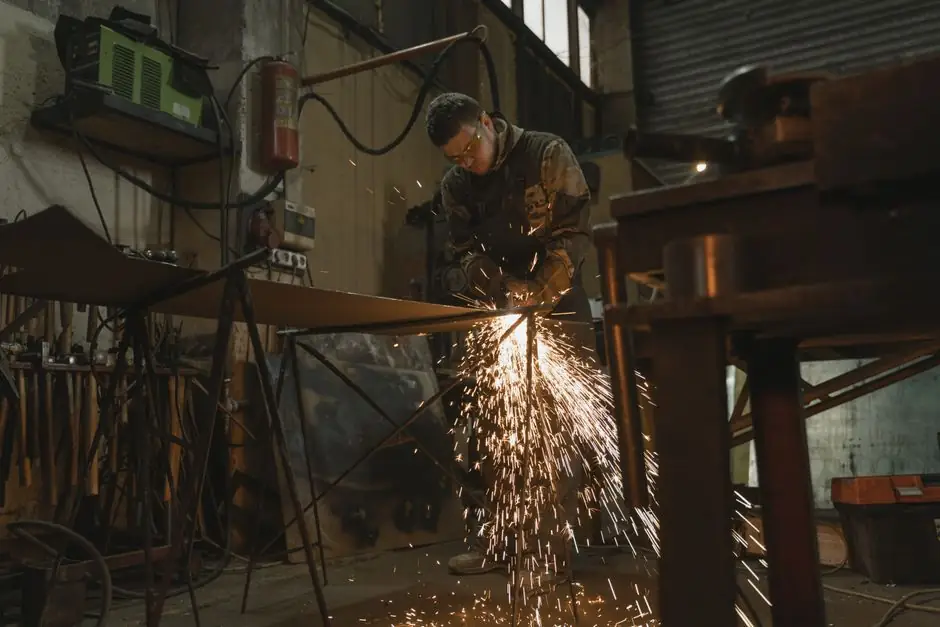
A plasma arc is an electrically ionized gas column heated past 20,000°C that melts and ejects conductive metal, producing usable cuts from sheet up to roughly 50 mm and maximum severing thickness near 150 mm [S2][S4].
The process suits plain carbon and stainless steel, aluminum, titanium, and nickel alloys, because any electrically conductive material can complete the arc back to the grounded cutting table [S4]. Equipment scales from handheld inverters under 30 kg to CNC tables and robotic 6-axis cells, which is why the same process shows up in job shops, shipyards, and field service trucks.
Where Plasma Cutting Outperforms Oxy-Fuel and Laser
On steel up to 25 mm (1 in) thick, a plasma torch runs at minimum 2x the travel speed of oxy-fuel, and on thinner gauges the speed ratio climbs to 12x or higher [S7]. For 1 in and below, Hirebotics likewise reports plasma cutting up to twice as fast as oxy-fuel, with cutting speed rising as thickness drops [S3]. The economic flip side is operating cost: plasma runs mainly on electricity and compressed shop air, while oxy-fuel burns acetylene or propane plus oxygen, so consumable gas cost trends lower on plasma even when the inverter's sticker price is higher [S3].
Versus laser, plasma trades edge quality for capital cost: a CNC plasma table typically lands at a fraction of a fiber-laser install of comparable bed size, while still cutting any conductive metal that fiber handles, plus non-ferrous like aluminum and copper that flame cutting cannot touch [S8][S4]. The narrower kerf versus flame and the smaller heat-affected zone (HAZ) versus oxy-fuel also reduce dross and post-cut grinding, which is a direct labor saving on medium-thickness stainless and aluminum work [S4]. See the plasma cutter encyclopedia entry for the underlying process variables that drive these differences.
Hard Limits: Thickness, Kerf, HAZ, and Noise
Plasma cannot match laser on thin-gauge kerf and edge straightness, and it cannot match waterjet or heavy oxy-fuel on the upper thickness range: a useful upper limit for quality cuts sits near 50 mm, with absolute severing capacity around 150 mm before arc instability and edge taper become unacceptable [S2][S4]. The HAZ is wider than laser, which matters on hardened or heat-treated plate where post-cut mechanical properties near the edge can drift, though submerged (water-table) cutting shrinks both the HAZ and the noise floor [S4].
Operator-side, plasma cutting is loud, emits intense UV and IR from the arc, and produces a hot slag stream of molten metal that needs fume extraction or water-bed capture; GLW Engineering flags the noise level and the inability to cleanly sever very thick or dense stock as the two most-cited shop complaints [S1]. Consumable cost (electrode, swirl ring, nozzle, shield) scales with arc-on time, so high-amperage high-duty-cycle cells burn through tips faster than a low-amperage hand torch on the same linear meters. For a side-by-side with abrasive and toothed-blade tools used in metalworking fab, the cut-off machine classification guide frames the kerf and consumable logic that also applies here.
Selection Criteria: Amperage, Duty Cycle, Cut Quality Tier
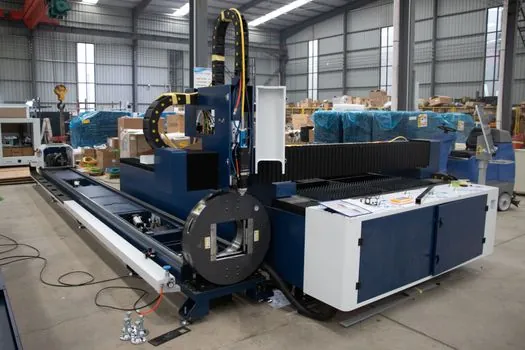
Specifying a plasma system comes down to four numbers: rated amperage, duty cycle at that amperage, sever thickness, and quality-cut thickness. A 30-50 A inverter handheld unit is the practical minimum for field work and cuts clean up to about 6-10 mm mild steel; 60-100 A CNC-class machines handle 15-25 mm quality cuts and 30+ mm sever cuts; 200-400 A high-definition systems push clean cuts past 25 mm and severing toward 50 mm and beyond [S2][S4].
Process choice inside the family also matters: high-frequency contact starting is cheap but interferes with CNC electronics, so pilot-arc starting is standard on mechanized torches [S2]. Compressed air is the default plasma gas for mild steel and gives acceptable cut quality; nitrogen, argon-hydrogen, and oxygen mixes raise edge quality on stainless and aluminum but add gas logistics and cost. Fictiv notes plasma edge quality is visibly below laser on the same gauge, so cosmetic-edge work is typically routed elsewhere [S8].
Options Compared on Decision Criteria
The four common thermal and mechanical cutting routes for conductive metal line up against the criteria that drive a purchasing decision: cut speed, edge quality/kerf, maximum useful thickness, and per-meter operating cost. [S2]
Plasma cutting: up to 12x faster than oxy-fuel on thin stock, kerf wider than laser but narrower than flame, clean quality up to 50 mm and severing near 150 mm, low per-meter cost on 3-25 mm steel where electricity and compressed air dominate over consumable gas [S2][S3][S4][S7]. Oxy-fuel cutting: slow on thin gauge, only works on ferrous metals, lowest equipment cost, but high fuel-gas burn rate and largest HAZ and kerf [S3][S4]. Laser (fiber, CO2): tightest kerf and best edge quality on sheet under about 15 mm, fast on thin stock, but high capex and limited on reflective metals without specialized fiber sources [S4][S8]. Waterjet: no HAZ and cuts very thick plate, but slow traverse, high abrasive cost, and large footprint, so it is reserved for heat-sensitive or thick non-metallic stacks [S4]. For the structural-fabrication side of the shop, rebar coupler selection is the kind of adjacent process decision where cut quality, speed, and per-joint cost dominate over headline equipment price.
Who Plasma Is For, and Who Should Walk Away
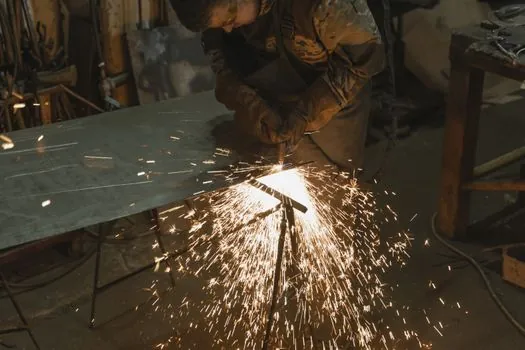
Plasma is a fit for fab shops cutting 1-25 mm steel, stainless, and aluminum in mixed short-run batches; for field-service trucks doing repair and demolition cuts on scrap-and-replace plate; and for production cells running nested CNC profiles where 0.5-1.5 mm kerf tolerance and a visible but acceptable dross line are acceptable [S1][S4]. It is also a fit for sites that need one machine to cover mild steel, stainless, and aluminum without swapping processes, since plasma handles all three with only a gas-mix change [S3][S4].
Plasma is the wrong tool when cosmetic edge quality on sub-3 mm sheet is the deliverable (laser wins), when cuts above roughly 50 mm quality or 150 mm sever are routine (waterjet or heavy oxy-fuel/oxy-arc), when the workpiece is non-conductive (waterjet, router, or saw), or when heat input to the cut edge will damage metallurgy, since plasma HAZ, even submerged, is wider than laser [S4]. Shops that already own a CNC plasma should also evaluate abrasive and toothed-blade alternatives before assuming plasma is the default, a decision framework covered in the cut-off machine type comparison.
Operating Costs, Consumables, and Safety Footprint
Headline operating cost on plasma is electricity plus a compressed-air or nitrogen/hydrogen supply plus a consumable set (electrode, nozzle, swirl ring, shield) rated for a finite number of arc-on hours or pierces. GLW Engineering cites a 1:2 cost-per-cut ratio favoring plasma over oxygen cutting on equivalent work, and Hirebotics confirms lower ongoing gas and energy spend versus oxy-fuel even when oxy-fuel's upfront gear is cheaper [S1][S3].
Safety footprint is real: plasma arcs emit Class 3B/4 UV that mandates auto-darkening helmets rated for the amperage, IR exposure controls, fume extraction (especially on stainless where hex-chrome risk applies), and hearing protection because the noise level under load is high enough to exceed typical 85 dB shop thresholds without attenuation [S1]. Water-bed or downdraft tables cut both fume and noise, and submerged cutting is the documented route to shrink the HAZ and the noise floor on stainless and aluminum work [S4]. For site layout where the cutter sits next to other construction tools, the construction machinery equipment reference covers the broader noise, dust, and power-load context a fab cell inherits.
Trackable signals over the next planning window: inverter-class plasma amp ratings per kilogram continue to climb, raising the duty cycle available in handheld form factors; high-definition plasma edge quality is closing the cosmetic gap with fiber laser on 10-20 mm stainless, narrowing the reroute-to-laser threshold; and consumable life per arc-on hour is the most reliable proxy for real per-meter cost when comparing OEM bids, since published pierce and cut ratings vary widely between entry and premium tiers.
The underlying component specifications are covered under lamps and light fittings.