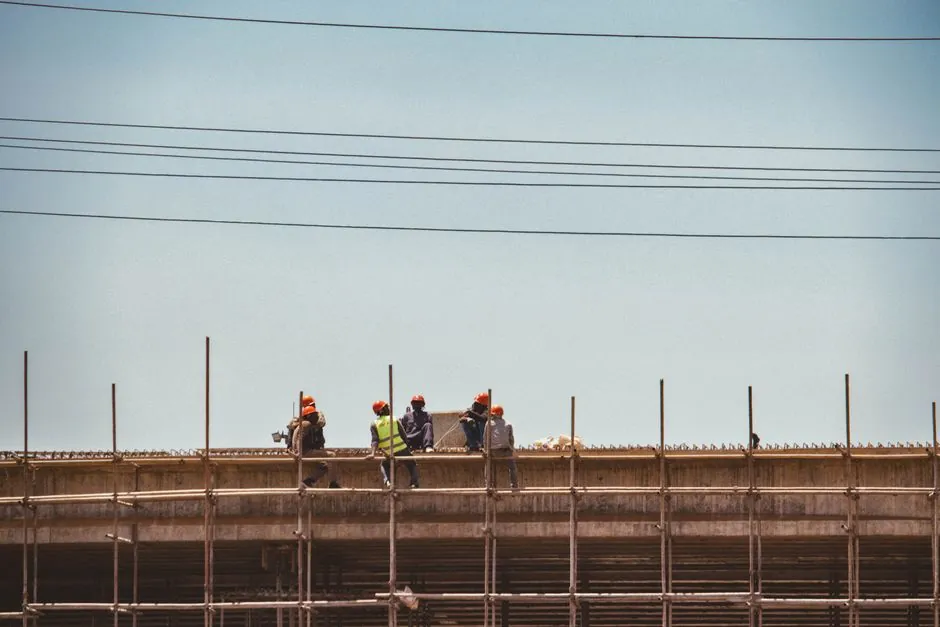
Ringlock scaffolding is a modular system whose core is a rosette welded to the vertical standard at fixed intervals of 500 mm, with up to 8 ledger and diagonal connection points engageable per node and locked by a hammer-driven wedge [S1][S3]. Compared with cuplock scaffolding, which uses two fixed/sliding cups and accepts up to four ledger blades per node, the rosette geometry is the defining difference between the two families [S2][S3].
The system is widely specified for high-rise construction, bridge and infrastructure maintenance, shipbuilding, refineries, offshore wind and oil platforms, mining, and event structures such as grandstands, with hot-dip galvanised steel as the typical material for corrosion resistance in those environments [S1][S3][S4].
Rosette Node Geometry and Connection Logic
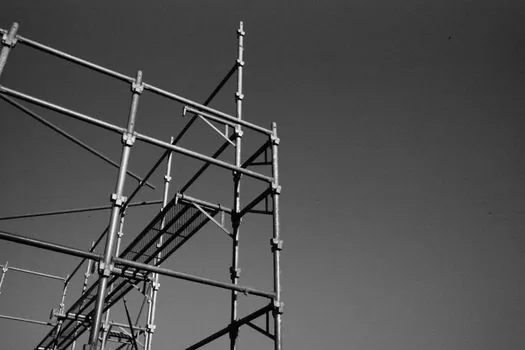
Each vertical standard carries rosette connectors at 500 mm vertical intervals, and each rosette is punched with 8 holes so that horizontal ledgers and diagonal braces can be hooked in and tightened with a hammer-driven wedge, a sequence that removes the ratchet step used in traditional tube-and-coupler scaffolds [S1][S5]. The same wedge-head pattern lets one node accept braces at the standard 45° and 90° set-out positions, which is why ringlock is the typical choice for circular tank scaffolds, curved façades, and irregular industrial layouts [S1][S3][S6].
For erection crews, the practical impact is that a single rosette behaves as a structural multi-way joint: load is transferred through the standard tube, the rosette weld, the wedge, and the ledger end-fixing rather than through loose right-angle couplers, so the joint stiffness stays consistent across the bay [S1][S5]. Where complex geometry is required on site, the same node will accept diagonal braces at 0°, 45°, and 90° without changing the connector, which is the main engineering reason ringlock replaced cuplock on curved work [S3][S6].
Component Set: Standards, Ledgers, Diagonals, Decks, Base Jacks
A ringlock kit typically reduces to a small bill of parts: vertical standards with welded rosettes, horizontal ledgers, diagonal braces, base jacks, modular steel or aluminium decks, and stair stringers, with accessories such as guardrails, toeboards, side brackets, and lattice girders added as the application demands [S1][S3][S5]. Standards are most commonly 48.3 mm OD hot-dip galvanised steel tube, the same nominal tube used by cuplock and most EN 12811-compliant system scaffolds, which is why the two systems are often compared on a like-for-like tube basis [S2].
Hot-dip galvanising is the standard corrosion-protection finish for ringlock components in refinery, offshore, and shipyard service, where the scaffold is repeatedly exposed to salt spray and chemical atmospheres; aluminium ringlock is also used for light-duty access where weight matters, such as event stages and indoor fit-out [S3][S4]. For shoring and formwork support, the same rosette is reused with heavy-duty ledgers and diagonal braces to carry slab and beam loads, which makes ringlock dual-use as access scaffold and falsework [S3][S6].
Ringlock vs Cuplock vs Frame: A Criteria Comparison
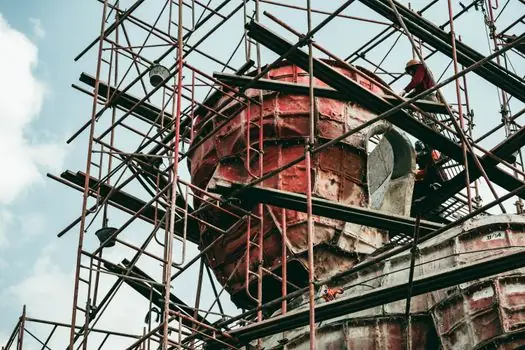
The three dominant modular and semi-modular systems on most construction sites can be lined up against four decision criteria that procurement and site engineers actually use: connection geometry, bay angle flexibility, assembly speed, and structural use case [S2][S3][S5].
Ringlock uses a rosette with 8 holes at 500 mm node spacing, accepts braces at multiple angles including 45° and 90°, is locked with a hammer-driven wedge, and is aimed at heavy-duty access, shoring, curved geometry, and industrial/offshore work [S1][S3][S5]. Cuplock uses a fixed bottom cup plus sliding top cup at typically 500 mm node spacing, accepts up to four ledger blades at right angles, and is aimed at large, repetitive, rectangular façade bays and simple shoring [S2]. Frame (H-frame) scaffolding uses welded rectangular frames stacked vertically and tied with cross braces, has no rosette, and is aimed at low-rise residential and light commercial work where cost per square metre matters more than geometry flexibility [S4][S5].
On speed, ringlock and cuplock are close, with the wedge-into-rosette and the cup-over-blade sequences both faster than the ratchet-tube step of tube-and-coupler, but ringlock wins on geometry because the rosette's 8-way connection outpaces the cuplock's effectively 4-way right-angle connection [S1][S2][S6]. On cost, frame scaffolding remains the cheapest per square metre for simple, low-rise work, which is why it has not been displaced on housing and small commercial sites even where ringlock is available [S4][S5].
Typical Applications by Sector
Ringlock scaffolding is specified across eight recurring use cases: high-rise and large commercial building construction, bridge construction and maintenance, shipbuilding and ship repair, mining, refineries and chemical plants, offshore wind farms and oil rigs, event structures (grandstands, stages, lighting rigs), and formwork/shoring support for slabs and beams [S1][S3]. For high-rise commercial work, the system scaffold category (ringlock or cuplock) is preferred over tube-and-coupler because modular bays handle higher live loads and accommodate staged pour cycles on tall structures [S4].
On industrial sites with dense piping, vessel clusters, and irregular access, ringlock is chosen over frame scaffolding because the rosette allows the same standard to fan out to multiple working levels around an obstacle without custom welded frames [S3][S5]. Offshore, the combination of hot-dip galvanised steel, a small parts inventory, and rapid wedge locking is what makes ringlock the default for jacket and platform access, scaffold towers on vessels, and wind-farm secondary steel [S1][S3]. For process plants, the same rosette is paired with side brackets, ladder-access towers, and debris-net fixings to deliver a fully enclosed working platform around live equipment, a configuration that matches the access needs of refinery turnaround work [S1].
Limits, Failure Modes, and Selection Watch-Outs
Ringlock is not the right tool for every job. For small residential and light commercial work, frame scaffolding remains cheaper per square metre and is faster to erect for a single straight façade, and forcing ringlock into that service simply inflates the bill [S4][S5]. For highly irregular heritage or restoration work where the scaffold must wrap a non-standard geometry, tube-and-coupler still has a role because its loose right-angle couplers can be set at any angle without being limited to the 8 rosette positions [S4].
The most common field failure modes are wedge under-driving (wedge not fully seated by hammer blow, leading to slip under load), rosette damage from impact or improper stacking, mixed-system tie-ins where a ringlock ledger is forced into a non-original cup or clamp, and galvanising damage that progresses to corrosion in marine service [S1][S3]. Procurement should therefore verify that rosette spacing is to 500 mm, that wedges are original-manufacturer and not field-fabricated, that base jacks are rated for the bay load, and that hot-dip galvanising thickness is specified for the service environment (typical offshore duty is heavier than typical onshore duty) [S1][S5]. Compliance is normally demonstrated against EN 12811-1 for performance and EN 12810 for system scaffolds, which any reputable ringlock supplier will reference in their data sheet; the supplier's test report and load table should be on file before the first bay goes up.
Selection Criteria for Specifiers and Buyers
Specifiers should match the system to the project on four axes: (1) required live load per bay, (2) geometric complexity, (3) repetition and bay count, and (4) environment/corrosion class [S2][S4][S5]. For high live loads, complex geometry, and large bay counts in corrosive environments, ringlock is the default choice; for simple rectangular façades with low live load and tight budget, frame scaffolding is the default; for very large repetitive rectangular shoring, cuplock remains competitive on speed [S2][S4][S5].
When evaluating a ringlock supplier, check that the rosette is a forged or pressed steel ring welded to the standard at 500 mm centres, that wedge heads are drop-forged (not cast), that the system holds a current EN 12810/EN 12811 design code reference, and that spigot connections between stacked standards are positive-locking with a dedicated pin rather than a friction fit [S1][S5]. Also confirm the availability of system-compatible stair towers, lattice girders for bridging, and side brackets, because the productivity gain on a real site comes from the accessories as much as from the basic rosette node [S1][S3]. For procurement teams that already standardise on construction machinery and equipment fleets, ringlock is increasingly procured as a unified access package alongside hoists and formwork to reduce interface risk on site.
Standards, Compliance, and Sourcing Notes
Ringlock system scaffolds in European and most international projects are designed and tested to EN 12810 (façade scaffold performance) and EN 12811-1 (structural design of working scaffolds), with hot-dip galvanising to EN ISO 1461 for corrosion protection; load classes are typically Class 4 to Class 6 (3.0 kN/m² to 6.0 kN²) for heavy-duty access and shoring service [S1][S3][S5]. On process plants, the scaffold is also tied to site-specific safety rules for refineries and chemical plants, which is why ringlock dominates that sector [S1].
Buyers should request the manufacturer's declaration of conformity to EN 12810/EN 12811, the galvanising certificate to EN ISO 1461, the load-class table per bay configuration, and a recommended tie-pattern drawing for the specific façade or vessel geometry [S1][S5]. On the logistics side, ringlock's small parts inventory (standards, ledgers, diagonals, decks, base jacks) gives a measurable transport and storage advantage over tube-and-coupler, which is one of the reasons it is favoured on remote offshore and mining sites [S1][S3]. For projects that also need a powered access fleet, ringlock is commonly specified in the same procurement package as the broader scaffolding and lamps and light fittings bundles, so that tower lighting, edge lights, and debris netting share the same rosette-compatible bracketry.
Two related reads on equipment selection: a side-by-side on demolition hammer types for the breaking side of the same trades, and a map of impact drill types for the anchor-fixing work that ties scaffold to structure.