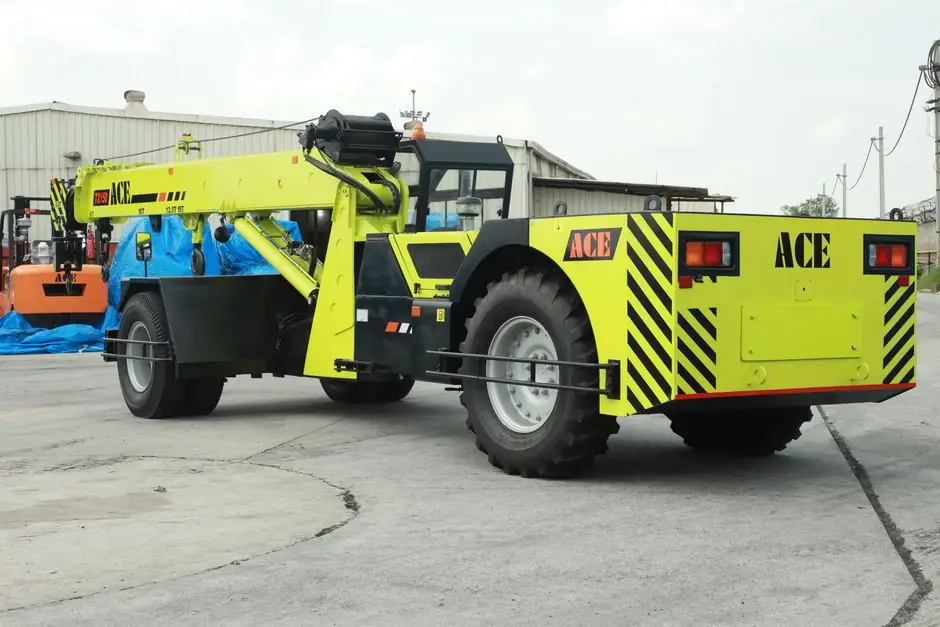
Rough terrain cranes (RTCs) cover a working capacity band of roughly 25 t to 110 t in current OEM catalogs, with the SANY SRC300C at 30 t and the Zoomlion ZRT1100D533 at 110 t bracketing the mainstream range [S2].
The class is defined as a two-axle, single-engine mobile crane with four-wheel drive, four-wheel steer (including crab steer), and a short wheelbase built for soft, uneven ground; a rough terrain crane is the go-to pick when an all-terrain crane or a crawler crane is over-spec for the lift and the access route cannot be paved [S2][S4].
Where a rough terrain crane is the right tool, and where it is not
Rough terrain cranes are specified for oil-and-gas lease work, small-to-medium industrial maintenance, plant construction, and short-radius bridge or tower erection on unprepared ground, where the machine must self-reposition between lifts without a transport trailer [S4].
They are not the right pick for highway-speed relocation between distant sites, for lifts above ~110 t where boom and counterweight demands exceed two axles, or for indoor or finish-trade work where ground pressure and emissions rules favor electric telehandlers or crawler units; Terex's used-fleet positioning explicitly markets the class for "uneven, confined, and off-road job sites" in oil and gas, industrial maintenance, and plant construction, not for long-haul highway duty [S4].
Key spec dimensions to compare across OEMs
Four numbers drive the comparison: maximum rated load, main-boom tip height, drive speed, and pick-and-carry rating. XCMG's XCR30 is listed at 30 t capacity, 42.2 m main boom, and a 140 m/min hoist speed at max load; the XCR70 jumps to 70 t with a 45 m five-section boom and a 6.5 m minimum turning radius [S2].
The XCR55L4 carries 55 t, runs 80 km/h on road, and uses a 162 kW crane engine with a large-displacement dual-variable plunger pump on the confluent main valve [S2]. The SANY SRC550 sits above the 30 t SRC300C in the catalog ladder and is described as a compact, telescopic mobile unit aimed at general construction lift work [S1].
At the top of the current OEM tables, the Zoomlion ZRT1100D533 reaches 110 t and a 66.8 m working height (1,800 m altitude rated), with 70 km/h drive speed and full pick-and-carry capability; the 90 t Tadano LRT 1090-2.1, also listed with pick-and-carry duty, gives 66 m tip height and a 3,000 kg max-load-at-max-radius figure useful for repeated radius-cycle work [S2].
Comparison matrix: 30 t, 55 t, 70 t, 90 t, 110 t classes
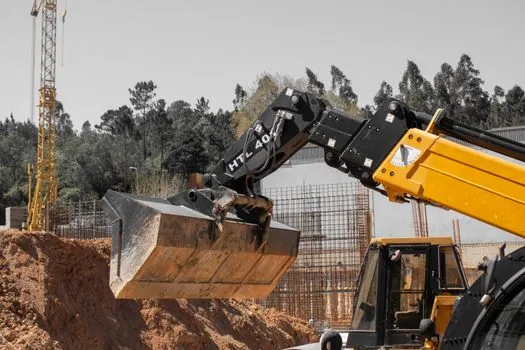
For a buyer comparing the five realistic OEM tiers side by side, the working envelope and mobility metrics are the gating values, while the engine power scales with capacity, not with boom reach. [S2]
The 30 t class (SANY SRC300C, XCMG XCR30) is the small-site entry point, with 46.5 m boom height and 46 km/h top speed typical; the SRC300C pairs that envelope with a focus on "rugged terrain or extreme environmental conditions, like deserts or freezing areas" per the OEM copy [S2]. The 55 t XCR55L4 doubles drive speed to 80 km/h and lifts crane engine power to 162 kW, the right step for contractors that road-relocate between pads on the same lease [S2].
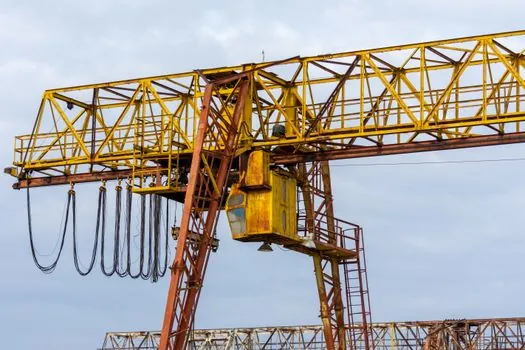
The 70 t XCR70 is described as "70 t rough terrain crane with best lifting capacity in its class" with a 45 m five-section boom and 6.5 m turning radius, the smallest in its tier, on a 192 kW engine and a slower 40 km/h top speed; it is the pivot point where RTCs start to overlap with smaller all-terrain lifts [S2]. The 90 t class (LRT 1090-2.1) and 110 t class (ZRT1100D533) add full pick-and-carry ratings and 66-66.8 m booms, at which point the two-axle envelope is at the practical limit and buyers should also evaluate a gantry crane for shop-side assembly or a small crawler for ground-bearing work [S2].
Standards, ratings, and the spec language that matters
Rough terrain crane rated-load charts are explicitly conditional on firm, level ground; the XCMG XCR30 product copy states that "the total rated loads given in the rated load charts are the maximum lifting capacity when the crane is set up on firm and level ground" [S2]. That is the reason outrigger-pad sizing, ground-bearing pressure checks, and slope limits dominate the lift plan, not the bare capacity number on the nameplate.
For US-spec units the load-chart compliance framework runs through ASME B30.5 (mobile and locomotive cranes) and OSHA 29 CFR 1926.1400-1441 (cranes and derricks in construction); for European duty, EN 13000 covers mobile crane safety, including rough terrain variants, and EN 13001-1/2/3 governs general crane safety principles. Operators in scope of US federal or state highway work sit under 29 CFR 1926.1427 (operator qualification), and ground conditions fall under 1926.1402 (ground conditions) [S2].
Altitude derating shows up in OEM tables: the Zoomlion ZRT1100D533 is rated to 1,800 m operating altitude, which matters for Rocky Mountain, Andean, or high-altitude Asian deployments, and operators should ask vendors for derate curves above that line [S2].
Selection logic: matching the machine to the duty cycle
For a single-pad, repeated-radius industrial maintenance job (refinery turnarounds, wind-farm erection pads, substation steel), the 30-55 t class is usually the lowest cost per lift, since the higher-tier machines trade top speed and boom length for outrigger footprint and counterweight that you may not use. [S2]
For multi-pad lease work where the crane has to drive between wellheads on unpaved roads, the 55-70 t class with 70-80 km/h road speed and 162-192 kW engines (XCR55L4, XCR70) is the workload sweet spot; below 55 t, road speed drops and cycle time suffers, above 70 t, axle load and bridge-law permits start to dominate the transport math [S2].
For 80-110 t lifts in confined plant sites where a large all-terrain or crawler cannot approach, the 90-110 t RTC tier (LRT 1090-2.1, ZRT1100D533) is the ceiling, and the decision should include a side-by-side review of a gantry crane option for shop-side assembly and a small crawler crane for ground-bearing work, since at 110 t the RTC is operating at the structural limit of the two-axle concept [S2].
Failure modes, common oversights, and the practical shortlist
The dominant failure pattern for rough terrain cranes is not boom failure, it is ground failure: outriggers punching through unprepared subgrade, slope-induced tip-overs, and pick-and-carry operations on grades above the OEM limit. The OEM copy's repeated insistence on "firm and level ground" is a direct response to this, and operators should treat the rated-load chart as conditional, not absolute [S2].
Two operational checks to bake into the rental contract: confirm the published road speed is achievable on the lease road surface (some OEMs publish optimistic numbers), and confirm pick-and-carry ratings on a chart-by-chart basis, since pick-and-carry limits are typically a fraction of the static outrigger capacity and vary sharply with boom angle and radius [S2].
Shortlist logic for an August 2026 buyer: specify capacity at the radius you actually lift at, not the headline maximum; require the OEM to publish a pick-and-carry chart, not just an outrigger chart; check altitude rating if the site is above 1,000 m; and treat the 110 t class as a hard ceiling, with crawler crane alternatives reviewed for any lift above that line [S2].
See also our earlier report, Pressure transmitters: eight industrial types and where each one fits.