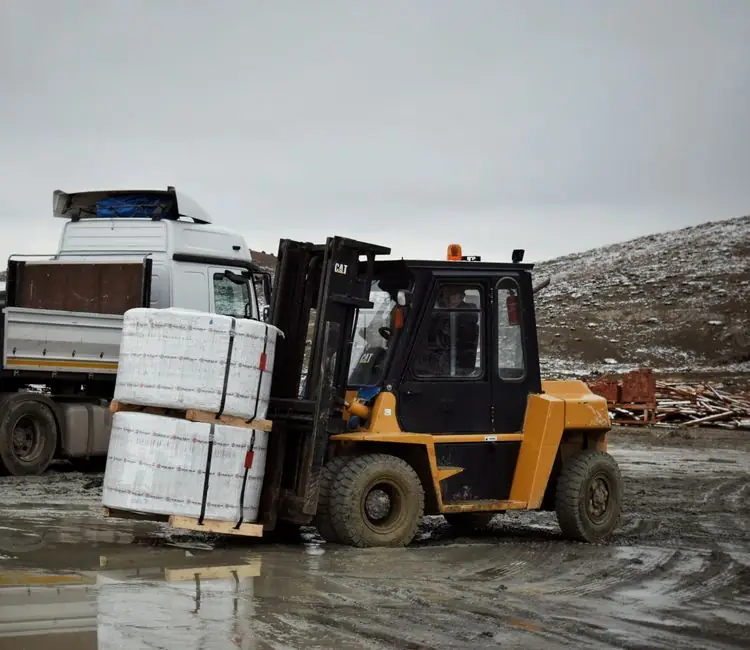
Agricultural rough terrain forklifts in the 2026 market span 1,800 to 10,000 kg rated load, with diesel power from 36.8 kW (QuanChai 493) up to 103 kW (DongFangHong 6105) and minimum ground clearance between 250 mm and 370 mm depending on chassis class [S1][S2][S3][S4].
Three working envelopes dominate farm and plantation buying: light 1.8-3.5 ton units (4.5-7.0 m lift height) for feed, fertilizer, and pallet handling around barns; mid-range 5.0 ton units with 320 mm clearance for hay, bale, and crate work on soft ground; and 10.0 ton forestry-rated machines with 370 mm clearance, 150 L fuel tanks, and 9800 kg operating weight for timber and silage logistics [S1][S2][S3][S6]. A 5-ton integrated rear-steer model (CPCD5.0T-Y) trims the minimum turning radius to 2,500 mm versus 2,950 mm on front-steer equivalents, a useful gain inside tight orchard rows [S4].
Capacity tiers and what each one actually carries
The 1.8 ton Hangcha class lifts to 4.5 m with a 1,070 mm short wheelbase and triplex mast, suiting poultry and dairy shed work where access is narrow [S6]. At 3.5 ton (CPCD35T-A, 3,500 kg rated, 500 mm load center, 3,000 mm standard mast, 3,500-7,000 mm optional), travel speed reaches 30 km/h loaded and 33 km/h empty, with 400 mm/s lift and 530 mm/s lowering on the loaded cycle [S1].
Stepping to 5.0 ton front-steer (CPCD5.0T-A) adds a 1,520 mm fork, 2180 mm wheelbase, and 95 L diesel and hydraulic tanks, while the 5.0 ton rear-steer (CPCD5.0T-Y) keeps the same 5,000 kg rating but cuts overall length to 3,850 mm and turning radius to 2,500 mm, trading 1,000 kg of counterweight for maneuverability [S2][S4][S5]. The 10.0 ton class (CPCD10T-A) is a different machine: 9,800 kg operating weight, 4,500 kg counterweight, 2560 mm wheelbase, and a 103 kW power pack for plantation log handling [S3].
Drivetrain, ground clearance, and tire choice for soft ground
All four Luken agricultural classes share 23.5-70-16 herringbone tread tires front and rear, with pneumatic, semi-pneumatic, or solid construction offered as options, a relevant switch for puncture-prone stubble or rocky ground [S1][S2][S3][S4][S5]. Minimum ground clearance scales with capacity: 250 mm at 3.5 ton, 300-320 mm at 5.0 ton, and 370 mm at 10.0 ton, matching the deeper ruts and root balls found in mature plantations [S1][S3][S4].
Four-wheel drive is the consistent differentiator versus a warehouse forklift: 4WD plus a 278-series two-speed split gearbox and air-over-disc service brakes are standard across the 3.5-10 ton agricultural builds, while the 1.8 ton Hangcha is offered in both 2WD and 4WD configurations [S1][S2][S3][S4][S6]. A rough terrain forklift is engineered around that drivetrain, not adapted from an indoor chassis.
Engine, fuel, and hydraulic envelope
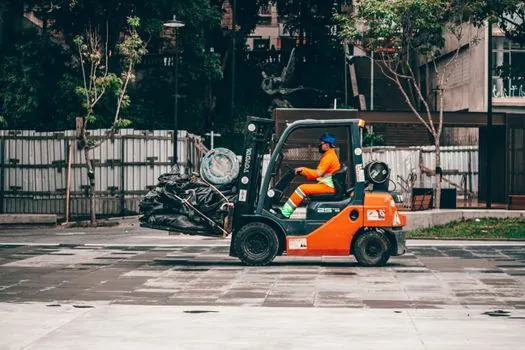
Smaller farms are well served by the YunNei 490 (42.0 kW) in the 3.5 ton class and the QuanChai 493 (36.8 kW) in the 5.0 ton class, both China-IV emission rated as standard with optional tier upgrades [S1][S2][S4]. The 5.0 ton front-steer with the YunNei 4102 jumps to 76.0 kW for heavier bale and silage cycles where hydraulic demand is sustained [S5].
Hydraulic tank capacity tracks engine size: 80 L at 3.5 ton, 85-95 L at 5.0 ton, and 80 L at 10.0 ton (where 150 L of diesel supports longer shifts), with lift/lower speeds identical at 400/500 mm/s and 530/430 mm/s across the 3.5-10 ton range [S1][S2][S3][S4][S5]. For a buyer cross-shopping a rough terrain forklift against a telehandler, those lift speeds are the productivity number to compare, not just rated capacity.
Attachments that change a farm forklift into a year-round tool
Across the 3.5-10 ton agricultural range, the factory options list is the same: side shifter, 3-stage mast, tilting device, bucket, wood grab, snow plough, corn bale clamp, crane jib, fork extension, rotator, and air conditioner [S1][S3][S5]. That commonality matters because a single 5.0 ton chassis can move from winter snow clearing to summer bale clamp work without a second machine, lowering total cost of ownership on mixed farms.
Mast configuration is the other variable: standard 2-stage 3,000 mm suits barn work, while 3-stage masts push lift height to 7,000 mm for high-sided trailer loading and silo filling [S1][S2][S3][S4][S5]. Door frame tilt of 8 degrees forward and 11 degrees back is consistent across classes, which keeps attachment geometry familiar when operators move between machines [S1][S2][S3][S4][S5].
Selection gates from the farm buyer's checklist

BLANC-ELE's June 2026 farm buyer checklist breaks the decision into load type, normal versus maximum load, ground condition, lift height, and terrain, exactly the variables that map to the spec table above [S7]. The first gate is load: fertilizer, feed, bales, crates, timber, and pallets each demand different mast, fork, and attachment combinations, and choosing a chassis with a smaller working margin than the maximum load shortens frame life on ruts [S7].
The second gate is ground: mud, sand, grass, and gravel favor the 4WD herringbone-tread setup and the higher-clearance chassis (300-370 mm), while hard-packed yard work can use 2WD 1.8 ton units to cut capital cost [S6][S7]. Titan's TD-RT series, sized at 2.5-3.5 ton (5,000-8,000 lb) and diesel-powered, sits in the same mid-range slot, useful as a comparison point when quoting 3.5-5.0 ton agricultural builds [S8].
Comparison: 3.5 ton vs 5.0 ton front-steer vs 5.0 ton rear-steer vs 10.0 ton
On a farm shortlist, the four realistic classes line up against the decision criteria buyers actually weigh: 3.5 ton (CPCD35T-A) gives 250 mm clearance, 3,500 kg at 500 mm load center, 30 km/h travel, and 3,565 kg operating weight for under USD mid-market shed work [S1]. The 5.0 ton front-steer (CPCD5.0T-A) adds 320 mm clearance, 5,000 kg rating, 1,520 mm forks, 95 L tanks, and QuanChai 493 power at 36.8 kW, the default all-rounder for hay and fertilizer [S2].
The 5.0 ton integrated rear-steer (CPCD5.0T-Y) keeps the 5,000 kg rating and 36.8 kW power but trims overall length to 3,850 mm and turning radius to 2,500 mm, at the cost of 1,000 kg less counterweight, making it the orchard and vineyard pick [S4]. The 10.0 ton (CPCD10T-A) is the forestry-grade outlier: 10,000 kg rated, 370 mm clearance, 9,800 kg operating weight, 4,500 kg counterweight, and 103 kW DongFangHong 6105 power, only justified where timber, big bales, or plant-nursery logistics dominate [S3].
Failure modes and ownership risk to price in
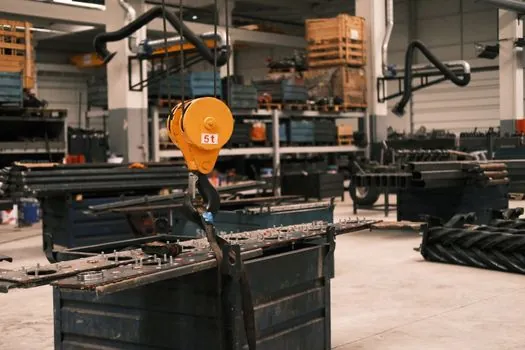
Under-spec'd chassis are the most common farm failure: a 3.5 ton machine asked to handle 4-ton silage clamps loads the front axle past its design point and accelerates tire wear on the herringbone pattern [S7][S1]. The 23.5-70-16 size is shared across classes, but operating weight per tire climbs from about 890 kg at 3.5 ton to 2,450 kg at 10.0 ton, so tire selection (pneumatic, semi-pneumatic, solid) needs to follow ground, not just class [S1][S2][S3][S4][S5].
Maintenance access is a second risk: 2WD farm forklifts save capital but recover poorly in mud, while 4WD units add a transfer case and front axle that need scheduled service, a recurring line item that should be priced before purchase [S6][S7]. Buyers comparing these machines should also confirm emissions tier (China-IV is the standard-fit baseline on the 36.8-103 kW engines) and that the 278-series two-speed gearbox is matched to the expected haul distance per shift [S1][S2][S3][S4][S5].
For farm buyers cross-shopping against conveyor and handling accessories, the engineering spec map for 2026 industrial builds is covered in ball screw selection for mining and linear guide selection for automotive production lines, useful when sizing the hydraulic side of a materials handling line. The next trackable signal is the 2026 emissions tier update for the 76-103 kW engine bracket, which would shift the 5.0-10.0 ton quoting window if China-IV options are retired mid-year.
Spec-level background on the components involved: pressure transmitter.