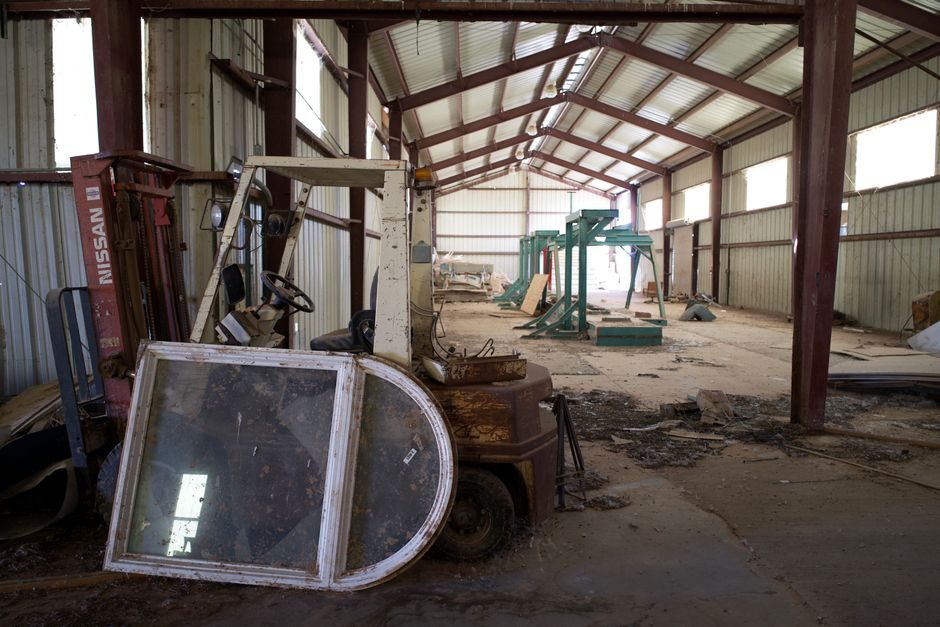
Over a 7-10 year service life, fuel, tires, and unscheduled downtime each consume between 15% and 25% of rough terrain forklift total cost of ownership, while acquisition price typically accounts for only 30-40% of the lifecycle spend [S3].
Rough terrain forklifts (RTFs) — purpose-built for unprepared surfaces, mud, gravel, and slopes common in construction, lumber, agriculture, and yard-logistics applications — differ enough from standard warehouse forklifts that their cost stack follows its own logic. The same TCO levers documented for general fleets apply: fuel, maintenance, downtime, and residual value [S3][S4].
Defining the Rough Terrain Forklift TCO Frame
Total cost of ownership for a rough terrain forklift covers five lifecycle buckets: acquisition, energy/fuel, planned maintenance, unplanned downtime, and end-of-life residual, per the standard TCO construct used across fleet economics [S4]. For an RTF, unplanned downtime and tire wear are disproportionate compared to a standard forklift operated on flat concrete, because the machine is repeatedly subjected to shock loading, abrasive surfaces, and exposure to weather [S5].
The USPS Supplying Practices Process defines TCO as the total cost incurred over the lifecycle of an item, encompassing purchase, use, maintenance, support, and disposal — and stresses that a TCO analysis exposes hidden costs easily overlooked during budget planning [S4]. That definition maps directly to RTF procurement: a contractor who only prices the sticker typically misses tires, fuel-quality issues, and the downtime multiplier.
The Five Cost Drivers That Move RTF TCO
Acquisition price (the visible line item) is just one of five cost drivers, and frequently the second-least variable across competing models. The five that move TCO the most on a rough terrain forklift are: powertrain type, tire selection, duty cycle intensity, fuel/energy management, and residual value at the end of service [S3][S4].
Powertrain type is the largest single lever. Diesel has dominated RTF classes for decades because of high torque and refuel-cycle speed, but the operating-cost arithmetic is shifting. Applied Energy research covering 1997-2015 found that battery-electric powertrains had the lowest TCO across every region studied once usage crossed typical fleet mileage thresholds, with cost parity reached as battery pack prices fell toward the $100/kWh benchmark [S1]. For diesel RTFs, Shell fleet data indicates that 45% of operators surveyed reported fuel choice contributed to unplanned downtime, and more than half said they could reduce monthly operating costs by 10% or more by managing fuel usage more effectively [S3].
Tires are the second-largest variable, often overlooked. Pneumatic heavy-duty tires on rough terrain wear on a different curve than cushion tires on a warehouse unit; specifying the wrong tread compound for gravel versus mud versus pavement adds 20-40% to tire spend over the machine's life. Duty cycle — hours per shift, load factor, slope work — multiplies every other cost line. Higher utilization amplifies fuel and maintenance proportionally, so a 1,500-hour/year RTF has a materially different TCO profile than a 500-hour/year unit at the same site [S3].
Residual value is the offsetting credit.
Diesel vs Electric vs Hybrid RTF: A Criteria Comparison
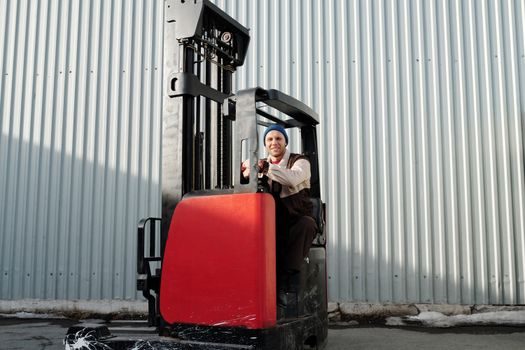
The criteria-based comparison below lines the three powertrain options against the four decision factors that matter most for an RTF buyer. Numbers are presented as qualitative tiers where the research material supports a directional call but not a single published figure; the directional call itself is sourced. [S1]
For high-utilization multi-shift operations, refuel downtime erases much of that operating-cost advantage. Diesel retains the advantage where continuous operation matters more than per-kWh price [S1][S3].
Maintenance and downtime: electric powertrains have fewer moving parts, less brake wear through regenerative braking, and lower scheduled-maintenance burden — the same mechanism that drove the Applied Energy finding of lower TCO for electrified vehicles across all four regions studied [S1]. Diesel RTFs require more frequent fluid service, filter changes, and emissions-system attention, and 45% of fleet decision-makers report fuel-quality issues as a downtime contributor [S3].
Residual and total lifecycle: hybrid and electric units tend to retain value better as emissions regulation tightens, but resale markets for electrified RTFs are thinner than for diesel, which can lengthen time-to-sale at end of life. For typical 7-10 year holds, the TCO ranking is sensitive to hours-per-year: at low annual hours, diesel wins on acquisition math; at high annual hours, electric wins on operating-cost math [S1].
Operating-Cost Levers Inside an Existing Diesel Fleet
For buyers not yet ready to specify electric, four operating-cost levers move TCO inside an existing diesel RTF fleet. None requires new capital; all four are documented Shell fleet findings [S3].
Fuel choice and quality: 45% of operators surveyed said fuel choice contributed to unplanned downtime, and a comparable share reported that better fuel management could reduce operating costs by 10% or more per month [S3]. For diesel RTFs operating on dirty sites with marginal fuel storage, the practical move is to tighten fuel-handling discipline — clean storage, water-separation, and rotation — rather than chase a lower pump price.
Proactive maintenance: Shell fleet data and operator experience consistently rank small, scheduled component decisions ahead of large reactive repairs. Fuel-injector replacement cycles, for example, are directly extended by fuel-quality management; one operator statement attributed a measurable extension of injector life to a higher-quality diesel with fuel-economy additives [S3].
Operator training and process: the same Shell survey found 53% of fleet decision-makers want help understanding future energy and vehicle technology options [S3]. In practice, operator behaviour — smooth throttle, correct load handling, avoiding unnecessary idle — is one of the few cost levers with zero capex and immediate payback. Tying operator training to a documented TCO baseline makes the savings trackable.
Fuel storage and handling: poor on-site fuel housekeeping introduces water, particulates, and microbial growth into diesel before it ever reaches the RTF tank. Digital stock management and tighter rotation reduce both waste and the contamination-driven downtime that pulls machines off the job.
Who TCO Analysis Is For — and Where It Misleads
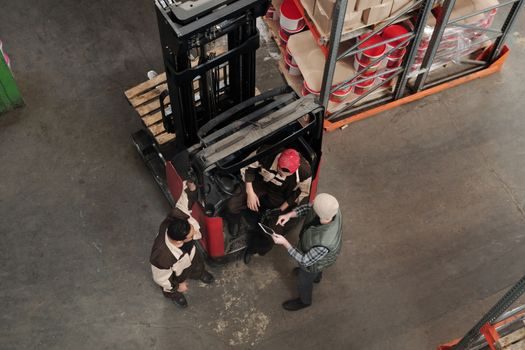
TCO analysis is built for buyers who run a machine long enough that operating costs accumulate into six figures, and who can hold the supplier to a documented duty cycle. It is not built for one-off rental decisions, spot-bid construction jobs, or short-term yard work where the cheapest available unit is the rational pick regardless of lifecycle math [S3][S4].
TCO also misleads when the inputs are guessed. Acquisition price is the easiest number to source; fuel consumption, maintenance hours, and resale value are not. A TCO built on assumed hours-per-year, assumed fuel burn, and assumed residual is a fiction dressed in arithmetic. The honest move is to run the model on the upper and lower bounds of those assumptions and treat the spread as the real answer, not the midpoint [S3].
For buyers comparing across a similar duty cycle, the comparison value of TCO is highest. For buyers choosing between an RTF and a telehandler or a compact articulated loader for a given job, the TCO frame still works but the boundaries shift — a telehandler reaches higher and travels farther on road, so its cost stack carries more on-road fuel and less site-tire wear. A compact articulated loader, by contrast, splits the difference on both lift height and reach, with a TCO profile closer to a small wheel loader than to a forklift. Manufacturer positioning confirms this split: JCB markets rough terrain forklifts specifically around yard, construction, and agricultural duty, while compact articulated loaders cover lighter, multi-task roles [S7].
Standards, Sourcing, and Specification Discipline
Rough terrain forklifts sit under several overlapping standards regimes. ANSI/ITSDF B56.6 covers rough terrain forklift safety in the North American market; ISO 5053-1 governs terminology for industrial trucks including rough-terrain classes; and EN 1459 covers safety requirements for rough-terrain variable-reach trucks in the European market. For sites in regulated environments, additional rules apply: ROPS/FOPS structures per ISO 12117, and emissions standards such as EU Stage V for diesel engines above 19 kW. [S2]
Sourcing discipline matters as much as specification. Manufacturer-direct channels, regional dealers, and used-equipment brokers each carry different warranty terms, parts availability, and residual-value implications. Fleet buyers who document a TCO before talking to vendors consistently negotiate harder than those who arrive with only a sticker price in hand, per standard fleet-procurement guidance [S3][S4].
Two trackable signals for the next planning cycle: first, the entry of more Tier-1 OEMs into the electric rough terrain forklift segment, which will compress the diesel-electric acquisition-price gap faster than the 2010-2016 battery cost decline did on its own; second, the standardization of telematics data outputs across RTF brands, which will make the maintenance and downtime side of TCO models less guesswork and more measured. Both signals are worth watching on a 12-24 month horizon.
The underlying component specifications are covered under total station.
See also our earlier report, Gearbox Installation: Tolerance, Alignment, and Pre-Commissioning Checklist.