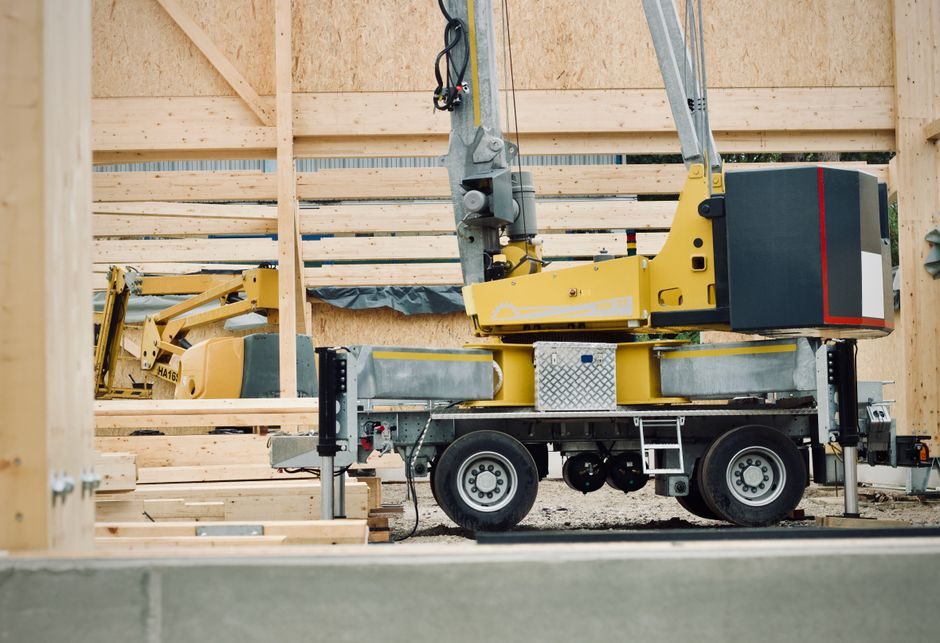
For working heights between 8 m and 30 m on firm ground, a truck-mounted aerial work platform is the default specification on European utility, telecom, and sign-installation contracts; above 30 m, or on soft subgrade, the same duty usually shifts to a tracked aerial work truck or a self-propelled boom lift on outriggers [S1].
The decision is rarely about "should we buy one" — it is about which sub-type matches the site: straight (telescopic) boom, articulated knuckle boom, vertical mast, or scissor, with working-height bands roughly 8–14 m, 12–25 m, 16–43 m, and 43 m+ respectively [S1].
Working-Height Bands and Reach Envelope
Standard truck-mounted platforms cover 8 m to 16 m of platform height, which captures the bulk of street-lighting, low-rise façade, and tree-work contracts; straight-boom telescopic units on 3.5–7.5 t chassis extend the band to 25 m, while articulated booms reach 43 m+ at the cost of a longer wheelbase and a stabiliser footprint of roughly 4.5 m × 4.5 m [S1].
Horizontal outreach at full platform height typically falls to 40–60 % of the rated working height on knuckle booms because of the boom geometry, so a unit rated 25 m vertically may only deliver 11–13 m of side reach with a 200 kg basket load [S1]. Scissor lifts are the exception: zero outreach at full height, which is why scissor platforms are specified for ceiling and atrium work rather than overhead-line work.
Chassis, Payload, and Stabiliser Footprint
An aerial work truck on a 3.5 t light-duty chassis (e.g. Transit, Sprinter, Daily) is road-legal without an HGV licence in most EU states when GVW stays under 3 500 kg, but platform height above roughly 14 m usually forces a 7.5 t or 11.99 t chassis, which crosses the HGV threshold in the UK and several EU jurisdictions [S1].
Outrigger spread is the second hard constraint: a 25 m knuckle boom needs at least four outriggers with a pad pressure below 5 t/m² to operate on asphalt, and below 2.5 t/m² on suspended slabs — values that frequently rule out use on multi-storey car park decks without load-spreader plates [S1]. For wider ground-bearing comparisons, the same load-spreader logic is documented in our guide on industrial coating installation substrate prep and climate windows, where pad-pressure limits and surface tolerance drive acceptance.
Power Source: Diesel, Electric, and Hybrid
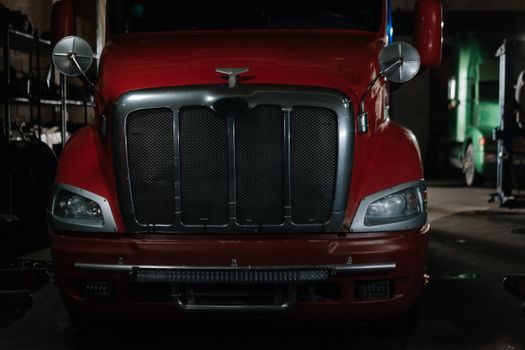
Diesel-powered boom lifts still dominate in outdoor telecom and transmission-line work because a 25 m unit runs an 8–10 hour shift on a single 60–80 L tank; battery-electric units typically deliver 4–6 hours of real work per charge on scissor lifts, dropping to 3–4 hours on articulated booms because of hydraulic pump draw [S1].
For indoor or emission-restricted sites (warehouses, food plants, city zero-emission zones), lithium-ion packs sized at 24 V / 400 Ah or 48 V / 600 Ah are now standard, with onboard chargers accepting 16–32 A CEE plugs and a full recharge in 6–8 hours; the trade-off is roughly 600–900 kg of added battery mass, which reduces the residual payload available for the basket and outrigger ballast [S1].
Mobility vs Scaffolding: Where It Pays Back
Versus traditional tube-and-fitting scaffolding, an aerial work platform typically sets up in 5–10 minutes versus a half-day for a 14 m scaffold tower, and the unit cost is recovered inside 6–12 months on any contract that needs the same working height at more than 30 different points [S1].
On multi-trade sites, a single platform can serve mechanical, electrical, fire-sprinkler, and finishing crews sequentially — a model that mirrors the efficiency logic behind climbing formwork TCO and re-use spreads, where one piece of equipment serves multiple work packages and amortises across cycles.
Hard Limitations and Failure Modes
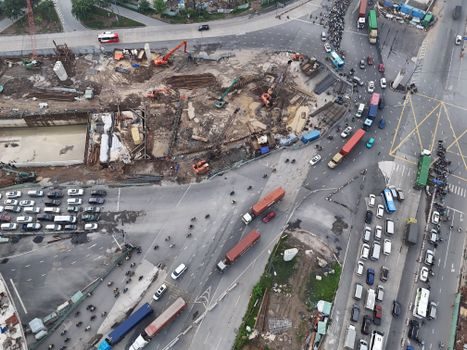
Wind is the first hard limit: most platforms above 20 m derate or shut down at 12.5 m/s (45 km/h) sustained wind, while EN 280:2022 specifies a maximum allowable wind speed of 12.5 m/s for outdoor operation unless the OEM publishes a higher figure verified by type test [S1].
Ground-bearing pressure is the second: outriggers on soft ground need load-spreader plates of 0.6 m × 0.6 m minimum on 25 m units, otherwise bearing pressure exceeds 5 t/m² and the pad sinks — a common cause of overturned platforms on construction sites [S1]. Slope is the third: most chassis-mounted platforms are limited to 5° (≈ 8.7 %) chassis levelling when the booms are stowed, and to 0–1° with the boom deployed unless the unit is fitted with a full self-levelling outrigger system. For a related trade-off map on stabiliser-type acceptance bands, see slewing ring bearing bolt-up and run-out acceptance.
Operator Certification and Site Constraints
EN 280:2022 (Mobile Elevating Work Platforms — Design, Calculations, Safety Requirements and Test Methods) is the governing European standard for design and type-test; operator training falls under ISO 18878 / national IPAF or equivalent certification, which is mandatory in most EU member states and the UK for any powered platform above 2 m of platform height [S1].
Daily pre-use checks cover stabiliser deployment, limit-switch function, overload cut-out, and emergency lowering; a documented defect on any of these four items takes the unit out of service, and the average annual compliance cost on a mid-size fleet (10–25 units) runs 3–5 % of acquisition value — a recurring burden that mirrors the operating-cost ratios seen on concrete batching plant spec-driven pros and cons.
Selection Criteria Comparison: Scissor vs Telescopic vs Articulated
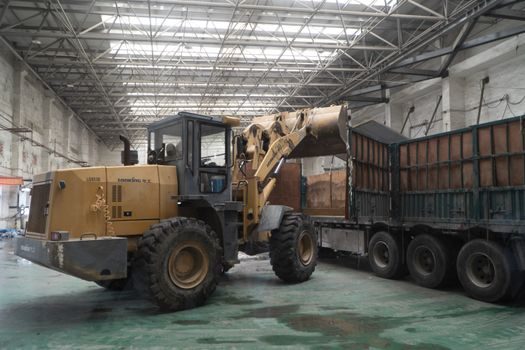
On a four-criteria decision matrix — platform height, horizontal outreach, indoor usability, and unit cost — scissor lifts win indoors below 14 m at the lowest cost, telescopic booms win on outreach above 20 m on open ground, and articulated knuckle booms win on congested sites where the boom must "up-and-over" obstacles [S1].
The trade-off structure — multiple sub-types lined up against a fixed set of decision criteria — is the same engineering decision pattern used in ceramic bearing advantages and disadvantages and stretcher advantages and disadvantages, where the right pick depends on the duty cycle, not the headline number.
Who an Aerial Work Truck Is For — and Who It Is Not
The unit is for: utility crews, telecom riggers, sign installers, arborists, and façade contractors who need repeated repositioning across 5–50 work points per shift on hard, level ground with verified bearing capacity [S1].
The unit is not for: confined indoor aisles below 4 m where a vertical mast or a small scissor is a better fit, soft or unmade ground where a tracked spider lift is mandatory, or chemical/ATEX-rated environments where only certified non-sparking booms are acceptable — for which the typical aerial work truck is not approved. Buyers who need a single platform to cover all three regimes usually end up with two or three specialised units rather than one compromise.
Trackable signals to watch over the next 6–12 months: EN 280:2022 type-test data sheets published by major OEMs after the 2022 revision's transition window closes, and city-level zero-emission zone (ZEZ) rules in London, Amsterdam, and several German cities that push diesel boom lifts into hybrid or full-electric replacements on inner-city contracts [S1].
Detailed specification references: dump truck.