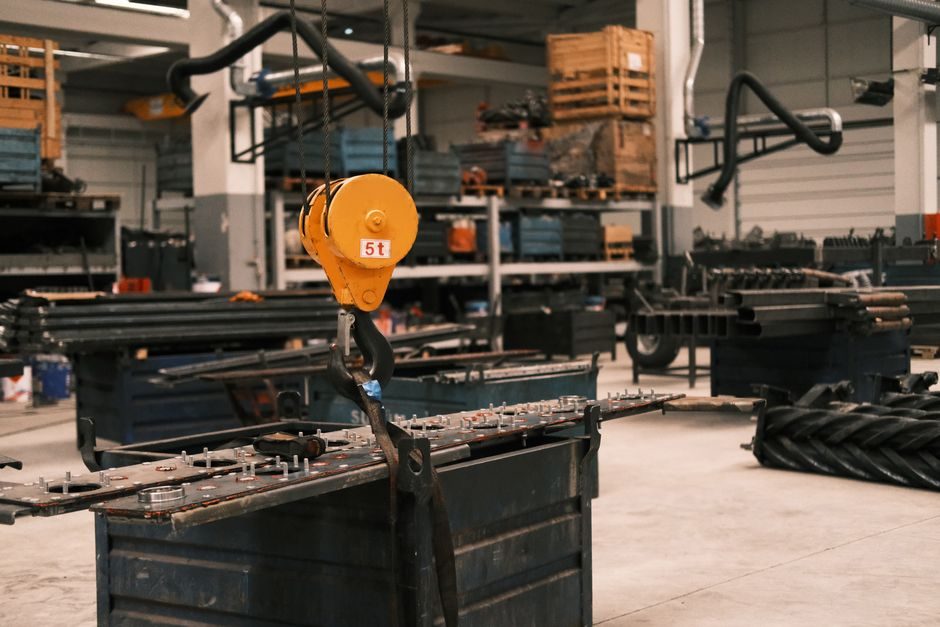
Current OEM lineups split rough terrain forklifts into three drivetrain families — diesel-powered XF/X Series, high-voltage lithium XH Series, and telehandler variants — with load capacities from 1,500 kg up to 10,000 kg and lift heights from 2,700 mm to 7,000 mm on standard mast configurations [S3].
Application spread covers construction sites, tree-care operations, dairy farming, apiaries, orchards, ports, and forestry/logistics yards, with compact articulated loaders targeting sub-2 t niches that full-size rough terrain forklifts cannot reach economically [S1][S2].
Drivetrain and Capacity Segmentation Across 2026 OEM Lineups
Rough terrain forklifts segment cleanly by powertrain and load class: Hangcha's XF Series covers diesel 1.5–1.8 t (3,000–6,000 mm lift), 2.5–3.5 t (2,700–6,500 mm lift), and 5.0–10.0 t (3,000–7,000 mm lift), while the XH Series high-voltage line runs 1,500–3,500 kg at 3,000–6,000 mm lift height [S3].
For a buyer mapping requirements to a rough terrain forklift, the first gate is load class: sub-2 t handles nursery, landscaping, and beekeeping work; 2.5–3.5 t is the construction and masonry sweet spot; 5–10 t moves pallets of aggregate, timber, and steel on unprepared ground [S3]. Harlo's North American line brackets the same envelope — HP5000 (5,000 lb), HP6500, HP8500, 10-FIVE (10,500 lb), and 12-FIVE — confirming the 2.3–5.7 t band is where most North American demand concentrates [S4].
Standard Forklift vs Rough Terrain vs Telehandler: When Each Fits
A standard forklift is engineered for flat, sealed warehouse floors with pneumatic or cushion tyres; a rough terrain forklift adds four-wheel drive, higher ground clearance, heavier mast structures, and load-restraint features to survive mud, gravel, and 8–15% grade ramps that would stall an indoor unit [S2].
JCB frames the difference directly: rough terrain units are "specifically designed to work outdoors, often on uneven surfaces, as opposed to those used inside a factory or warehouse" [S2]. When lift height exceeds roughly 6 m and the work pattern is reach-and-place rather than pallet-to-pallet, the telehandler takes over — Hangcha's X Series diesel telehandler delivers 4,000 kg at up to 17,700 mm lift height, and the XH high-voltage telehandler variant offers 2,500–3,500 kg at 0–9,800 mm [S3]. The decision rule is straightforward: under 6 m lift on broken ground, choose a rough terrain forklift; over 6 m or where forward reach matters, choose a telehandler.
Site-Class Matching: Construction, Agriculture, and Specialised Niches
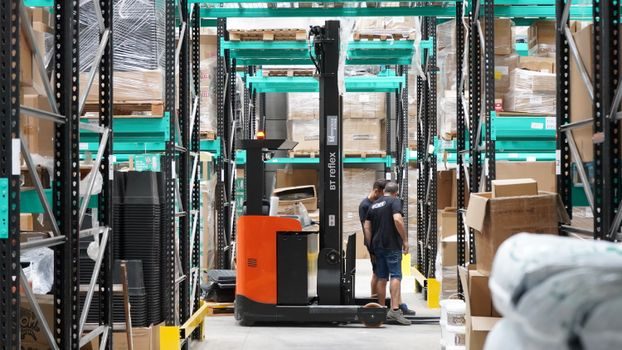
Construction and infrastructure sites — the historical core market — demand 2.5–3.5 t rough terrain units with 4WD, oscillating axles, and enclosed cabs, which is exactly the JCB 926/930/940 envelope marketed for "any challenging rehandling environment" [S2].
Agriculture and horticulture split into narrower sub-niches. Hummerbee positions compact articulated loaders for construction, tree care, landscaping, and dairy farming, while its rough terrain forklifts are engineered for apiary and orchard work where ground compaction and manoeuvrability between rows matter [S1]. Ports, terminals, and timber yards — segments where Hangcha explicitly lists its rough terrain models under "Forestry/Wood" and "Ports/Terminals" industry solutions — typically require 5–10 t capacity with 3,000–7,000 mm lift to handle palletised bagged goods, lumber packs, and container-side buffering [S3]. The same equipment gates — capacity, lift, ground-condition rating, and drivetrain — that govern a pallet jack procurement also apply at the rough terrain end, just scaled up by an order of magnitude in mass and cost.
Selection Criteria: Six Gates Before You Specify
Six gates consistently separate a sound rough terrain forklift purchase from an expensive mis-spec: (1) maximum load per shift cycle, (2) maximum lift height to the top working row, (3) typical ground profile and maximum sustained grade, (4) drivetrain — diesel, LPG, or high-voltage lithium — driven by emissions and indoor-outdoor mix, (5) tyre and axle package for the worst expected surface, and (6) attachment interface for forks, buckets, clamps, or jibs [S2][S3].
On gate 4, the appearance of dedicated high-voltage lithium XH Series products in the 1,500–3,500 kg band signals a real shift: indoor-outdoor sites with emission rules — covered markets, food/pharma cross-docks, municipal yards — now have an electric option that retains the 3,000–6,000 mm lift envelope of its diesel XF sibling [S3]. On gate 1, the 5,000–10,000 kg XF class is the right answer for aggregate, timber, and steel-pallet work; the 1.5–3.5 t class fits masonry, packaged goods, and most agricultural pallet work; sub-1.5 t is compact-loader territory and outside the rough terrain forklift category [S1][S3][S4].
Limitations, Failure Modes, and Operator Considerations
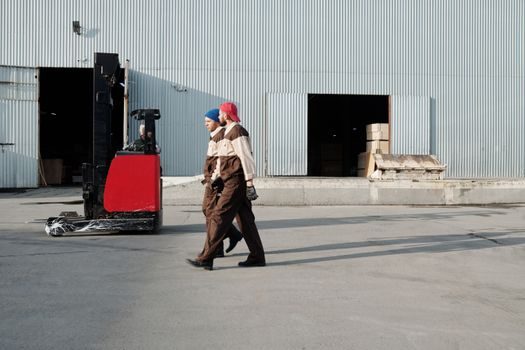
Rough terrain forklifts trade top speed and fuel economy for ground capability, so they underperform standard forklifts on smooth concrete over any distance — a 2.5 t rough terrain unit typically tops out below 25 km/h where a comparable diesel warehouse forklift will cruise at 30+ km/h, and that gap widens on long yard loops [S2].
Operator certification and load-chart discipline are non-negotiable: rough terrain units are more sensitive to load-centre shifts on uneven ground, and a load that is in spec on flat concrete can become unstable on a 10% slope with a raised load. Telehandler variants extend the failure surface — the X Series diesel telehandler at 17,700 mm lift height demands strict adherence to the load-moment diagram, and any side-load or dynamic slewing outside the chart can flip the machine. For specialised narrow-track work in apiaries, orchards, or between tree rows, neither a full rough terrain forklift nor a telehandler fits; this is where compact articulated loaders from makers such as Hummerbee — with their short wheelbase and tight steering geometry — become the correct tool rather than a rough terrain forklift [S1].
Sourcing Channels and Vendor Landscape in 2026
Three sourcing patterns dominate the 2026 rough terrain forklift market: Western OEMs with full dealer and service networks (JCB, Harlo), Chinese OEM lines distributed through European subsidiaries (Hangcha Europe), and North American niche builders focused on compact articulated loaders for specific industries (Hummerbee) [S1][S2][S3][S4].
JCB markets rough terrain forklifts as part of a broader construction-machinery range that includes telehandlers, backhoe loaders, and skid steers, so a buyer specifying a JCB unit can fold it into a multi-machine fleet service contract [S2]. Hangcha's European catalog lists five distinct rough terrain variants — three XF diesel classes, XH high-voltage forklift, XH high-voltage telehandler, and X Series diesel telehandler — giving a single-vendor path from 1,500 kg compact units to 10,000 kg heavy-class and 17,700 mm-reach telehandlers [S3]. For procurement teams, the practical decision is whether to standardise on one of these OEM lineups for fleet uniformity, or to mix specialist brands (Harlo heavy-class, Hummerbee compact) for application-specific fit [S1][S4]. Comparable product procurement logic applies across adjacent industrial lines — see, for example, how order picker selection follows a similar capacity-and-aisle gate structure.
Trackable signals worth watching through the rest of 2026: high-voltage lithium variants expanding into the 5–10 t heavy class (Hangcha's XH line is currently capped at 3,500 kg, leaving the upper XF diesel range as the only option above that), and telehandler-reach envelopes creeping past 18,000 mm on diesel platforms [S3].
Spec-level background on the components involved: pressure transmitter.