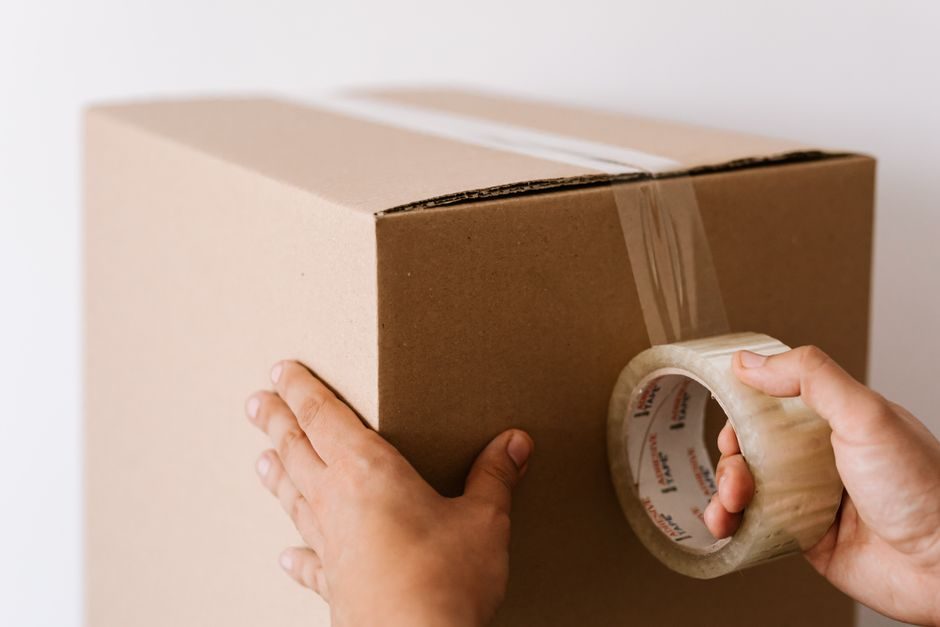
Stretch film and strapping band are the two dominant unit-load securing methods in 2026 packaging lines, and the decision between them is governed by load rigidity rather than cost. A 2026-05-31 DirectIndustry listing shows integrated stretch-wrapper-with-strapper systems such as the Signode XYZ CoilMaster rotary-ring unit, confirming that high-end lines now combine both technologies on a single pallet rather than treating them as alternatives [S1].
Both consumables sit inside a wider securing-and-stabilising workflow alongside strapping machines and pallet wrappers. For European blown-film supply, Northern-European extruders such as Uni-Wrap A/S (operating since 1981) ship cast and blown LLDPE stretch film in gauges typically specified between 12 µm and 30 µm, while Asian suppliers including Credit (Tianjin) Packaging Material Co. Ltd., established 2019-07-24, list stretch film, PVC cling film, and shrink film as parallel product families [S4][S6].
Definition and Operating Principle
Stretch film is a polyolefin web (predominantly LLDPE, occasionally LDPE or mLLDPE metallocene blends) that secures a load through elastic recovery and cling, not mechanical lock-up [S6]. Typical pre-stretch ratios on power-pre-stretch wrappers run 200–300%, with film gauges from roughly 12 µm for light hand-wrap up to 23–30 µm for machine-grade pallet wrap. Strapping band, by contrast, is a semi-rigid extruded strip in PP (polypropylene) or PET (polyester) that holds a load by tensile rigidity and a sealed joint, typically applied at 200–400 N strap tension on a pallet and tensioned by a strapping machine [S2][S3].
The two technologies differ in failure mode. A stretched film only fails when cut, punctured, or when the load shifts enough to exceed the film's elastic limit, after which recovery still holds residual tension. A strap fails abruptly at the joint or buckle when shock load exceeds its tensile rating, which is why PET strapping is rated in the 200–450 kg break-load range for the common 12–19 mm widths and PP sits lower at roughly 100–250 kg for the same dimensions.
Decision Criteria: Load Rigidity, Transit Hazard, and Throughput
The dominant selection criterion is load rigidity. Uniform, pallet-sized, compression-tolerant goods (cartons, bagged product, bottled water) are the textbook fit for stretch film because the film's elastic memory conforms to slight load settling. Irregular, hard-edged, high-density, or shift-prone loads (coiled steel, bricks, lumber, machined parts) are the textbook fit for strapping, where the rigid band resists both lateral shift and vertical expansion [S1][S2].
Trans hazard is the second filter. Long-haul truck, container, or export shipments benefit from edge protectors and corner boards under stretch film, and often a top sheet, because film puncture is the leading in-transit failure. Strap is more puncture-tolerant but is sensitive to UV and to heat (PET softens near 80 °C; PP near 100 °C), so heated-container or outdoor storage loads need film or a film-strap hybrid. A four-strapped coil on a wooden skid wrapped in 23 µm film, then stretch-hooded, is the typical heavy-industry pattern visible in the XYZ CoilMaster configuration [S1].
Throughput is the third filter. A semi-automatic stretch film machine cycles 30–60 loads per hour, a fully automatic rotary-ring wrapper 80–150 loads per hour, and an automatic strapper alone 15–25 cycles per minute. Lines that exceed roughly 80 loads per hour on uniform pallets almost always pick film-first automation, while lines with mixed load types justify a strap-and-wrap combination [S1][S5].
Criteria-Based Comparison: Stretch Film vs Strapping Band

For procurement engineers, four decision criteria lay the technologies side by side. On load-fit, film suits uniform compressible pallets while strap suits rigid or shift-prone loads. On equipment cost, a hand-roll stretch wrapper is one to two orders of magnitude cheaper than a powered stretch wrapper, and a manual strapping band tool likewise sits well below an automatic strapper, though automatic strappers and rotary-ring wrappers are in the same five-figure capital band. On consumable cost per pallet, hand-applied stretch film typically lands at roughly USD 0.30–0.80 per pallet at 2026 LLDPE resin levels, while PP strapping sits near USD 0.05–0.15 per strap and PET near USD 0.10–0.25 per strap, depending on width and core size. On failure mode, film degrades gradually (puncture, tear propagation) while strap fails abruptly at the seal or buckle when tensile rating is exceeded. [S1]
A second axis is sustainability and recyclability. Mono-material LLDPE stretch film is widely recyclable in PE streams where collection exists, but most pallet wrap is still multi-layer LLDPE/EVA or mLLDPE blend to deliver cling and pre-stretch, which complicates sorting. PP and PET strapping are both theoretically recyclable into their respective resin streams, but real-world recovery is limited by contamination with seals, buckles, and paper corner board.
Who Should Use Stretch Film — and Who Should Not
Stretch film is the right call for distribution centres shipping uniform cartons, bagged chemicals, food and beverage cases, and e-commerce parcels where the load is light to medium and edge damage is the main risk. It is the wrong call for loose coils, bricks, or any unit where individual items can shift inside the pallet footprint, because the elastic film cannot prevent internal rearrangement — it only holds the outer envelope [S6].
Operations with no capital budget, no compressed-air supply, and low throughput (under 20 loads per day) should stay on hand-grade film with a 17–20 µm gauge, dispensed from a hand-roll carriage. Operations that must validate load restraint to ASTM D4169 or EUMOS 40501 transit-test protocols are better served by machine-grade pre-stretched film applied on a powered pre-stretch carriage, where the pre-stretch ratio is locked and auditable.
Who Should Use Strapping Band — and Who Should Not

Strapping is the right call for rigid unit loads: steel coils, aluminium ingots, bricks, lumber bundles, paper reels, and palletised bricks or tiles that need positive compression and edge protection. It is also the right call for closure reinforcement on corrugated export boxes and for bundling long extrusions (pipe, tube, timber) where the strap runs perpendicular to the long axis [S2][S3].
Strapping is the wrong call for soft, compressible, or settling loads, because the rigid strap will slack within hours as the load compresses, leaving a loose band that no longer contributes restraint. It is also the wrong call when operators cannot be trained to handle strap tension safely — a snapped strap at 200–400 N tension is a documented laceration hazard, which is why automatic strappers with enclosed strap paths are specified wherever the cycle count justifies the capital.
Hybrid Systems and Real Use Cases
Heavy industrial lines increasingly use both. A 2026-05-31 Signode product listing describes a rotary-ring stretch wrapper with integrated strapping head for coil product, the XYZ CoilMaster, signalling that coil-handling lines no longer treat film and strap as a binary choice [S1]. A second common pattern is corrugated-box closure, where two or three PET straps are heat-sealed across the box flutes before the case is palletised and stretch-wrapped for transit, combining strap's rigidity (box integrity) with film's puncture resistance (transit hazard) [S3].
Reference buying guidance for stretch-film selection — resin family, gauge, pre-stretch, and pallet fit — is covered in the Stretch Film Buying Guide 2026; the strapping-side details for joint type, tension setting, and seal audit are documented under the strapping band and strapping machine reference pages. For lines that have already decided on film-only securing, the next hardware decision is covered in a separate spec cut on stretch film vs strapping band.
Limitations, Failure Modes, and Sourcing Constraints
Both technologies have well-documented failure modes that should be written into any spec. Stretch film fails by puncture at corners (mitigated by edge protectors), by tension relaxation at elevated temperature (mitigated by 23 µm or thicker gauge and lower pre-stretch), and by cling loss on dusty or cold surfaces (mitigated by tackifier-loaded inner cling layer or by switching to a blown film with higher surface tack) [S6]. Strapping fails at the heat-seal joint on PP (typical seal strength 60–75% of parent strap tensile), at the weld on PET (typical 80–90%), and at corrosion of metal buckles in marine export service.
Sourcing constraints in mid-2026 centre on PET resin price volatility linked to feedstock paraxylene, and on LLDPE film supply from a small number of Northern-European blown-film extruders — Uni-Wrap A/S, founded 1981, is one of the long-established Danish suppliers serving Northern Europe, and Chinese export supply from Credit (Tianjin) and similar producers adds parallel capacity [S4][S6]. Quality vetting on a stretch-film order should confirm gauge tolerance (±5% is achievable, ±10% is common on hand-grade), width tolerance, cling retention after 30 days at 30 °C, and Dart Drop impact; on a strapping order, confirm break-load, joint efficiency, elongation at break, and coil length per 20 kg core [S2][S3].
The next trackable signal is the revision status of ASTM D4649 (stretch film palletisation test) and the EUMOS 40501 road-transport load-restraint standard, both of which procurement teams should monitor for any change to the 0.5 g deceleration acceptance threshold for unit-load testing.