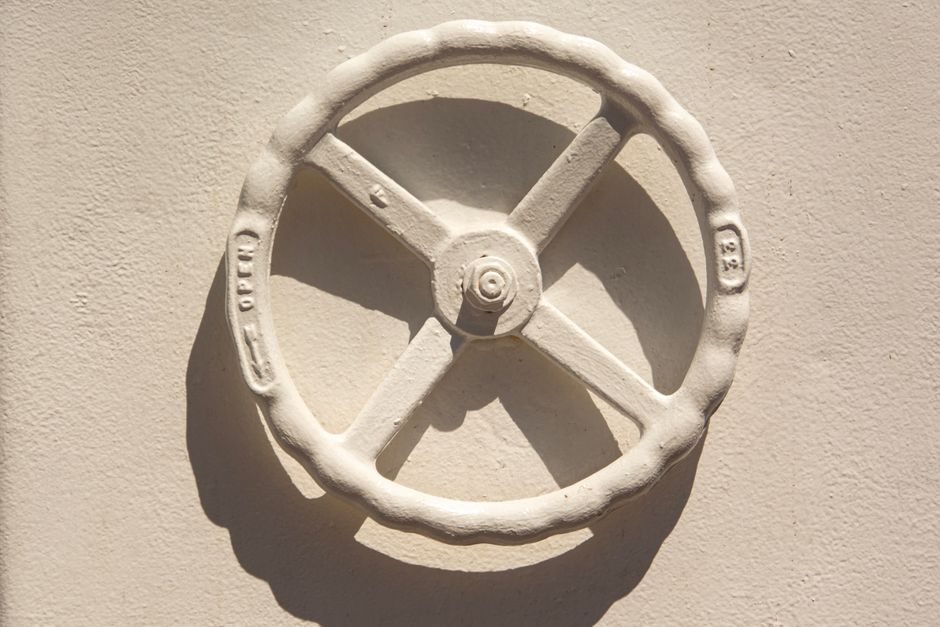
Swing check valves in 2026 are sold across DN1–DN28 (1–28 in) sizes, with wafer, flanged, threaded, and butt-weld ends all commercially stocked — the cheapest trade-platform MOQ is 10 pieces at roughly US$30 from Shanghai-based suppliers, while flange-end swing checks are quoted FOB China for water/oil/gas service [S3][S5][S6].
Selection is dominated by three OEM-visible variants on the 2026 industrial market: a wafer-pattern plastic body (Praher, EPDM seal), a butt-weld exhaust raincap with precision-balanced vane and Zytel®-fitted silencer (Mercury Products, 1–28 in, zinc/chrome/SS finish), and a flanged water/oil/gas pattern from KOKO and comparable Chinese OEM groups [S1][S2][S4]. The category overlaps with the broader check valve family, but the swing geometry has its own application envelope.
What a swing check valve is — and where it differs from a spring check
A swing check uses a hinged disc that swings open under forward flow and closes by gravity (often assisted by a lever-and-weight, air cushion, or air cylinder on process lines) when forward velocity decays — that is the geometric reason it is the dominant choice for large-bore, low-velocity liquid service rather than pulsating pump discharge [S6]. The sister type, the spring-loaded (axial) check, is what most 2026 Made-in-China catalog listings under H71 / H71W / H74 actually describe: full-bore, gas/water/oil, 1-inch male/female thread, stainless or carbon steel body [S3]. When buying, treat the swing and spring types as two distinct products: a swing is gravity-closed and orientation-sensitive (horizontal or vertical-up flow only); a spring check is orientation-agnostic and survives pulsating flow. A swing check valve specified on a vertical-down line will not seal under its own weight and must be re-engineered.
Swing checks are almost always specified against an upstream ball valve or balancing valve in a plant; pairing the wrong seat elastomer with the upstream fluid is the single most common 2026 specification error seen in RFQs from new buyers.
Body style and end connection — wafer, flange, threaded, butt-weld
Four end-connection families are live on 2026 B2B catalogs. Wafer-pattern plastic bodies with EPDM seals are stocked for chemical service by Praher Plastics Austria [S1]. Flange-end swing checks for water/oil/gas are the most-quoted China-OEM pattern, with TT or LC payment and 1-piece MOQ on Okorder [S5]. Threaded 1-inch male/female swing checks in stainless or carbon steel sit in the spring-check family H71/H71W/H74 [S3]. Butt-weld exhaust raincaps span 1–28 in for heavy-duty exhaust systems, with welded lids, lubricated metal bushings, and finishes in zinc plating, polished chrome, paint, or stainless steel [S2].
Selection rule used by 2026 process engineers: wafer pattern for chemical service and short face-to-face dimensions; flanged for easy removal on water/oil/gas mains; threaded for low-pressure instrument and skid work; butt-weld for exhaust and raincap duty. The face-to-face dimension of wafer swing checks conforms to common industry tables — buy a 150# wafer pattern only if the mating flanges are also 150# class, otherwise the seat will not centre.
Materials, seat elastomers and pressure-temperature envelope
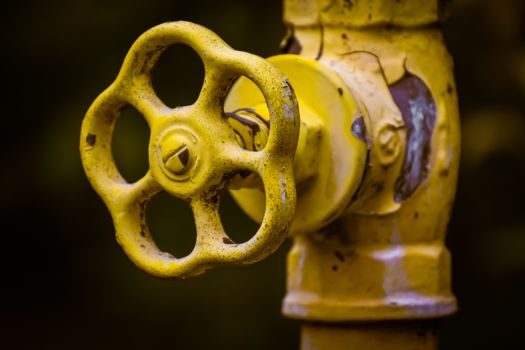
Body material options visible in 2026 catalogs split into three camps. Metallic bodies in WCB carbon steel and CF8/CF8M (304/316) stainless cover the bulk of water, oil, gas and steam duty [S3][S4][S5]. Plastic bodies in PVC, PP and PVDF are stocked as wafer-pattern units for corrosive chemical service, almost always with EPDM as the standard seal [S1]. Exhaust/raincap duty is dominated by zinc-plated or polished-chrome carbon steel, with stainless as an upcharge option [S2].
Seat and disc pairings follow media: EPDM for water, dilute acids and alcohols (max service temperature typically below steam envelope); NBR (Nitrile) for hydrocarbons and oils; FKM/Viton for higher-temperature hydrocarbons; metal-to-metal for steam and high-temperature service above the elastomer ceiling. 2026 trade catalogs show EPDM and NBR as the default stocked seals, with FKM and metal-seat as quoted options on the same SKU [S1][S3]. A 2026 buyer should map the fluid first, then the seat, then the body — not the reverse.
Selection criteria by application — 2026 decision matrix
Four decision criteria separate the four 2026 variants on offer. Body style: wafer for chemical and compact face-to-face, flanged for utility and ease of maintenance, threaded for instrument and skid, butt-weld for exhaust/raincap. Material: plastic/PVC for corrosive chemicals at moderate pressure, WCB carbon steel for water/oil/gas on a budget, 316SS for corrosive or hygienic service, zinc/chrome-plated CS for exhaust. Seat: EPDM for water and dilute chemicals, NBR for oils, metal for steam and high temperature. Size range: 1–28 in spans the full exhaust/raincap envelope [S2], 1-inch threaded is the catalog spring-check baseline [S3], wafer plastic is typically 2–8 in on Praher stock [S1], and flanged swing checks span the full utility range to ANSI 150# / 300# class.
The buyer who needs a versatile water/oil/gas check at low cost and easy maintenance should specify a flanged swing check in WCB with NBR seat. The buyer who needs a chemical-service check at compact face-to-face should specify a wafer pattern in PP/PVC with EPDM. The buyer who needs an exhaust raincap with silencer should specify a 1–28 in butt-weld unit in zinc or stainless. A side-by-side comparison of the four: Flanged WCB/NBR — low cost, easy maintenance, 150#/300#, water/oil/gas; Wafer PP/PVC/EPDM — compact, corrosion-resistant, chemical service, limited temperature; Threaded SS/H71 — full-bore, instrument/skid, 1-inch, gas/water/oil; Butt-weld exhaust — 1–28 in, raincap, silencer option, atmospheric/exhaust service.
Who a swing check is for — and who it is not for
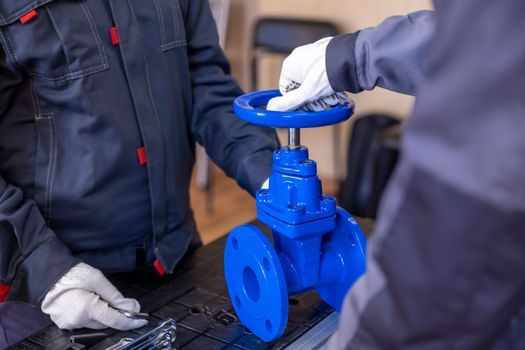
Swing check valves are for: large-bore horizontal liquid lines (cooling water, firewater, raw water, crude), low-pulsation discharge of centrifugal pumps, vertical-up flow service, and atmospheric exhaust with raincap duty. They are NOT for: vertical-down flow (disc will not close under gravity), high-pulsation reciprocating pump discharge (use a swing check valve with lever-and-weight, air cushion or air cylinder assist — these assisted variants are stocked as separate SKUs on 2026 catalogs) [S6], dirty slurries without a strainer upstream, steam service above the elastomer ceiling (use metal-to-metal seat), and any application where water hammer on closure is unacceptable. A 2026 buyer specifying a swing check on a vertical-down line, or on a reciprocating pump without a cushion option, is specifying for a rework.
Sourcing in 2026 — MOQ, price bands, lead-time levers
The 2026 trade landscape for swing check valves is dominated by Chinese OEM groups (KOKO and similar) and one visible European plastic-body specialist (Praher) [S1][S4]. The lowest MOQ on Made-in-China for swing/swing-assisted variants is 10 pieces at roughly US$30 FOB Shanghai, with 20,000-piece monthly production capacity quoted on the same supplier [S6]. Flange-end swing checks for water/oil/gas are quoted on Okorder at 1-piece MOQ against an unspecified FOB price with TT or LC payment [S5]. Spring check equivalents (H71 / H71W / H74) sit in the same search result cluster at comparable trade pricing [S3].
Three concrete 2026 sourcing levers: (1) negotiate MOQ down by accepting standard WCB + NBR build rather than exotic 316SS + FKM; (2) bundle the swing check purchase with a ball valve or balancing valve RFQ to lift volume; (3) confirm the 150# vs 300# class at the RFQ stage, since face-to-face dimensions differ and the wrong class produces a non-seating seat. Buyers comparing Q3 2026 quotes should also note that parallel capital-equipment categories — like the Industrial Ethernet Switch 2026 Buying Guide: Port Count, PoE, DIN-Rail and EN 50155 sourcing cycle — move on similar LC/TT payment terms, so a single combined PO can compress the negotiation window on the valve side.
Installation, maintenance and failure modes
Failure modes documented across the 2026 catalog cluster: disc hinge pin wear on exhaust raincap service (mitigated by the lubricated metal bushing on Mercury Products builds [S2]); seat erosion on water/oil service with particulate (mitigated by a linear guide-style upstream strainer); water hammer on pump discharge (mitigated by lever-and-weight or air-cushion assisted variants [S6]); and seat cold-flow on plastic wafer bodies (mitigated by staying inside the EPDM temperature envelope) [S1]. Field maintenance on flanged patterns is faster than on threaded because the disc and seat can be accessed without cutting the line — a 2026 buyer should factor this into the lifecycle cost, not just the FOB price.
For 2026 specification discipline, the buyer should require: ASME B16.10 face-to-face, ASME B16.5 flanges (or EN 1092-1 for European chemical service), ASME B16.34 valve design and inspection, and a seat material test certificate traceable to the heat number. Independent of those dimensional standards, the buyer should also map the swing check to its crossed-roller guide-style alignment with the upstream strainer and the downstream isolation valve — a swing check that is not aligned with a strainer and an isolation valve cannot be maintained in service.
The next trackable node is the Q3 2026 China-OEM price refresh: as of 2026-05 to 2026-06, swing and spring check listings on Made-in-China, Okorder and direct OEM sites are being updated with raw-material surcharge clauses tied to nickel and copper indices, so any 2026 swing check RFQ older than 60 days should be re-issued against the current surcharge sheet [S3][S4][S5][S6].