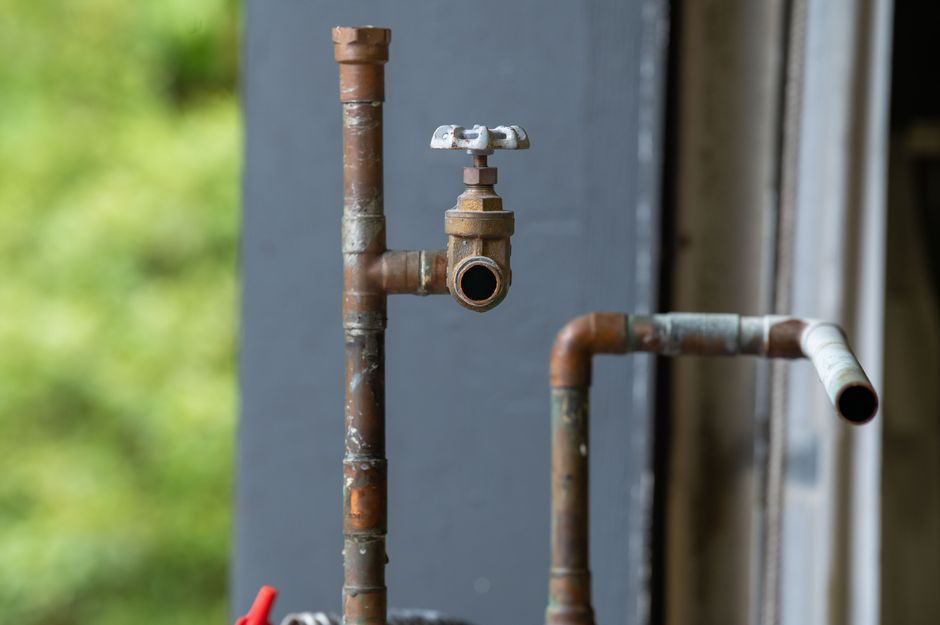
For a temperature-limited system, the control valve is the modulating workhorse that holds the process on setpoint, and the safety relief valve is the passive overpressure / over-temperature guard sized to API 520 / API 521 / ASME Section VIII requirements that opens only when the controlled variable exceeds a fixed certified limit [S4].
Stainless-steel safety relief valves stocked for water, steam and air service cover DN15–DN65 at 1–12.5 bar and −20 to 195 °C in gunmetal or stainless bodies [S2]. A pilot-operated variant adds a remote-control / unloading drain port, used specifically to protect downstream pumps and control valves from over-pressure transients [S1].
Functional split: modulation vs overpressure protection
A control valve is a powered, continuously variable throttling device that receives a 4–20 mA / digital position command from the process controller, and its job is to keep the measured variable at setpoint, which in temperature-limited service usually means trimming coolant, fuel or steam flow [S3].
A safety relief valve is spring-loaded (or pilot-operated) and self-actuating: it stays fully closed during normal operation and pops at a fixed inlet pressure, certified to ASME Section VIII. It has no modulation band and is not a regulating element, which is why the same site can carry both a Pacific Industrial Service control-valve line and a separate safety-relief-valve line as two distinct product categories [S3].
Where each type is specified in temperature-limited service
Spring-loaded safety relief valves are the default on fired heaters, steam boilers, and any pressure vessel where a blocked-outlet or runaway-heating fault must be vented; the Masoneilan / Consolidated reference frames them as the basic overpressure device, with a fixed set pressure and a sized orifice [S4]. The Kromschröder VSBV, for example, is set with an adjustable opening range of 20–500 mbar (8" WC to 8.0 psig) and is specified alongside the JSAV shut-off to prevent nuisance trips on short pressure spikes in gas-burner control systems [S5].
A control valve is specified wherever the design intent is to <em>avoid</em> reaching that relief setpoint in the first place — e.g. a three-way mixing valve trimming the heat-exchanger outlet temperature, or a fuel-gas block valve trimming burner firing rate. The Pacific Industrial Service catalog lists control valves as their own repair-and-replacement line, separate from pressure-relief-valve servicing [S3].
Decision criteria: which device to put on a temperature-limited line
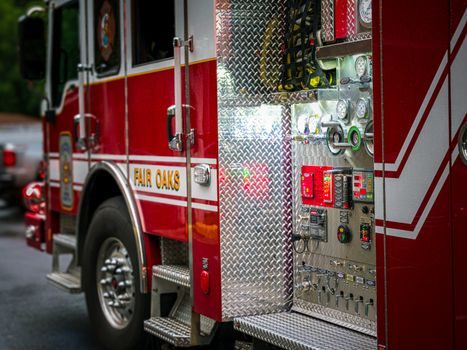
Pick a safety relief valve when (1) a code-mandated overpressure or over-temperature protection device is required, (2) the device must fail open without power, and (3) it only has to act occasionally and at a single setpoint — e.g. NABIC gunmetal or stainless units in DN15–DN65 at 1–12.5 bar for hot water, steam and compressed air [S2].
Pick a control valve when (1) tight, continuous temperature control is required, (2) a process variable must be trimmed against a moving setpoint, and (3) actuation energy (pneumatic / electric / hydraulic) is available. Where both functions exist, a pilot-operated safety relief valve can be used to unload the system back through the control-valve bypass during shutdowns, protecting the industrial valve trim from thermal shock [S1].
Comparison on four decision criteria
Mode of operation: control valve modulates continuously on a positioner signal; safety relief valve is binary — fully closed below set, fully open at set [S4].
Energy source: control valves need external air, electricity, or hydraulic supply; spring-loaded safety relief valves need nothing and are self-contained; pilot-operated relief valves use a small auxiliary circuit to overcome the main-spring area and still operate without main-power [S1][S4].
Sizing and certification: control valves are sized for Cv at the operating point, per ISA/IEC 60534; safety relief valves are sized for a required discharge area at the relieving condition, with the orifice area published as API-standard letters (D, E, F, G, …) and the set pressure / temperature stamped on the body to ASME Section VIII.
Maintenance interval: control valves expect routine trim and actuator servicing as part of the control loop, and Pacific Industrial Service markets that work as a continuous service offering [S3]. Safety relief valves, by contrast, are expected to sit sealed for long periods and be tested on a fixed schedule — typically annually on process service — with pop-test rigs rather than the bench-rebuild cycle used for control valves [S3][S4].
Real configurations on gas-burner and steam systems

A typical burner-train arrangement pairs the JSAV overpressure shut-off with a VSBV safety relief valve set between 20 mbar and 500 mbar, sized for natural gas, town gas, landfill gas, LPG (gaseous) and bio-methane up to 0.02 %-by-vol. H₂S, with a CE-marked, non-ferrous-free variant for oxygen or oxygen-enriched service [S5].
On a mud-pump or drilling skid, the Ja-3 safety relief valve is fitted directly on the discharge line as a fixed-set overpressure guard separate from the choke / control manifold; the relief-valve setting and the choke opening are independent decisions and are not interchangeable. On a low-noise skid, a pilot-operated relief valve with a remote-control drain port is preferred precisely because the unloading line lets the operator depressurise the system smoothly through the same device, instead of hard-lifting the pressure sensor and the control valve trim against a thermal transient [S1].
Limits, failure modes and common specification mistakes
Specifying a control valve as the only protection is the classic error: a control valve can stick, run out of air, or be driven into the wrong seat direction by a controller failure, and at that point the system has no second line of defence against a temperature run-away. A separate safety relief valve is therefore a regulatory and engineering requirement, not an option, on most fired-equipment and pressure-vessel services [S4].
Specifying a safety relief valve where a control valve is needed is the opposite mistake: a relief valve has no usable throttling band, so any attempt to use it for fine temperature control will either chatter against the seat (mechanical damage, leakage) or pass full flow and overshoot the process. Stainless-steel gunmetal / stainless units stocked by NABIC are clearly described as discrete safety devices, not regulators [S2].
On a temperature-limited loop, a pressure transmitter feeds the controller, the controller positions the control valve, and the safety relief valve sits in parallel as a passive guard. None of the three devices duplicates the other; removing either the control valve (no modulation) or the relief valve (no overpressure / over-temperature protection) breaks the safety instrumented function.
Trackable signals to watch: (1) whether the next API 520 / API 521 revision revises the fire-case orifice-area calculation for insulated vessels, since that directly changes the required safety-relief-valve size on temperature-limited vessels, and (2) whether burner-train OEMs such as Kromschröder extend the VSBV upper inlet-pressure limit above the present 4 bar, which would re-open the question of where a downstream flow meter can be installed relative to the relief device [S5].