Samsung Electronics returned to the top of the global DRAM revenue ranking in Q2 2026 with a 39% share, recapturing the position it lost to SK Hynix a year earlier [S5].
The Q2 2026 Counterpoint Research tracker places the three majors within a single-digit spread, while China-based CXMT (ChangXin Memory) surged to 7% share on the back of 716% year-over-year revenue growth, putting domestic DRAM capacity squarely into the global top five for the first time [S5].
Q2 2026 revenue share: the three-major shake-up
Counterpoint's Q2 2026 Global Storage Tracker puts Samsung at 39%, SK Hynix at 26%, and Micron Technology at 25% of DRAM revenue, a near-tie at positions two and three with a single percentage-point gap [S5]. Nanya Technology followed in fourth with strong DDR4/LPDDR4/LPDDR5 momentum, and CXMT landed in fifth at 7% after a 716% YoY revenue jump driven by domestic server and mobile demand plus ramped output [S5]. The figure is decisive: SK Hynix revenue still grew 214% YoY in absolute terms, yet its share slid from 39% in Q2 2025 to 26% in Q2 2026, illustrating how HBM3E price erosion and HBM4 shipment delays compressed its mix even as the overall pie expanded [S5].
2024 baseline and 2025 shipment concentration
On a full-year 2024 baseline, the three-major oligopoly was already entrenched: Samsung at 33.5% revenue share, SK Hynix at 21.3%, and Micron at 18.4%, with combined DRAM revenue of US$87.6 billion across the top three, per Report Prime's 2024 ranking [S1]. The 2024-2031 CAGR printed at 5.25%, with the 2024 market at US$83.00 billion rising to a projected US$118.75 billion by 2031 [S1]. By 2025, the consolidated top-three control of server DRAM shipments reached 98% of unit volume, with quarterly contract prices in that segment moving only 5-8% per quarter against double-digit swings in legacy DDR3 [S2]. This shipment concentration in the server tier is the structural reason the three-major duopoly can absorb HBM price shocks without losing aggregate share overnight.
Price trajectory and the HBM mix shift
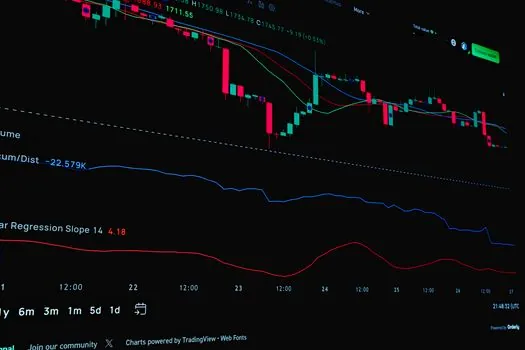
Counterpoint's 2026-2027 outlook flags PC DRAM contract prices rising 105.0-110.0% QoQ in Q1 2026, and server DRAM up 88.0-93.0% QoQ in the same quarter, a magnitude that is reshaping the relative contribution of conventional versus high-bandwidth memory [S2]. For SK Hynix specifically, the HBM3E-to-HBM4 transition has been a margin headwind: HBM ASP fell year-over-year in Q2 2026 as HBM3E pricing declined and HBM4 shipments slipped, dragging the share of higher-margin stacked memory in the mix [S5]. Samsung countered by leaning on conventional DRAM supply stability, pricing discipline, and a simultaneous HBM volume ramp, the three levers the company credited in its Q2 commentary for the share rebound [S5]. The upshot is a market in which two demand curves (commodity server DRAM and HBM) move together, but the split between them decides which vendor tops the ranking.
Product and node map: who makes what
Samsung's 2024-2025 product slate centers on LPDDR5, HBM3, and server DDR5 RDIMMs, with a stated 3 nm EUV migration path and a Pyeongtaek giga-fab expansion; 2024 revenue was US$40.10 billion at a 24.3% operating margin [S1]. SK Hynix pushes HBM3E, LPDDR5T, and DDR5, with capex intensity running at 38% and Cheongju M15X expansion plus TSV stacking as the near-term differentiators [S1]. Micron's lineup is GDDR6X, DDR5, and LPDDR5X, with a 1β node shrink in motion; 2024 revenue was US$22.00 billion [S1]. Below the top three, the Report Prime 2024 table shows Nanya at 2.6% (DDR4/DDR3L/specialty, Fa-1B fab ramping), Winbond at 1.1% (specialty DRAM/PSRAM, automotive qualification), Powerchip at 1.0% (commodity DRAM, 300 mm conversion), and CXMT at 0.8% on DDR4 plus DDR5 engineering samples, with domestic-equipment sourcing as the strategic constraint [S1]. The 2024 figures and the 2026 Q2 outcome do not contradict each other; rather, the CXMT line item moved from 0.8% in 2024 to 7.0% in Q2 2026, a delta consistent with the 716% YoY revenue print and ongoing capacity additions ahead of the company's planned IPO [S5][S1].
Application mix and regional weighting
Servers and data centers represented 45.1% of DRAM consumption in 2025, and DDR5 was 39.4% of the technology mix, a configuration that explains why HBM allocation decisions ripple through the entire ranking [S2]. By technology generation, DDR5 displaced DDR4 across enterprise server and premium consumer PC platforms in 2025-2026, while HBM3 and HBM3E stacks became the de-facto memory building block for AI training and inference accelerators [S2]. On regional weighting, the Report Prime 2024 table is Korea-skewed (Samsung and SK Hynix combined at 54.8% of 2024 revenue), with the United States holding 18.4% through Micron and Taiwan rounding out the top seven through Nanya, Winbond, Powerchip, and Etron [S1]. The Dataintelo RAM market view, while covering DRAM plus adjacent RAM technologies, gives Asia Pacific 48.6% of 2025 RAM revenue and tags DRAM as 72.4% of total RAM technology, broadly consistent with the concentrated fab footprint in South Korea and Taiwan [S4].
Selection lens: which vendor fits which use case
For AI accelerator DRAM, SK Hynix retains a stacked-memory edge in HBM3E and is now pushing HBM4, with a 38% capex intensity that signals continued capacity build [S1]. For mainstream server DIMM and high-volume PC DRAM, Samsung's combination of conventional-DRAM supply security and a parallel HBM ramp makes it the lowest single-vendor concentration risk in 2026-2027 [S5]. For cost-sensitive DDR4/DDR5 commodity supply, CXMT's 7% share and 716% growth point to a credible fourth source for buyers willing to qualify a newer fab, especially for Asia-Pacific and domestic-China volumes [S5]. Nanya remains the specialist pick for DDR4/DDR3L and specialty DRAM where long-lifecycle industrial demand matters more than the leading node [S1]. Buyers sourcing PLC memory subsystems or industrial valve controllers paired with embedded memory should also note that second-tier suppliers like Winbond, ISSI, and Smart Modular continue to serve AEC-Q100, low-power, and rugged niches that the three majors do not actively target [S1].
Signals to watch next

Track Counterpoint's Q3 2026 Global Storage Tracker for whether Micron closes the one-point gap on SK Hynix, and whether Samsung's share holds above 35% as PC DRAM contract prices continue the 105-110% QoQ trajectory flagged for early 2026 [S5][S2]. Watch the HBM4 to HBM8 capacity outlook for stacked-memory supply normalization, since HBM ASP stabilization is the single largest swing factor for SK Hynix's 2027 margin profile. Also follow chip packaging capacity and advanced packaging 2026 tightness, as TSV and hybrid-bonding throughput are the binding constraints on HBM4 ramp and therefore on the three-major ranking into 2027.
Spec-level background on the components involved: pressure transmitter.