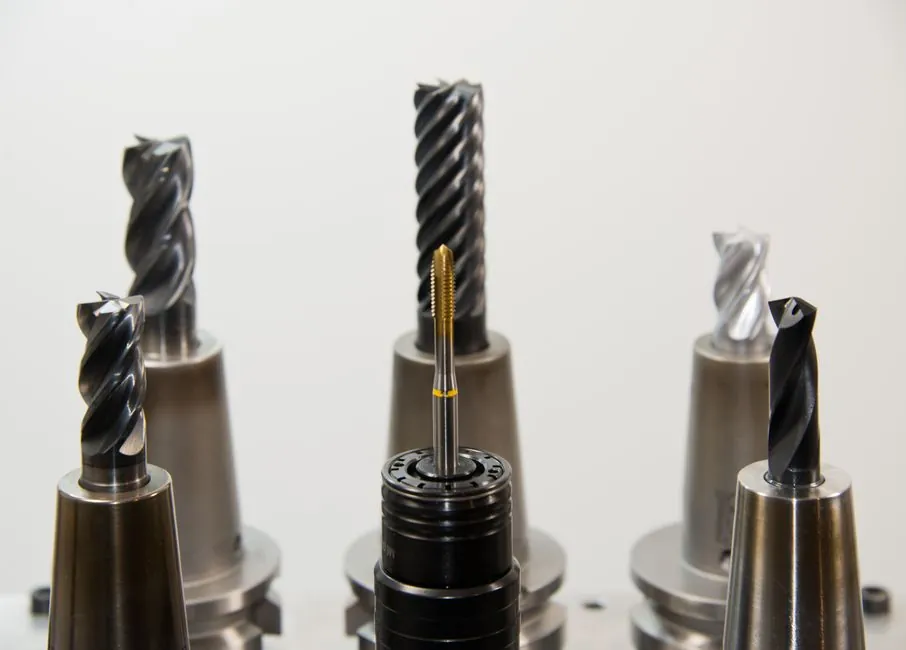
Rail components, including frogs, crossings, baseplates, brake shoes, and bolsters, drive sandblasting machine selection toward heavy-duty roller-conveyor and hook-type geometries running at 0.6–1.0 MPa with 20–80 mesh steel grit, with 80 psi nozzle CFM sized against air-compressor capacity as the single most undersized spec on new rig purchases [S4][S2].
Rail foundries share the same upstream surface-prep gate as any other ferrous shop, but rail-specific geometry, axle-load traceability, and EN 1561 / EN 1563 casting-grade requirements push selection toward a shot blasting machine workflow rather than open-nozzle hand blasting, with sand media reserved for thin-web and reentrant-cavity cases where peening coverage must reach blind pockets that a centrifugal wheel cannot hit [S4][S1].
Match machine class to rail component geometry
Rail frogs, switch points, and crossing castings are bulky, with web thicknesses of 40–120 mm and overall length of 0.5–12 m, which is the operating envelope of roller-conveyor pass-through and hook-type shot blasting machine geometries, both listed as bulk-class sub-types by Chinese OEM catalogs and paired with steel shot or steel grit in place of silica sand to keep operator silicosis exposure inside OSHA 29 CFR 1910.94 limits [S4].
Brake shoes, baseplates, and small bolsters (typically 150–600 mm, 1–25 kg each) drop into a different machine class: a tumble-belt or rotary-table cabinet running at 0.4–0.7 MPa, with a 25–80 mesh abrasive and a 3–15 CFM nozzle at 80 psi. The 300 kg abrasive tank size with a 15 HP air-compressor pair is the most common mid-volume configuration on Indian OEM price lists and maps cleanly to a 4–6 ton/day rail-component descaling line [S3].
Thin-web bolster and side-frame webs under 12 mm, where steel-shot impact can induce distortion, route to automated wet-blast cabinets at 0.3–0.5 MPa with 120–240 mesh fine ceramic or glass bead, holding Ra at 0.8–3.2 μm and eliminating the embedded-contaminant risk that triggers coating-adhesion failure on later powder-coat lines [S2][S5].
Pressure, suction, and wet propellant for rail work
Pressure-fed pots (sealed pressurized abrasive vessel) deliver the higher cut rate that rail descaling needs, and run 15–37 kW compressor packages with 0.8–1.0 MPa discharge to push 20–40 mesh steel grit at 45–254 CFM depending on nozzle size, the standard Chinese OEM envelope for 80–150 k RMB pressure-blast cabinets [S2][S4].
Suction (venturi-draw) cabinets run lighter, 7.5–11 kW compressors and 0.6 MPa minimum, and are limited to <4 m²/hr cleaning rate on ferrous rail castings, which excludes them from any line above ~2 ton/day. They survive only on small-lot maintenance work and prototype-bolster runs [S2][S3].
Wet-blast (water-injected dust suppression) cabinets are the right pick for indoor rail MRO cells where occupational silica exposure and dust load must be held below 10 mg/m³, and where the wastewater stream must be routed to a decanter, since the same suppression that protects the operator also contaminates the abrasive and forces a 100% media-replacement cycle every shift [S2][S4].
Abrasive media for rail-grade surface finish

Steel grit (G25–G80, angular, 20–80 mesh) is the default rail descaling media: it cuts fast, delivers Sa 2.5 (ISO 8501-1) cleanliness, and produces the 3.2–12.5 μm Ra profile that powder-coat and zinc-rich primer systems are qualified against [S2][S4].
Steel shot (S230–S550, round, 0.4–1.2 mm) is the right pick when the rail component goes into a peening service, such as leaf-spring eyes and selected suspension forgings, where the compressive stress layer and 0.006–0.012 Almen intensity are part of the drawing call-out. The same machine, run with shot instead of grit, can be reclassified from descaling to peening by media swap alone, which is one reason Chinese OEM catalogs bundle steel cut wire and cast shot as parallel SKUs [S3][S4].
Glass bead, walnut shell, and corncob are the rail finishing-media choice for satin finishing on stainless bogie hardware and on aluminum-alloy brake hardware, where the goal is Ra 0.8–1.6 μm and zero substrate etching. Garnet and aluminum oxide sit in the middle of the aggressiveness scale and are the standard media for portable rail-trackside rigs working on joint bars and field welds [S4][S8].
Air-supply sizing: the most undersized spec on rail projects
Nozzle CFM at 100 psi scales from roughly 3 CFM for a #2 nozzle to 25 CFM for a #8 nozzle, and the air compressor must hold 80 psi at the nozzle after line losses, with the suction type needing at least 7.5–11 kW and the pressure type 15–37 kW for typical rail work [S2][S4].
For a 300 kg abrasive tank (the rail mid-volume baseline) the compressor spec is 15 HP delivering 45 CFM at 80 psi, and a 1000 kg heavy-duty rig paired to a 50 HP screw compressor covers the bulk-class walk-in rooms that handle full-length rail sections, sleepers, and crossing panels in batches of 1–3 t per cycle [S3].
Nozzle wear is the silent productivity leak: replace the nozzle when its bore grows 25% over the original diameter, because cut rate and surface uniformity both collapse past that point, and a worn nozzle on a rail-side frame will produce an Sa 2.0 instead of the specified Sa 2.5, failing the EN 1561 / EN 1563 surface-prep clause and forcing manual re-blast of the rejected batch [S2].
Surface cleanliness, profile, and what rail specs actually require

Before any coating step, rail components must hit Sa 2.5 (ISO 8501-1) with a surface-residue count at or below 5 particles/cm² and a profile in the 3.2–12.5 μm Ra band, the working envelope of brown corundum or steel grit at 0.6–1.0 MPa and 20–80 mesh, and the same envelope that Chinese OEM four-step selection guides recommend for steel and cast-iron hardware [S2][S4].
For pre-coat anchor profiles, 40–80 mesh steel grit at 0.6–0.8 MPa in an automated conveyor cabinet is the standard line, running 50–100 kg/hr media consumption on a 50 kW rig, while for electroplating pre-treatment the target drops to Ra 0.8–1.6 μm and the media jumps to 120–240 mesh glass bead or fine ceramic [S2].
Aluminum and stainless rail hardware, including door-hardware brackets and interior trim, must avoid grit-induced deformation, so wet blast at 0.3–0.5 MPa with 120–240 mesh glass bead is the default, delivering Ra 0.8–3.2 μm without scratching, and a TS Blasting case study on automotive aluminum housings reported a 30% drop in abrasive consumption after switching from pressure-blast to wet-blast on a soft-material line [S2][S5].
Cabinet, open-nozzle, and blast-room selection by part envelope
Bench-top cabinets (parts up to ~1 m³, view window + gloves, dust collector) are correct for small bolster brackets and fastener lots but cannot accept a 6 m rail section. Open-nozzle outdoor work with mobile dust collectors covers ship hulls, tank farms, and offshore platform decks, and is where wet-blast and vacuum-recovery systems are specified to contain toxic coatings such as lead and hexavalent chromium on aging rail infrastructure [S4].
Walk-in blast rooms pair with 50 HP compressors and 1000 kg pressure pots for full-length rail handling, and add lighting, reclaim floors, and operator respiratory protection per OSHA 1910.94 general-industry abrasive-blasting requirements, the same bulk-class sub-types that include overhead-chain and hook-type shot blasting geometries [S3][S4].
Conveyor-blast systems (Kafan KF-3810-12A and similar OEM models) run continuous high-volume flat-part production with part-on-part contact avoided through fixturing, and a sand blasting machine in this configuration fits a rail baseplate line producing 200–600 parts/hr at uniform quality, while the rotary-table cabinet is the right geometry for round and symmetric rail hardware [S1].
Where the standard selection method goes wrong on rail work
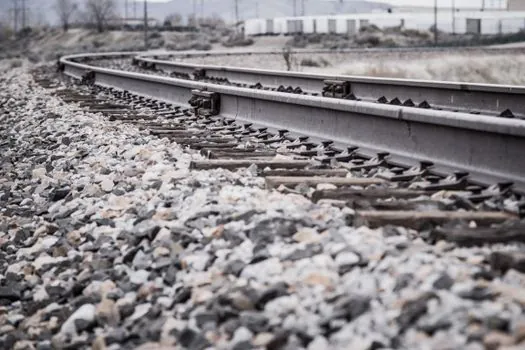
The four-step Chinese OEM method (workpiece size/material, batch size, accuracy, productivity) maps to rail almost line-for-line, but it under-weights the upstream sand-mix and binder step that controls the sand grain adhering to incoming castings, so the sand mixer selection should run ahead of the blast machine decision: high-speed rotor mixers at 20+ m/s tip speed, 10–25 s binder injection, are the right geometry for furan and phenolic-urethane binders on rail cores, and they leave a less friable casting surface that requires shorter blast cycles downstream [S2][S6].
For pre-coat anchor profiles, the sand-casting-mold geometry also drives the choice: a thin-web bolster cast in a chemically bonded sand mold burns off its binder skin at lower pressure, while a thick-web frog cast in green sand needs the 0.8–1.0 MPa pressure-fed rig with steel grit to clear the burn-in layer, and that 0.2 MPa difference is the largest single variable in the rail-blast cycle time [S4][S6].
Trackable signals to watch through the rest of 2026: bulk-class walk-in room orders at the 50 HP / 1000 kg pair, the share of wet-blast cabinets in new rail MRO cell builds, and any shift of OEM catalogs from 20–40 mesh steel grit to finer 40–80 mesh grades for pre-coat work, alongside the Sand Blasting Machine Picks for Telecom Enclosures spec guide and the lighting-fixture blast map which together cover the same duty-class taxonomy on non-rail workpieces.