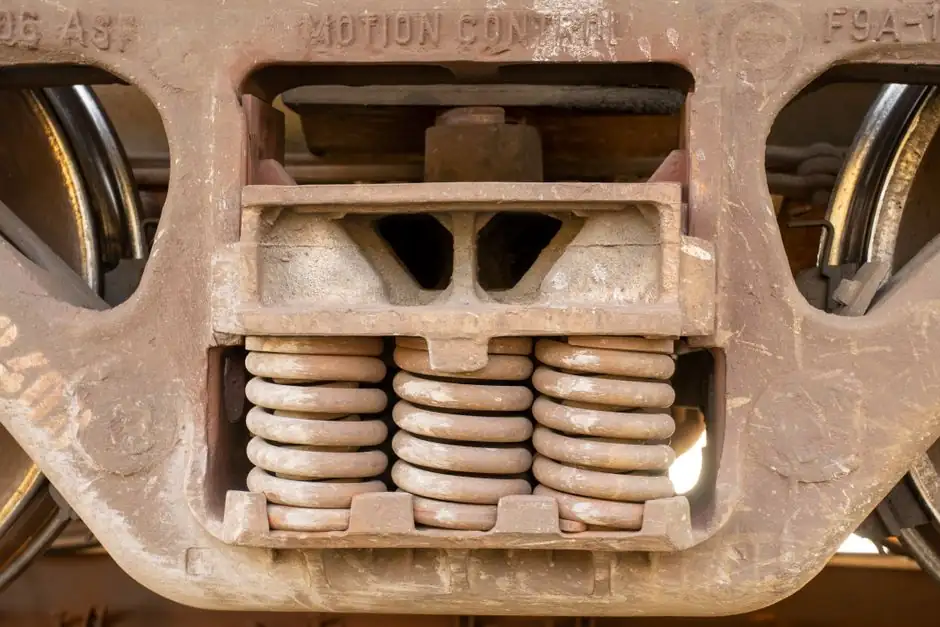
Rail-component foundries cast bogie frames, wheel hubs, brake discs and coupler knuckles in the 50-200 kg range, typically at 5-30 t/h of prepared sand on furan, phenolic-urethane or bentonite-bonded systems [S2].
Selection is driven by muller geometry, wheel loading, lining material and PLC recipe depth, not by catalogue tonnage; a continuous 15-30 t/h double-arm Durchlaufmischer is the default for bogie-side lines, while a 5-15 t/h single-arm or planetary-rotor unit covers jobbing rail fittings [S5][S4].
Rail-component tonnage classes and matching mixer capacity
Rail casting covers three capacity bands: jobbing rail fittings at 1-5 t/h, bogie-side frame and coupler production at 5-15 t/h, and wheel-hub or brake-disc lines at 15-30 t/h [S5]. Each band maps to a different geometry, and over-sizing a jobbing unit by two classes burns installed power without lifting mould strength.
For the bogie-side band, a double-arm continuous mixer at 15-30 t/h is the standard mid-capacity choice, with extended arm reach serving two patterns in parallel or one large bogie frame faster; below 5 t/h, single-arm mixers cover compact jobbing work with a smaller footprint and lower investment [S5]. Above 30 t/h, twin-shaft Durchlaufmischer units deliver the highest throughput and the most aggressive binder dispersion for series wheel-hub production [S5].
Muller geometry vs rotor geometry for rail castings
Continuous rotary mullers with counter-rotating star-and-roller geometry deliver the most uniform 90-180 s mulling window for bentonite-bonded green sand, and are the default for tonnage lines above 15 t/h, where green-sand moulds are still used for rail-side castings [S2]. High-speed rotor mixers with horizontal shafts running at tip speeds above 20 m/s are preferred for chemically bonded systems where furan or phenolic-urethane activation must be injected in under 60 s [S2][S3].
For rail foundries running both green sand and resin sand on the same site, the comparison line is: muller for bentonite at 1.5-2.5 m/s tip speed and 10-15 kW per ton of compacted sand, versus rotor for resin at 20+ m/s tip speed and a 10-25 s binder add window [S2]. Pushing rotor speeds higher than 30 m/s wastes power as heat and shortens lining life without delivering proportional tensile-strength gain in rail-side castings. For planetary rotor units, the working principle is dual-motion: a main shaft drives mixing arms around a central axis while the arms themselves rotate, eliminating dead zones and ensuring uniform binder coating across the bed [S4].
Wheel loading, tip speed and lining trade-off for rail duty
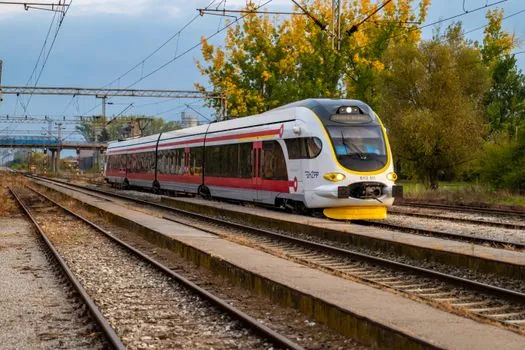
Wheel loading, expressed in kilograms of wheel mass per kilowatt of motor input, sets the compaction energy delivered to the sand bed, and is the selection-critical figure for green-sand rail moulds [S2]. A high-pressure moulding line typically needs 800-1,200 kg/kW; job-shop green-sand work on smaller rail fittings is comfortable at 1,500-2,000 kg/kW [S2].
Lining material is the second trade-off. Ni-Hard cast iron at roughly 550 HBW is the foundry default for abrasive green-sand duty, with a typical service life of 18-36 months in two-shift iron work [S2]. Stainless-steel liners, commonly 304/316 grade, are specified when sodium silicate or phenolic-urethane binders attack the ferrous lining, which is common in rail foundries switching between furan and bentonite on the same line [S2]. Polyurethane panels or ceramic linings are used in resin-sand units where binder pickup on metal is a recurring clean-down problem, with ceramic lining service life rated above 10 years in planetary rotor mixers [S4].
Binder path: furan, phenolic-urethane and bentonite for rail components
Binder chemistry dictates both muller geometry and PLC recipe structure for rail castings. Furan acid-cured systems use a high-speed rotor with a 10-25 s binder add window, sand temperature held at 25-35 °C, which matches wheel-hub and brake-disc cores where surface finish drives scrap rate [S2]. Phenolic-urethane (Pepset-style) systems tolerate a wider sand temperature window and are the default for large bogie-side frames where bench life and stripping time dominate cycle design [S2][S5].
Green bentonite systems remain standard for rail-side castings where mould cost and reclamation economics dominate, requiring the full 90-180 s mulling window to activate the bond, with sand-cooler downstream sized to the same peak tonnage (see sand cooler for the matching thermal envelope) [S2]. For continuous mixer geometry, the resin sand line reference walks through the binder-sand ratio and agitator sizing that the rail-furan duty inherits. A full sand mixer primer anchors the muller vs rotor decision across all three binder families.
Continuous arm mixers, mobile carriages and rail-line layout
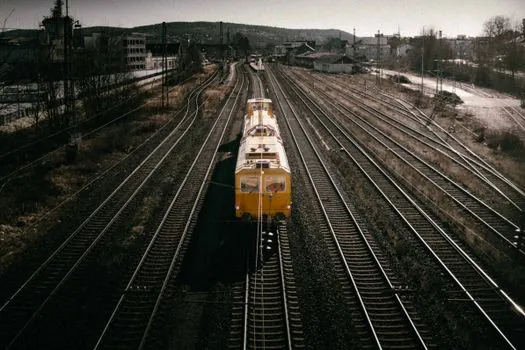
Mobile and overhead mixer configurations travelling on overhead rails or floor-level tracks serve multiple flask stations with one mixer, which is the standard layout for floor-moulding rail foundries producing one-off bogie frames or large couplers that cannot come to the mixer [S5]. The J2S28 series mobile double-arm continuous mixer, a moving double-arm configuration on a trolley with belt sand feeding and 1,500-2,650 mm small-arm length, is the workhorse pattern for this duty class, with productivity rated 5-100 t/h depending on sand feeding mode and arm geometry [S1].
Mobile units allow simultaneous sand supply and mixing without mutual interference when fitted with a quick-change sand supply system, which cuts changeover time between rail-component runs [S1]. For fixed-station rail foundries, the S25 series fixed double-arm sand mixer addresses resin-sand uniformity and hot-sand loss, two pain points cited by small and medium foundries running mixed rail-and-general casting schedules [S8]. The power mixer reference covers the agitator-class geometry that high-speed rotor units running alongside mullers inherit.
Comparison: muller vs rotor vs planetary for rail foundries
Three geometries compete for rail foundries, and the decision reduces to four criteria. Wheel-and-roller mullers deliver the most uniform 90-180 s mulling window for green bentonite at 1.5-2.5 m/s tip speed and 10-15 kW per ton, the default above 15 t/h and the only geometry that fully activates bentonite without over-working the bond [S2]. High-speed rotor mixers run at 20+ m/s tip speed, inject binder in 10-25 s, and are the right match for furan and phenolic-urethane on rail cores and chemically bonded systems where activation energy must be injected in a single pass [S2][S3].
Planetary rotor mixers use dual-motion kinematics, one main shaft revolving while arms counter-rotate, with 1-2 high-speed rotors at up to 240 r/min, and add a variable-frequency drive layer for recipe-controlled intensity [S4]. On cost and lead-time, planetary units sit between the muller and the high-speed rotor; on maintenance, Ni-Hard-lined mullers need liner changeout at 18-36 months in two-shift iron work, while ceramic-lined planetary units target 10+ year lining life [S2][S4]. The R&D literature on sand blasting machine cleaning cycles shares the same abrasive-wear data that informs wheel-loader selection. Foundries running mixed green-sand and resin-sand rail schedules typically standardise on one muller and one rotor rather than two mullers, to keep spare-parts inventory bounded.
PLC recipe handling, throughput control and rail-mould consistency
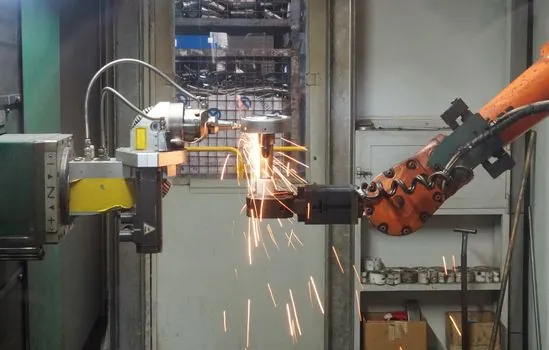
PLC recipe depth is the fifth selection criterion, and the most under-specified. Rail foundries running multiple component codes, wheels, brake discs, bogie sides and couplers, on the same line need a recipe structure that holds binder ratio within ±1% across recipe changes, which is the published tolerance for continuous arm mixers with mass-flow dosing [S5]. A high-pressure green-sand line at 30 cycles/h needs the muller discharge cycle kept at 110-160 s including charging, dry mulling, binder add, wet mulling and discharge, with no slack for PLC latency on recipe changeover [S2].
Continuous mixers integrate directly with mechanical and thermal sand reclamation, delivering over 90% reuse rates, which lowers new-sand cost, disposal cost and the carbon footprint of a 5-30 t/h rail line [S5]. For rail foundries running concrete mixer truck drum-cleaning analogies, the batch-vs-continuous logic is identical: continuous wins on throughput and binder control, batch wins on flexibility for low-volume rail fittings. Selection fails when the muller is sized to peak tonnage rather than average tonnage plus reclaim buffer, because reclaim sand arrives at a different temperature and moisture than new sand and the recipe must absorb both.
Trackable next signal: rail-side foundries evaluating green-sand-to-resin conversion should request cycle-by-cycle energy data from the OEM at 10 kW/t and 20 kW/t, and verify the PLC recipe set handles the reclaim-sand temperature band the sand cooler actually delivers, not the nameplate band. Two named signals to watch are: (1) twin-shaft Durchlaufmischer units above 30 t/h entering wheel-hub series production, and (2) planetary rotor units with ceramic lining moving into furan rail-core lines as the 10-year lining-life data accumulates.
Background reading: FKM Fluororubber Selection for Medical Devices: 2026 Spec Map.