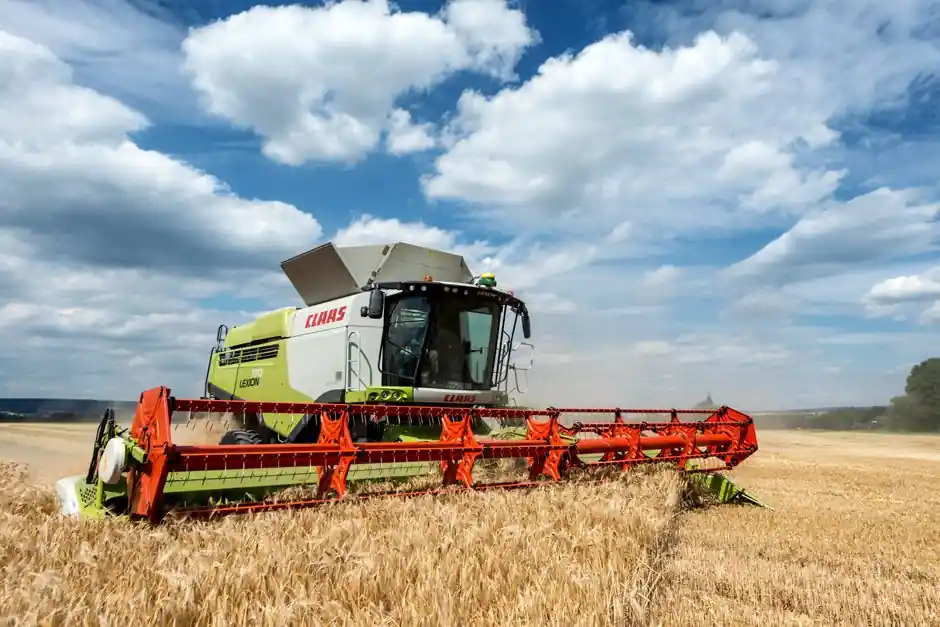
Agricultural-equipment buyers specifying sand casting molds in 2026 should anchor decisions on four concrete gates: cast iron alloy grade (gray, ductile, white, malleable), sand system (green sand vs resin-bonded), part weight envelope, and annual batch size, with ductile iron and cast steel dominating load-bearing housings, brackets, gearbox bodies, axle supports, and structural frames [S3][S4].
Ferrous sand casting remains the workhorse process for medium- and large-sized farm machinery parts, and U.S. ferrous foundries routinely cast single pieces up to 6,000 lb for harvesters, threshers, seeders, and irrigation systems [S2]. For complex geometries with undercuts, thin walls, or intricate detail, sand molds are typically the most flexible option versus permanent molds [S3].
Alloy-to-Component Map: Which Iron Grade for Which Ag Part
Ductile iron is the default spec for tractor housings and high-load structural castings because of superior toughness and fatigue resistance versus gray iron [S4]. Gray iron remains widely used for gearbox bodies and engine components where vibration damping and machinability dominate the spec [S3].
For wear-exposed parts (plow shares, tillage sweeps, crusher-style components), white iron delivers higher hardness and abrasion resistance at the cost of brittleness, while malleable iron is reserved for parts that need shock resistance combined with ductility, such as certain agricultural fittings and piping couplings [S3]. Carbon steel and alloy steel castings are commonly specified for plow components and axle supports where impact durability and structural stability outweigh the damping benefit of gray iron [S4].
A reference table from a 2026 industry review lines the standard alloys against typical ag applications: tractor housings in ductile iron, gearbox bodies in cast iron, plow components in carbon steel, axle supports in alloy steel, and irrigation connectors in cast iron for corrosion tolerance [S4]. The same source notes that optimizing mold design, pouring temperature, and cooling control is what locks in dimensional stability and consistent mechanical properties across production batches [S4].
Sand System Comparison: Green Sand vs Resin-Bonded vs Shell
Green sand (clay-bonded) is the lowest-cost route and suits high-volume, medium-complexity ag parts where surface finish and tolerance are not critical; it is the default for many tractor and harvester housings produced in large batches [S5]. Resin-bonded (chemically hardened) sand is specified for intricate patterns, thinner walls, and tighter dimensional control, at a higher per-part cost than green sand [S5].
For very large structural castings up to 6,000 lb, ferrous foundries typically rely on chemically bonded sand systems because green sand mold strength does not scale to the same section thicknesses without pattern complexity penalties [S2]. On the pattern side, the sand casting mold selection chain starts with pattern cost and lifetime, and the broader casting mold family framing helps when comparing to permanent-mold or investment-cast alternatives.
Resin sand casting is described as an excellent choice for intricate and detailed patterns and molds, with the trade-off being higher binder cost and longer cycle time versus green sand [S5]. For most ag-machinery structural parts, the sand system choice is downstream of alloy choice, not upstream of it.
Selection Criteria Beyond Alloy and Sand
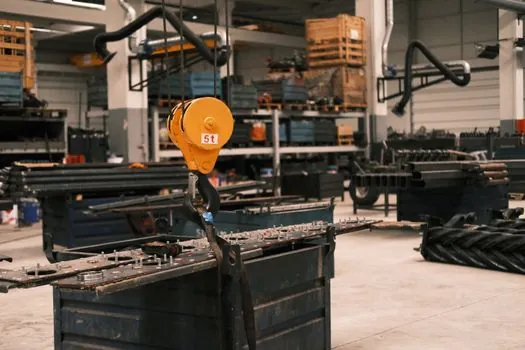
Part geometry is the first gate after alloy: complex geometries with undercuts, thin walls, or intricate internal cavities favor sand molds over permanent molds, while simple rotational or prismatic shapes can justify permanent-mold economics at high volume [S3]. Production volume is the second gate: sand casting is cost-effective for low- to medium-volume runs and remains flexible for design adjustments without extensive tooling changes, which matters for ag OEMs iterating on a new tractor or seeder platform [S3][S4].
Operating environment is the third gate. Ag machinery sees impact loads, soil abrasion, and long operating cycles, so load-bearing structures are routinely uprated to ductile iron or cast steel rather than gray iron [S4]. Regulatory exposure is the fourth gate: where castings contact fertilizer or food-processing streams, FDA-compliant material selection and surface finish become part of the spec, not an afterthought [S2].
Maintenance and serviceability also feed the spec. Sand casting's design flexibility lets ag manufacturers refine part geometry without re-tooling the entire pattern, which is useful for mature product lines that need running changes for new implements or row-crop configurations [S4]. A related angle is construction machinery and equipment spec logic, which overlaps heavily with ag machinery on housings, brackets, and gearbox bodies, so cross-industry reference data often applies.
Comparison Table: Mold and Process Options for Ag Castings
For procurement teams choosing between process routes, the four dominant criteria are part-size envelope, complexity tolerance, per-part cost, and typical lead time. Sand casting handles large parts (up to 6,000 lb in ferrous practice) and complex geometries at moderate per-part cost and standard lead times [S2][S3]. Permanent molds win on per-part cost and surface finish at high volume but cap part size and limit undercuts [S3].
Investment casting (lost-wax) is reserved for smaller, high-precision ag components such as hydraulic valve spools, pump pistons, and transmission parts where tolerance and surface finish dominate over part size [S5]. Precision machining is then applied as a secondary operation on sand or investment cast blanks for bearing surfaces and seal interfaces. The mold base reference helps frame the structural side of the tooling, while sand mixer and sand cooler entries cover the foundry-side sand preparation loop that gates batch-to-batch consistency.
Use Cases and Foundry Capability Benchmarks
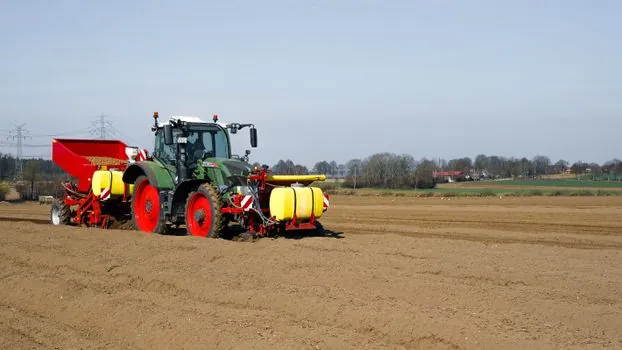
Typical agricultural sand casting applications include tractor housings, gearbox bodies, plow components, axle supports, and irrigation connectors, each mapped to a preferred alloy in industry reference tables [S4]. For foundries serving this market, capability benchmarks cited in 2026 supplier material include QMS 9001:2015 certification, single-piece capacity up to 6,000 lb, and experience with metallurgy across molding, melting, and pouring for both high-volume and large-scale component orders [S1][S2].
Foundries also list prior part families as a competence signal: combine harvester, seeder, and tractor transmission and hydraulic system castings; fertilizer-handling equipment subject to FDA material guidelines; and storage tanks, industrial mixers, and heat exchangers where iron and steel sand casting overlap with ag-adjacent process industries [S2][S5]. A practical takeaway for 2026 sourcing: shortlist foundries that publish alloy-by-application tables and an explicit single-piece weight ceiling, because both drive whether a given gearbox housing or axle support can be produced in one pour or must be split into weldments [S1][S2][S7].
Limits, Failure Modes, and What Sand Casting Will Not Solve
Sand casting tolerates loose dimensional accuracy relative to investment casting or machining-from-bar, so critical bearing surfaces, seal lands, and spline bores still need a secondary machining operation regardless of mold system [S3][S5]. For very high volume ag parts with simple geometry, permanent mold or die casting will normally beat sand on per-part cost despite higher tooling spend, so sand is not the default at, for example, millions of identical small brackets per year [S3].
White iron castings resist wear but fail in impact, so they are wrong for housing-style parts even though they show up in wear-component catalogs; ductile iron is the safer default when both wear and impact coexist [S3]. Resin-bonded sand adds binder cost and fume-handling overhead that green sand avoids, so a resin-sand spec should be tied to a specific feature (thin wall, fine detail) and not applied as a default premium [S5].
For ag buyers iterating on part geometry during a platform launch, sand casting's design flexibility is an asset, but the same flexibility means each pattern revision is a discrete cost event, so the die casting die selection logic on tooling life does not transfer one-to-one to sand patterns. Tracking two signals in the next sourcing cycle is enough: published per-piece weight ceilings from candidate foundries, and alloy-by-application tables that name gray, ductile, and white iron explicitly rather than just "cast iron" [S1][S2][S4][S7].