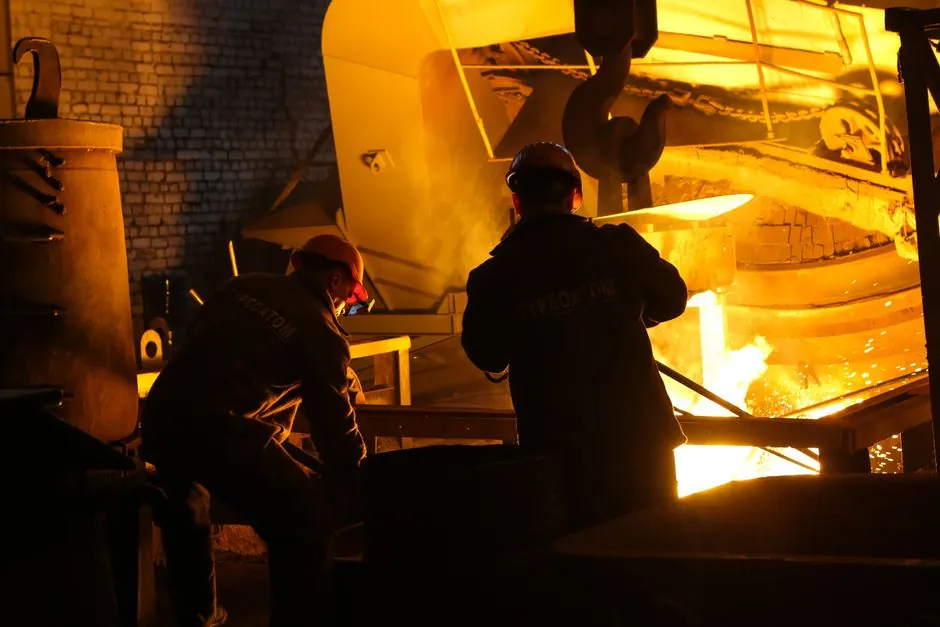
Specifying a sand reclamation unit on an RFQ starts with five non-negotiable lines: hourly throughput, inlet sand classification (green, resin-bonded, oil-bonded, ceramic), target reuse percentage, energy source, and reclaimed-sand quality limits (AFS number, LOI, moisture, fines below a stated mesh).
Foundry Management & Technology reports that mechanical reclamation at MAT Foundry in Poole, England, recovers approximately 5,000 metric tons of sand annually since the 2022 install, a working benchmark for medium-tier iron foundries [S5]. Hybrid systems that combine mechanical attrition with a downstream thermal stage are now the default reference for foundries chasing near-100% reuse, with thermal units sized to the weekly new-sand purchase rate divided across 5 days × 24 hours of campaign operation [S2].
Throughput Sizing: Convert Weekly New-Sand Tonnage to T/H
Thermal reclamation unit sizing starts with the foundry's new-sand intake per week; dividing that tonnage by 5 operating days and 24 hours gives the continuous campaign t/h the furnace must sustain, and thermal units are deliberately run continuously because start-stop cycling is materially less efficient [S2].
EnviroAir ships six standard thermal models spanning 0.25 to 6 t/h, with operating cost published at under $7.00 per ton processed on the standard models, giving procurement a clean cost-per-ton benchmark for the RFQ economics page [S4]. Pneumatic scrubbers such as the Simpson Pro-Claim are continuous, no-operator units sized on cell volume rather than hourly mass, with claimed sand-replacement cost reductions of 75 to 90% against virgin purchase plus disposal [S1]. The Waupaca Foundry operating quote: "Every grain of sand is getting through our process 30 or more times" [S1], which is the rationale for sizing the unit on recirculation mass rather than first-pass mass.
Technology Choice vs Binder Chemistry: Pneumatic, Mechanical, Thermal
Mechanical attrition and vibratory batch reclaimers such as the General Kinematics VIBRA-MILL grind binder residues from the sand grain, then class out fines and oversize; this is the workhorse for chemically bonded systems and pairs downstream of shakeout in most foundry flowsheets [S3].
Pneumatic scrubbing uses high-velocity air to impact sand against a conical target, removing the binder shell layer-by-layer without thermal stress, so grain physical properties are preserved and post-cooling is unnecessary [S1]. Thermal reclamation, in contrast, runs at 1,200 to 1,500°F (649 to 816°C) inside an indirect-fired rotary retort, oxidizing 100% of organic binder, with fluidized-bed thermal designs operating between 670 and 720°C on natural gas or LPG [S2][S4].
Decision logic: green-sand and resin-bonded chemically bonded systems (no-bake, shell) match pneumatic or mechanical; phenolic-urethane and oil-bonded cores match thermal because only oxidation clears the organic film; non-ferrous foundries with oil-bonded sands that do not contain clay are explicitly suited to thermal [S2][S3]. Hybrid pneumatic-then-thermal is the reference architecture for foundries targeting 95% reuse with stable AFS and LOI [S1][S5].
Reclaimed-Sand Quality Specs the RFQ Must Quantify
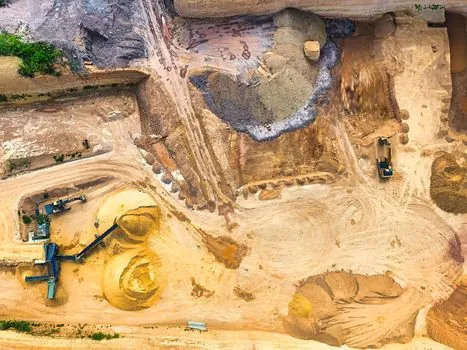
RFQ line items on output quality must include AFS number (target typically 40 to 60 for iron foundries, confirm with muller data), LOI loss-on-ignition below 0.5% for thermal output, residual moisture below 0.3% post-cooler, and a defined screen size, commonly 20 mesh, on the discharge of the cooling drum [S4].
Sand temperature leaving the cooler must be 10 to 30°F above ambient to prevent condensation in storage and downstream muller hoppers; this is a direct spec line, not a vendor footnote [S4]. For pneumatic systems the equivalent controls are discharge-screening mesh, dust-collector exhaust CFM, and binder-fines load carried out of the scrubber cell, which SIMPSON ties to the foundry's dust collection system sizing [S1]. Digital sensors for real-time grain fineness, moisture, and binder residue are now in scope on new equipment, and the RFQ should ask for sensor tag list and Modbus/OPC-UA map [S5].
Comparison of Main Reclamation Technologies on Decision Criteria
Three options are in scope for most greenfield and brownfield resin sand line retrofits, and the decision drops out of four criteria: binder chemistry, energy intensity, post-processing burden, and reuse ratio achieved. [S2]
Pneumatic scrubbing (Simpson Pro-Claim): best for chemically bonded and green sand; low energy, no post-cooling, no screening beyond the discharge screen; 40% → 95% reclaimed blend ratio reported by an MBAF foundry customer [S1]. Mechanical attrition (VIBRA-MILL): best for general foundry sands; batch operation; downstream classification mandatory; binder removal by grinding rather than oxidation [S3]. Thermal reclamation (EnviroAir, Omega fluidized bed): 1,200 to 1,500°F indirect rotary retort or 670 to 720°C fluidized bed, with the Omega 'Dead Bed' design offering a 3-year burner-and-lining warranty and heat-recovery module on the fluidizing air [S2][S4]. Operating cost on the EnviroAir standard models sits below $7.00 per ton, and capacity covers 0.25 to 6 t/h [S4]. Thermal delivers near-100% reuse where binder is fully organic; for iron foundries with bentonite-bound green sand the thermal path is usually restricted to the core-sand stream, with green sand handled mechanically upstream [S2][S5].
RFQ Mistake List: Lines That Force Requotes
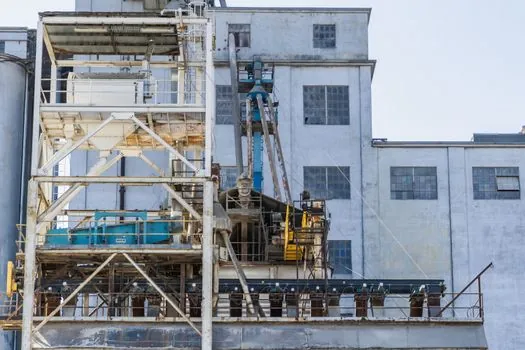
Five spec gaps cause requote cycles on most reclamation-unit bids, and each one should be closed before the RFQ is released. First, omitting the inlet sand tonnage per shift and per week leaves vendors guessing on model size. Second, missing binder chemistry (furan, phenolic-urethane, sodium silicate, green sand bentonite) drives the technology choice, and a wrong assumption flips the bid from mechanical to thermal or vice versa. [S2]
Third, no target reuse percentage (e.g. 70%, 90%, 95%) leaves the vendor to bid a base configuration that may not match the foundry's payback target. Fourth, missing reclaimed-sand mesh, AFS, LOI, and temperature targets means the vendor excludes screening, cooling, and classification equipment that the buyer assumed was in scope; this is the single largest line-item cause of quote inflation. Fifth, no energy-source definition (natural gas pressure available, LPG backup, three-phase electrical spec) blocks the burner or blower selection, and vendors return a 'provisional' price pending utility confirmation. For hazardous-area service around the dust collector, the dust-side electrical package should be specified to the relevant hazardous-location classification, which is a separate decision from the reclaimer itself; see Explosion-Proof vs Anti-Static: Spec-First Selection for Hazardous Areas for the area-classification decision logic that the RFQ should reference.
Verification Path: Material Testing Before PO
SIMPSON's own commercial process is to test the foundry's actual sand or ceramic sample before sizing the reclaimer, and that material-test step should be written into the RFQ as a conditional PO gate: vendor runs attrition or thermal trial on 200 to 500 kg of representative sand, returns AFS, LOI, and sieve data, and the buyer signs off on output quality before fabrication release [S1].
For thermal bids, ask for a gas-consumption curve in m³/t (or scf/ton) across the 670 to 720°C operating window, plus expected burner life, and confirm whether the burner and refractory lining carry a multi-year warranty such as Omega's 3-year coverage on the 'Dead Bed' design [S2]. The LCA literature treats the system boundary and functional unit (e.g. '1 metric ton of reusable sand at AFS 50, LOI < 0.5%') as the explicit scope for any reclamation investment case, and the RFQ should mirror that functional unit so vendor bids and the buyer's downstream carbon accounting line up [S6].
Trackable next signals: (a) whether the bid evaluation includes an energy-and-emissions line per ton of reclaimed sand, and (b) whether the awarded vendor commits to a sand-sample trial with published AFS/LOI/mesh data before fabrication release.