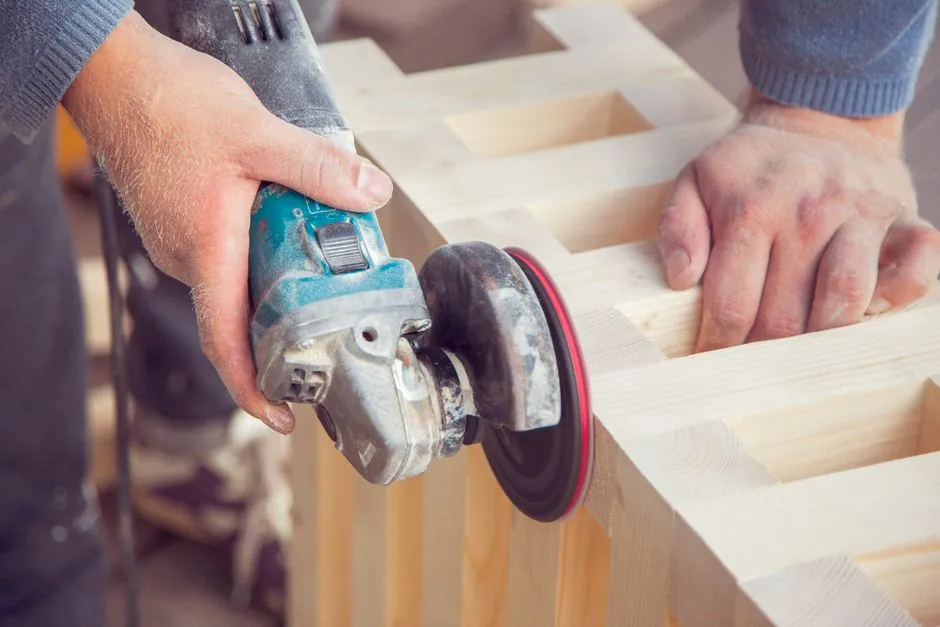
Interior finishing sander choice resolves into three physical variables: orbit diameter, power source, and whether the tool ships with an integrated dust port, per Dynabrade 6 in finishing sander technical data and Mirka drywall sander guidance [S1][S2].
Orbit size controls aggressiveness: 3/32 in (≈2.4 mm) orbits give the tightest, swirl-free finish on clear-coated wood; 3/16 in (≈4.8 mm) handles general finish sanding and light stock removal; 3/8 in (≈9.5 mm) random-orbit sanders are reserved for stock removal on wood, metal, fiberglass, composites, and solid surfaces [S1][S5]. Power source splits the field: 90 PSI pneumatic sanders at 10,000-12,000 RPM with aluminum bodies for vibration control, and 120 V brushless random-orbit sanders for drywall and ceiling work where dust extraction is mandatory [S5][S2].
Orbit size and surface result: the 3/32 in vs 3/16 in vs 3/8 in split
Orbit diameter is the single biggest predictor of finish quality and is the one specification that travels across every sander class [S1][S5].
The Dynabrade 6 in finishing sander range is offered in three orbit options: 3/32 in for finish work, 3/16 in for general finish sanding, and 3/8 in for material removal, with each orbit size available across multiple pad diameters and dust-port configurations (model series 59030-59040, 59000-59010, 58054-59164 respectively) [S1]. Uneeda's pneumatic line confirms the same rule: 3/16 in sanders are more aggressive, 3/32 in sanders are a tighter orbit that is better in finishing applications, and the operating envelope is 10-12,000 RPM at 90 PSI [S5].
For furniture refinishing, cabinet doors, and clear-coat prep, a 3/32 in orbit on a 5 in or 6 in pad is the standard pick because the small orbit suppresses visible swirl marks under stain [S3][S5]. A 3/16 in orbit is the default for general interior trim, doors, and pre-paint prep on wood, where stock removal is occasional but finish quality still matters [S5]. A 3/8 in orbit is a material-removal tool, not a finishing tool, and crosses over into metal, fiberglass, solid surface, and composite prep where swirl pattern is hidden by subsequent steps [S1].
Power source: pneumatic vs brushless electric
Pneumatic sanders remain the workhorse for high-volume production shops, while brushless electric random-orbit sanders have become the default for interior construction and renovation sites where dust extraction and outlet availability matter more than peak power density [S2][S5].
Pneumatic finishing sanders from Uneeda feature a lightweight aluminum body for low vibration, run at 90 PSI regulated supply, and operate at 10-12,000 RPM with either 3/16 in or 3/32 in orbits and optional dust extraction [S5]. Dynabrade's 6 in random-orbit sanders are also pneumatic, free-rated at 12,000 RPM, and qualified for sanding wood, metal, plastic, fiberglass, solid surfaces, composites, rubber, glass, and stone when fitted with appropriate abrasives and run per ANSI B7.1, CAGI B186.1, 29 CFR 1910, and the ISO hand-held non-electric power tool standard [S1].
Brushless electric random-orbit sanders such as the Mirka DEROS are specified for interior finishing because they pair a high-efficiency brushless motor with a dust port that routes to a HEPA-compatible extractor, eliminating the two to three cleanup days that traditional sanding methods require before painting [S2]. The Mirka LEROS extends the same dust-free concept to wall and ceiling work, where weight and reach dominate the decision more than orbit size [S2]. For process engineers selecting between the two, the gate is whether the work cell has clean, dry compressed air at 90 PSI: if yes, pneumatic is cheaper per tool and lighter; if no, brushless electric with a dust extractor is the only practical answer on a modern interior finish site [S5][S2].
Dust extraction: from optional to mandatory on interior sites
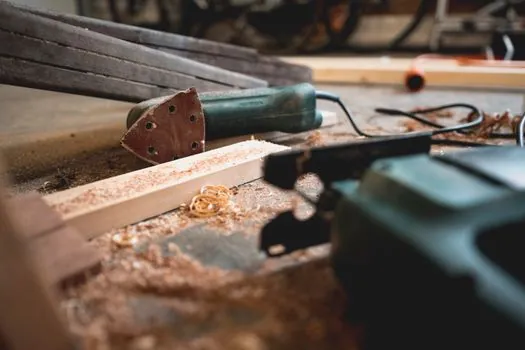
Dust extraction has shifted from an accessory to a specification requirement on interior finishing work, driven by cleanup cost and by crystalline-silica exposure control [S1][S2].
Sanding, grinding, and drilling dust can contain crystalline silica from bricks, cement, and masonry products, plus lead from lead-based paints and arsenic/chromium from chemically treated lumber, which is why Dynabrade's safety instructions call for approved dust masks and well-ventilated work areas [S1]. Eye protection to ANSI Z87.1 and respiratory protection above the applicable threshold limit values are mandatory under the same guidance [S1]. A dust-free system can eliminate two to three days of cleanup before painting or final surface treatment, which makes the integrated dust port on a brushless random-orbit sander a direct labor-cost reduction, not a comfort feature [S2].
Pneumatic sanders are also offered with factory dust extraction skirts, and 90 PSI units with integrated shrouds are the usual pick on production lines where the abrasive is loaded onto a hook-and-loop or PSA pad and the dust port drops into a central vacuum [S5]. For wall and ceiling work the Mirka LEROS is engineered specifically for dust-free drywall sanding, combining low weight with full-surface dust capture so the sander can run on a pole or extension without the operator breathing the plume [S2]. Where finish work moves between a dust-controlled shop cell and an open job site, the practical split is pneumatic with a shop vacuum on the fixed cell, and brushless electric with a HEPA extractor on the mobile job.
Sanding media and pad interface: hook-and-loop, PSA, and sheet clamps
Pad-to-abrasive interface dictates changeover time, abrasive cost, and how flat the pad can sand, and it is set by sander type, not by user preference [S1][S3][S5].
Random-orbit sanders use pre-cut discs attached with PSA (pressure sensitive adhesive) or hook-and-loop; discs cost more than sheet sandpaper but are more durable and change faster, which is the standard interface on Dynabrade 6 in sanders and on the Mirka DEROS [S3][S1]. Finishing or palm sanders with a square base use a quarter sheet of standard sandpaper clamped in place, which keeps abrasive cost low but limits the sander to a 1/4 sheet footprint per pass [S3]. Round-faced orbital sanders use pre-cut hook-and-loop discs and trade the low-cost sheet for faster swap-out and a more consistent cut [S3].
The relevant process rule: on a finish coat, the abrasive must be stepped down in grit without skipping more than one grade, and the pad must be kept clean, because loaded discs glaze and burn the finish, especially on 3/32 in orbit work where heat build-up is concentrated on a small contact patch [S3][S5]. For drywall joint compound, the dust extraction has to be running before the pad touches the wall, otherwise the fine plaster dust loads the disc and the operator ends up burnishing the wall instead of sanding it [S2].
Criteria-based comparison: matching sander class to interior task

The decision matrix below lines the main sander classes against orbit size, dust extraction, power source, and the interior task they actually fit, drawn from the Dynabrade, Uneeda, and Mirka product data [S1][S5][S2].
Finishing / palm sander (square base, 1/4 sheet clamp): orbit equivalent 1/16 in-3/32 in, dust extraction optional, power source both pneumatic and corded, best fit for furniture, cabinets, clear-coat prep, small surface area work [S3]. 5-6 in random-orbit, 3/32 in orbit: tight finish on flat panels, hook-and-loop discs, pneumatic or brushless electric, the default pick for shop finish work on wood [S1][S5]. 5-6 in random-orbit, 3/16 in orbit: general interior trim and pre-paint prep, more aggressive cut, optional dust port, pneumatic is standard [S5]. 5-6 in random-orbit, 3/8 in orbit: stock removal on wood, metal, composites, solid surface; not a finish tool [S1]. Wall and ceiling sander (Mirka LEROS class): large round pad, brushless electric, integrated dust extraction, drywall and plaster finishing on poles and extensions [S2].
For a single-tool DIY or small-shop purchase, the 5-6 in random-orbit 3/32 in pneumatic or brushless electric unit is the right call because it covers the largest share of interior finishing tasks without burning the finish [S1][S3]. For a contractor crew, the productive set is a 3/16 in pneumatic for aggressive prep, a 3/32 in pneumatic for finish, and a brushless electric wall sander with HEPA dust extraction for drywall and ceiling work [S2][S5]. For a process engineer specifying a finishing cell, the air supply must be regulated to 90 PSI with water and filter separation, the dust extraction must match the pad diameter, and the abrasive system must be one supplier's discs to keep inventory rational [S1][S5].
Safety, standards, and the boring stuff that ends jobs
Air tool safety is governed by ANSI B7.1 (abrasive wheels), CAGI B186.1 (portable air tools), 29 CFR 1910 (OSHA general industry), and the ISO hand-held non-electric power tools standard, all of which are cited in the Dynabrade sander manual and are non-optional in a US shop [S1]. Eye protection must conform to ANSI Z87.1, hearing protection is required above the applicable federal, state, or local occupational noise limits, and respiratory protection is required whenever contaminant thresholds are exceeded [S1]. Damaged, frayed, or deteriorated air hoses and fittings must be removed from service, and tools must not be modified from their original design, per the same manufacturer instructions [S1].
Specifying engineers should also note that finishing sander dust on interior projects can carry crystalline silica, lead, and treated-lumber dust, which moves the job from nuisance dust to regulated exposure under OSHA's respirable crystalline silica rule when the substrate is masonry, concrete, or plaster [S1]. The combined cost of an integrated dust extraction system, ANSI Z87.1 eye protection, and approved respiratory protection is small compared with a single re-work of a finish coat or a silica-related stop-work, which is why the Mirka dust-free drywall system is sold as a time and money saver, not a comfort accessory [S1][S2].
For related process-engineering selection maps, the dust detector selection for food processing spec map covers airborne particulate monitoring that often complements a sander dust-extraction system, while the concrete curing compound selection map sits one step upstream in interior finishing, since the surface hardness of cured concrete dictates which orbit and abrasive the first sanding pass needs. Process engineers cross-referencing finishing tools against plant equipment can also compare the sander selection logic and the related pressure transmitter spec logic, since dust-extraction vacuum pressure is monitored with the same sensor families used on pneumatic sander air supply lines.
Spec-level background on the components involved: pressure transmitter.