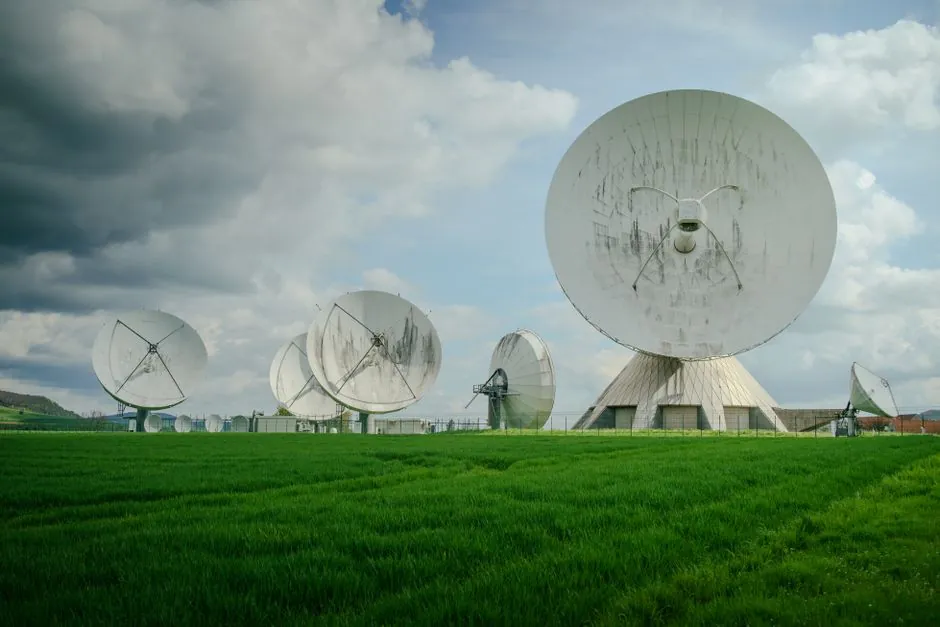
Satellite build cost is dominated by the bus structure, radiation-hardened avionics, and the qualification regime rather than raw materials, with IndustryArc sizing the global manufacturing market at $27.20Bn by 2030 on a 15.3% CAGR [S4]. Azista reports 100+ satellite buses per year from a single Indian campus, with 80% of subsystems developed in-house and a stated 100% mission success rate across 20+ flights [S3].
For procurement teams, the cost question is not "what does a satellite cost" but "which cost driver gates which dollar": bus class, EEE parts grade, propulsion, and the export-control / ITAR lane the build must run in [S4]. Apex frames the supply-side answer as productized bus platforms that compress delivery into weeks rather than years [S7].
Bus class and mass tier set the cost envelope
IndustryArc segments the build universe into smallsats up to 500 kg, medium 500-1000 kg, and large above 1000 kg, a classification that maps directly onto price tier [S4]. LEO constellations such as Starlink sit in the smallsat lane, with SpaceX logging nearly 70% of 115 Falcon 9 launches in 2024 on constellation expansion and 12 satellites in a November 2024 batch carrying direct-to-smartphone payloads [S4]. Azista's GEO, GSO, LEO, EO, and CubeSat catalog covers the same tiers from a single private mass-manufacturing footprint [S3].
Apex's productized bus platforms are explicitly designed to keep smallsat build cost predictable by locking the bus configuration before payload integration, replacing custom one-off builds with a configurable catalog of qualified chassis [S7]. For buyers, the practical rule: the bus class, not the payload, fixes the non-recurring engineering baseline.
EEE parts, radiation hardening, and the single biggest line item
Avionics and the radiation-hardened EEE parts pool typically dominate the recurring cost of any new satellite build, and the grade chosen moves price more than any other single decision. Azista states that 80% of its satellite subsystems are developed in-house, including mission-critical avionics, which it positions as the lever that controls both cost and schedule on a build [S3].
The cost logic that flows from this is straightforward: commercial-grade parts (COTS) drop the electronics line sharply but push more burden onto shielding, redundancy, and software, while rad-hard and rad-tolerant parts raise the per-board price but cut qualification time. The same bus, flown with two different EEE grades, can land in two different price tiers without changing structure or propulsion.
Propulsion, structures, and the materials tail
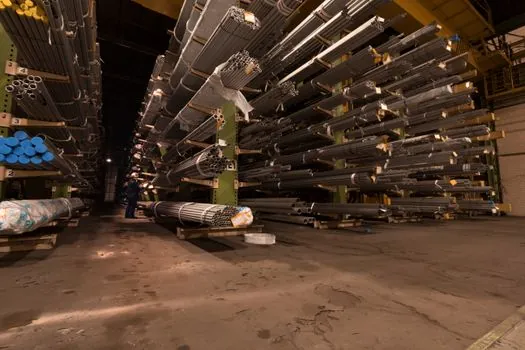
Azista's vertically integrated composites work covers high-performance resins, polymer/metal matrix composites, and high-temperature materials such as carbon-carbon and ceramic matrix composites, feeding structures for satellites and adjacent programs like the Tejas LCA fuselage and hypersonic test articles [S3]. That composites capability is the second-largest cost driver after EEE, and it gates both mass and thermal budget.
Propulsion choice sits on top of structures: electric Hall-effect or chemical mono-prop systems add integration mass, propellant tanks, and ground handling that materially change recurring cost. For constellations, the recurring build cost per bus is set by how much of this stack has been productized, which is exactly the play Apex markets on its productized platforms [S7].
Qualification, export control, and the regulatory multiplier
Azista advertises a 100% mission success rate across 20+ flights as a market differentiator, an outcome that is paid for upstream in qualification hours, environmental testing, and parts pedigree [S3]. IndustryArc notes the COVID-19 and post-2022 environment produced labour shortages and delayed component deliveries that pushed lead times, with Russia-linked supply of titanium and propulsion systems also disrupted, forcing manufacturers to re-source critical materials [S4].
Export-control classification is the multiplier that often goes unpriced in early RFQs: ITAR- versus EAR- versus dual-use lanes change what can be bought, from whom, and on what lead time, and that decision is normally locked before the first component is ordered. Hong Kong's ASPACE Satellite Manufacturing Center, opened 25 July 2023 inside the Advanced Manufacturing Centre at Hong Kong Science Park, illustrates the regional infrastructure play that competes for that work, pitched as one of the world's largest intelligent satellite manufacturing facilities at opening [S6].
Vendor landscape and the productization wave
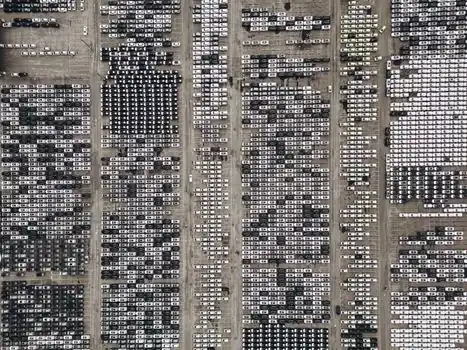
Three vendor archetypes are now bidding for the same smallsat and medium-sat work: vertically integrated primes such as Azista, with seven facilities totalling 300,000+ sq. ft. and in-house subsystems across electronics, composites, and assembly [S3]; productized-bus specialists such as Apex, selling pre-qualified chassis that compress delivery from years to weeks [S7]; and the constellation operators themselves, with SpaceX running its own Starlink line at scale [S4].
The signal that ties them together is the move from custom one-off builds toward productized, repeatable bus platforms, a shift that IndustryArc attributes to miniaturisation and the proliferation of constellations, with Bengaluru-based Pixxel demonstrating compact up-to-150 kg satellites under India's iDEX programme for the Indian Air Force [S4]. For buyers, this means RFQ evaluation should weight productized-bus depth and in-house subsystem share, not headline unit price alone. Related sourcing logic on process instruments and controls is covered in the pressure transmitter and flow meter reference pages, while the bus-comparison thinking mirrors the criteria-based selection in industrial valve sourcing.
Cost driver comparison: what moves the dollar and by how much
Across the four main cost drivers, the practical ranking for a smallsat or medium-sat build is: EEE parts grade and radiation hardening (largest swing on electronics line, often 2-5x between COTS and rad-hard for the same function), bus class and mass tier (sets the structural and integration baseline, with a step change at the 500 kg and 1000 kg boundaries defined by IndustryArc [S4]), propulsion and propellant (changes recurring cost and integration mass more than it changes unit price), and qualification plus export-control lane (sets NRE and lead time, often a fixed multiplier on the whole build).
Total cost of ownership on a satellite program is therefore not the bus unit price but the sum of NRE, qualification, launch integration, and the expected operational lifetime, with Azista's 100% mission success claim a direct bid on the reliability half of that equation [S3]. Procurement teams that price only the bus line, without locking the EEE grade and the export lane up front, routinely see the same bus arrive at two materially different prices from two vendors.
The next signal to track is the August 2026 vendor announcements out of the US smallsat primes and the Indian private manufacturers, including any update to Azista's stated 100 buses-per-year throughput and any new productized bus tier from Apex, alongside IndustryArc's next market sizing revision against the $27.20Bn 2030 baseline [S3][S4][S7].
See also our earlier report, Vacuum generator sizing and selection: ejector stages, electric pumps, and the criteria.