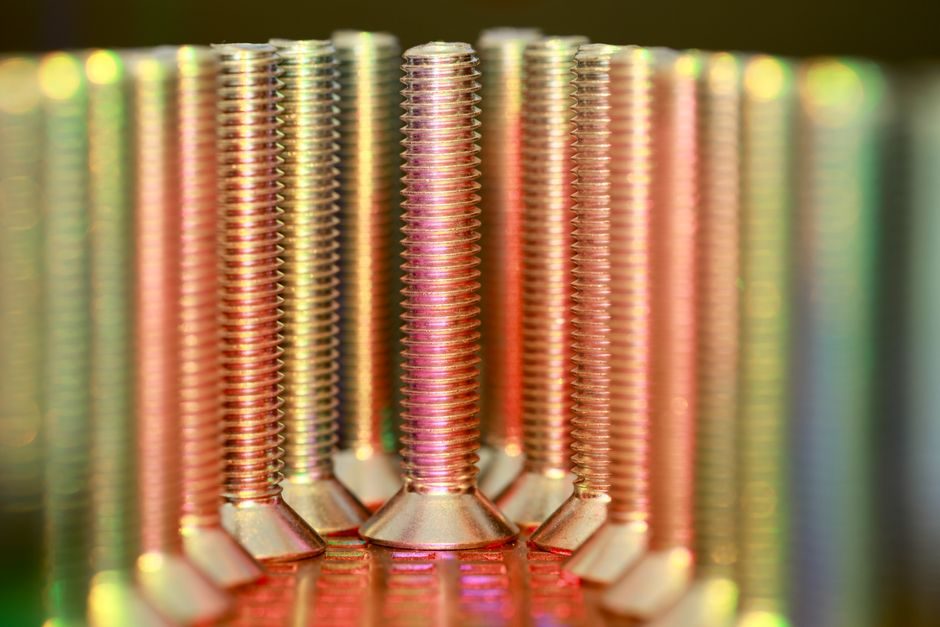
Screw conveyors specified for warehouse automation in 2026 are overwhelmingly horizontal or inclined up to 30° in standard configurations, with engineered units certified to 45° when bulk-solid flowability allows [S3].
Custom carbon-steel units with industrial coatings dominate general-purpose warehouse duty, while stainless-steel builds are required for food, dairy and pharmaceutical aisles; CableConveyors offers both material families with ATEX and Pressure Equipment Directive compliance built in [S3].
Defining the duty envelope: what "warehouse automation" actually moves
Warehouse-automation screw conveyors are not the same product as a mining auger or a TBM screw [S2]; they sit between a sack-tip station, a bag line, a grain silo, a reclaim pit or a day-bin and a downstream weigher or blender [S3]. Bulk-solid envelope is typically 0.5–3.5 t/m³ for bagged dry goods, flour, plastic pellets and similar warehouse SKUs [S1][S3].
For automated picking aisles and replenishment loops the screw is normally short (3–12 m), horizontal, fed by a rotary valve or screw feeder, and discharges into a bucket elevator, weigh hopper or conveyor spur [S3]. When the geometry forces a rise, the CEMA-style ceiling for standard inclined screws is 30°; above that, capacity loss accelerates, and CableConveyors states a properly designed unit can run to 45° before a dedicated screw elevator is the cleaner answer [S3].
Selection criteria: the five numbers that decide the build
Capacity is set by required tph and bulk density: twin-spiral units from Maxsen, for example, are quoted for chemical-powder feeding in the US$2,100–4,000/set band, 1-set MOQ, reflecting mid-range continuous-duty throughputs rather than high-tonnage mining service [S1]. U-type carbon-steel units from Cangzhou Yingjie, targeted at flour mills, list at US$800–1,000/piece for 1-piece MOQ — the price band that anchors most warehouse-automation quotes [S1].
Material of construction is the second gate: carbon steel with industrial coating is the warehouse-automation default, stainless steel is mandatory for food/dairy/pharma, and high-alloy or abrasion-resistant steels enter the spec only when the bulk is hot, corrosive, lumpy or high-containment [S3]. Lumping and oversize drive flight geometry — ribbon screws for sticky, cut-flight screws for lumpy reclaim — and both are part of the same custom-build envelope that cable-and-screw OEM CableConveyors advertises as its core offer [S3].
Compliance is the third gate: ATEX Directive (94/9/EC, recast 2014/34/EU) for explosive-dust atmospheres, the Pressure Equipment Directive (2014/68/EU) when the casing is a pressure vessel, and food-contact standards (EHEDG, 3-A, FDA-grade finishes) for grocery and pharma aisles are the three codes that appear on warehouse-automation data sheets [S3]. For dust-rich reclaim from grain or flour silos, ATEX zone classification — typically zone 21 inside the trough and zone 22 around it — drives motor and bearing enclosure spec [S3].
Comparison: carbon steel vs stainless steel vs high-alloy screw
On cost, carbon-steel U-type units list at roughly US$800–1,000/piece for standard diameters (Cangzhou Yingjie, flour-mill configuration) [S1]; stainless equivalents typically price 2–3× higher before any hygienic-surface upgrade; high-alloy or abrasion-resistant units sit above that again, used only where corrosion or abrasion rules out standard stainless [S1][S3].
On temperature, CableConveyors explicitly offers custom units for materials at extreme temperatures (high or low) as part of its standard design envelope, with wear parts (flights, casings) specified in abrasion-resistant steels or specialty coatings where needed [S3]. On compliance, only stainless units built to EHEDG/3-A or pharmaceutical surface-finish targets should be specified for food/dairy/pharma aisles; carbon-steel units can be made ATEX- and PED-compliant but cannot meet food-contact hygiene rules without a stainless wetted-parts upgrade [S3]. On lead-time, Chinese OEM stock units (1-piece to 10-piece MOQs depending on vendor) typically quote 15–30 days for carbon-steel and 30–60 days for custom stainless or ATEX-ped builds [S1][S3].
Where warehouse automation fits — and where it doesn't
For bagged flour, plastic pellets, sugar, salt, cement, grain and similar free-flowing dry bulk in 0.5–3.5 t/m³ range, a horizontal or shallow-incline screw conveyor is the lowest-cost, lowest-failure option between an upstream discharge and a downstream weigher or blender [S3]. For lumpy or fibrous reclaim (wood chips, bran, soybean meal, shredded bale fragments), purpose-built heavy reclaim augers like the Liaoning Hongrui grain-silo discharge reclaimer (US$50,000–200,000/set, 1-set MOQ) take over, with sweep-auger geometry rather than standard trough-screw geometry [S1].
The screw is the wrong machine for sticky wet sludge, highly aerated powders that fluidise, or any material that needs gentle handling — those call for a belt conveyor or, for sanitary lines, a tubular cable conveyor [S3]. CableConveyors' product range deliberately spans both, which is why its literature treats screw and cable as interchangeable in food, dairy and pharmaceutical plants depending on the bulk's bridging, segregation and cleanability behaviour [S3].
Integration with warehouse control: SAP EWM and the automation layer
SAP EWM (Extended Warehouse Management) is the WMS layer that drives replenishment, slotting and door-to-door material flow in automated warehouses, and it provides the automation and orchestration support that downstream equipment like screw conveyors and bucket elevators hook into [S6].
For multi-line warehouses running EWM, the screw conveyor is a slave device under a PLC or a packaging-line controller, not under the WMS directly; EWM issues replenishment orders, and the line-level PLC sequences the screw, the weigher and the bucket elevator to execute the move [S6]. This separation is deliberate: the screw's own control loop (speed, motor current, blockage detection) is local, and the WMS only needs to know when a unit-load has been requested, discharged, and confirmed [S6].
Vendor landscape: 2026 Chinese OEM reference set
The warehouse-automation screw market is dominated by Chinese OEMs with single-unit to 10-piece MOQs and aggressive price bands: Maxsen (Jiangsu) twin-spiral chemical-powder feeders at US$2,100–4,000/set; Cangzhou Yingjie U-type carbon-steel flour-mill screws at US$800–1,000/piece; Henan Pingyuan mining-grade belt and screw systems at US$8,490–149,600/set; Jiangsu Dazzling belt-screw packages at US$1,800–4,500/piece; and Shandong Fengyuanhongke at US$800–1,000/piece [S1].
CableConveyors (20 years in business, 2026-07-31 update) and Dahan (Xinxiang, Henan) anchor the custom-engineered tier, with Feipuda (Jiaxing, Zhejiang, est. 2012) and CableConveyors both offering ATEX, PED, food-grade and high-temperature variants off the same engineering base [S3][S4][S5]. For warehouse-automation buyers, the practical 2026 shortlist is: CableConveyors for custom ATEX/stainless, Maxsen for twin-spiral powder, Cangzhou Yingjie for low-cost carbon-steel U-trough, and Dahan for general mid-range configurable units [S1][S3][S5].
Failure modes and constraints engineers should price in
Over-inclination is the single most common cause of underperformance: above 30° standard screws lose capacity sharply, and above 45° even engineered units need to be re-validated against the bulk's angle of repose and slide characteristics [S3]. For warehouse floors with height constraints, the right answer is usually a short horizontal screw feeding a small bucket elevator, not a steeply inclined screw stretched past its design envelope [S3].
For related spec work, engineers running chemical-shipping duty should cross-reference a chemical-service screw conveyor selection map, and those handling electronics-grade parts should consult a separate electronics-handling selection map; food and beverage lines warrant their own food-and-beverage selection map with 3-A and EHEDG constraints layered on top.
Two trackable signals to watch in the back half of 2026: the first is the next round of MOQ and lead-time updates from Carbon-steel-tier Chinese OEMs, which is where warehouse-automation cost pressure shows up first [S1]; the second is any expansion of the ATEX-certified stainless-stock catalogue from CableConveyors, which would shorten lead times for European food and pharma builds that currently wait 30–60 days for custom stainless [S3].