Robot OEMs asking whether harmonic reducers can be second-sourced without redesign meet the same wall: only three firms worldwide mass-produce strain-wave gearboxes for robotics, Harmonic Drive AG, Harmonic Drive LLC, and Harmonic Drive Systems Inc. (HDSI), and HDSI holds controlling ownership in the German and U.S. entities, leaving global capacity structurally consolidated [S2].
A robot arm uses 2 to 6 reducers across 6 axes, and harmonic reducers alone account for an estimated 15 to 25 percent of total robot bill-of-materials cost, so any source change touches payload, repeatability, lubrication intervals, and warranty exposure in parallel [S1]. For a deeper primer on the device, see the harmonic reducer reference page.
Why Harmonic Reducers Are Not Footprint-Compatible Across Vendors
A strain-wave gearbox achieves 30:1 to 320:1 reduction in a single stage with sub-arcminute backlash by running a thin-walled flexspline against a rigid circular spline whose tooth count differs by typically 2 teeth, with the wave generator cam forcing the flexspline into elliptical deformation each revolution [S1][S5]. Because the flexspline cross-section, the cam eccentricity profile, the wave-generator bearing preload, and the tooth root geometry are co-designed, the output flange, pilot diameter, bolt pattern, and output bearing stack differ between HDSI CSF/CSG series, Harmonic Drive AG CPU/CSD series, and emerging Chinese units.
Manufacturers designing a new joint must choose the kinematic arrangement first (Circular Spline fixed, Flexspline fixed, or differential), and the ratio equation i = -Zf / (Zc - Zf) only works once that arrangement is fixed, so a "100:1" claim cannot be compared between two vendors without checking which element is the input and which is the output [S5]. The same nominal ratio from two suppliers can therefore deliver different output direction, different torsional stiffness, and different axial runout at the joint.
Rated life is the second non-drop-in variable: published service life is 10,000 to 20,000 hours at rated load, with the flexspline tooth-root fatigue being the limiting failure mode, and a heavier or stiffer flexspline from one vendor shifts both the life curve and the no-load torque drag that the joint motor must overcome [S1][S4].
The Supply-Side Lock: How Three Vendors Came to Dominate
Per [S2], Harmonic Drive Systems Inc. (Japan) holds exclusive global manufacturing rights outside the EMEA and Americas regions, while Harmonic Drive AG (Germany) covers Europe, the Middle East, North Africa, and South America, and Harmonic Drive LLC (United States) is fully owned by HDSI, with the German entity carrying a 30% HDSI stake. That structure leaves robot OEMs with effectively one engineering roadmap, one patent estate, and one set of design tools.
Distribution contracts reinforce that lock: per [S2], HDSI partner agreements historically prohibited partners from testing or using competing products during the supply window, with supply suspension as the enforcement lever, a clause that directly blocks any parallel-qualification effort inside an OEM's existing supplier base. Chinese robot makers quoted in [S2] confirm that domestic harmonic-reducer quality still trails Japanese units despite a newly published national "Harmonic Gear Reducers for Robots" standard covering model designations, temperature rise, service life, and test methods.
Where Second-Sourcing Fails, and Where It Can Work
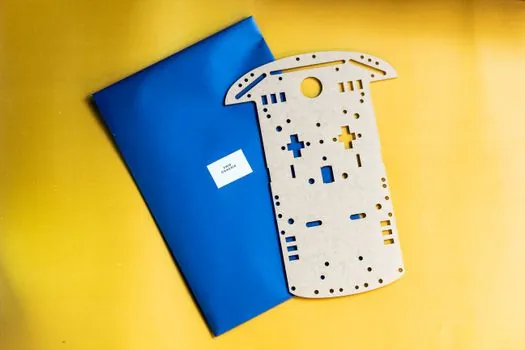
Second-sourcing typically fails at four points: (1) the output flange and pilot are not dimensionally identical, so a new motor-adapter plate is required; (2) the wave-generator bearing preload differs, so the joint's no-load torque and therefore the motor current map must be re-tuned; (3) the flexspline stiffness changes the joint's resonant frequency, which can re-trigger vibration faults in a cobot wrist tuned to the incumbent part; (4) the lubrication interval and grease type differ, so the maintenance schedule in the user manual must be re-validated [S4][S5].
It can work when the OEM designs the joint for source-agnosticism from day one, with a normalized output interface, a motor-side flexible coupling that absorbs up to 0.5 mm of concentricity error, and a closed-loop controller that does not depend on a specific reducer's exact torsional stiffness. The trade-off is concrete: a universal interface adds length to the joint stack (typically 8 to 15 mm) and mass (often 100 to 300 g per axis), which on a 6-axis arm accumulates into a measurable payload and reach loss for the robot, an issue that is especially acute in the cobot 1 to 50 kg class where harmonic reducers are the default [S1][S4].
A criteria-based comparison for the second-source decision:
1) Backlash and torsional stiffness, where HDSI's zero-backlash class is the benchmark and any second source should match within 1 arcminute and within 10 to 15 percent of the reference stiffness to avoid retuning the position loop [S1][S5]. 2) Rated life and load spectrum, where the 10,000 to 20,000 hour flexspline rating must hold under the OEM's real duty cycle, not just the catalog curve [S1]. 3) Mechanical interface, where the bolt circle, pilot diameter, output bearing, and wave-generator input coupling must all match or be absorbed by an adapter. 4) Supplier stability, where the second source's patent exposure, capacity, and IP indemnity to the OEM must be auditable, an issue that becomes acute if the supplier is in a different jurisdiction from the OEM's main market [S2].
Cost, Time, and the Hidden Validation Burden
Industry guidance puts a full harmonic-reducer requalification at 3 to 6 months of lab plus field testing, including no-load running, rated-load endurance, overload to 200 to 300 percent of rated torque, IP rating verification, and at least 1,000 hours of customer-site duty-cycle monitoring [S1][S4]. For a cobot, that translates into roughly 50,000 to 100,000 USD of validation cost per reducer model, and that figure assumes the second source already meets the published national standard referenced in [S2].
For a humanoid joint program, the trade is starker: each joint in a humanoid arm or leg is a custom actuator, and the harmonic reducer's stiffness, mass (often 200 to 500 g per unit in the small-payload class), and ratio directly set the joint's torque density, which is the single largest design lever for payload and battery life [S3]. A second source that is 10 percent heavier or 15 percent less stiff is not a drop-in; it is a re-design of the actuator and the structural link, not a sourcing change.
What Robot Makers Should Do Instead
The pragmatic path is design-for-second-source from the first prototype: specify a normalized output interface, write the position loop to be tolerant of a 10 to 20 percent stiffness band, qualify two vendors in parallel during the 3 to 6 month validation window rather than after, and keep the incumbent vendor's data package on file so the joint can be reverted without a full re-test [S4][S5]. This is more expensive at NPI but cheaper than a forced switch when the incumbent raises price or faces a supply disruption.
For comparison with alternative architectures, RV reducers dominate base and shoulder axes because their cycloid-pinion design scales to higher torque, while harmonic reducers dominate wrist axes because of their coaxial compactness, so the second-source question is most acute in the wrist and least acute in the base, where RV alternatives (Spinea, Nabtesco, Sumitomo) already provide a multi-vendor market [S1]. Cobot designers in particular should plan dual sourcing on the joint that drives the highest warranty cost, typically J4 to J6 on a six-axis cobot.
Two signals to track in the next 6 to 12 months: (1) whether the China national "Harmonic Gear Reducers for Robots" standard referenced in [S2] reaches cross-recognition with IEC or ISO working groups, which would lower the validation cost for non-HDSI sources; (2) whether HDSI's partner-contract clauses referenced in [S2] are challenged in any major OEM renegotiation, since a successful challenge would be the first structural break in the three-vendor concentration. Related reading on supplier concentration risk in adjacent component categories is in this piece on transformer lead times and refurbished bridges, and on the engineering cost of forced requalification in this note on reverse engineering obsolete OEM spares.
For component-level specifications, see vision light source, and harmonic filter.