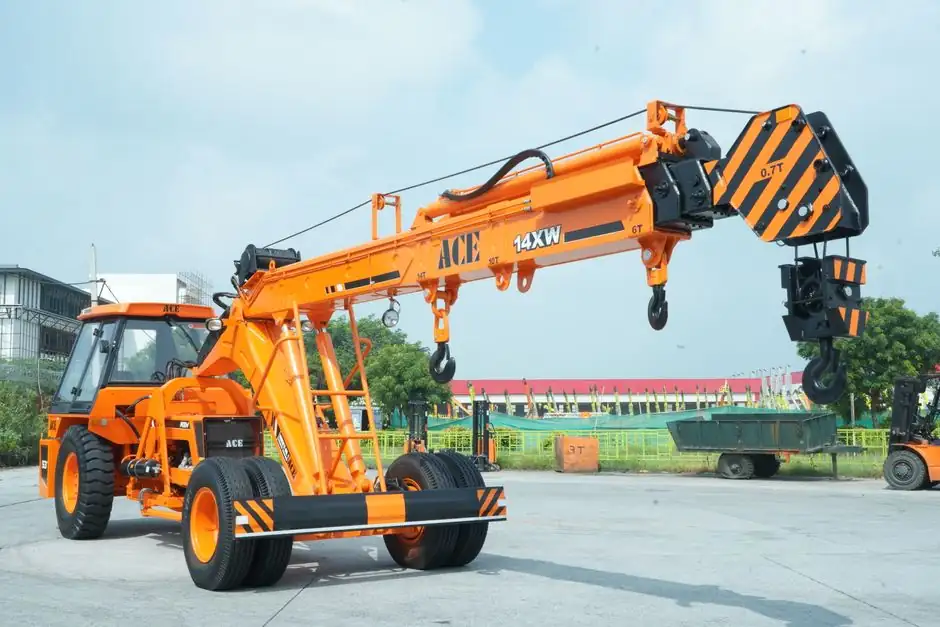
The equipment basis is a crawler crane or duty-cycle crane with controlled free-fall release, automatic wire-rope braking, and enough line pull to raise the pounder to the specified height under the actual radius and ground-condition assumptions [S2].
20-Ton Drop Weight Operating Envelope
Published dynamic compaction guidance describes pounder weights from 5 to 20 tons and drop heights from 60 to 100 ft [S5]. These ranges define the application envelope, but they do not establish that every crane in the relevant class can perform every 20-ton lift.
A project specification must convert mass and drop height into the crane configuration, including the suspended pounder, rigging, reeving, and any crane attachment required by the chosen lifting system.
Potential impact energy is proportional to pounder mass multiplied by drop height. At a 20-ton mass, a 20 m drop represents more than twice the gross potential energy of the same mass dropped from 10 m. The crane and its braking system must therefore be selected for the full specified height, not only for lifting the pounder off the ground.
Crane Type and Lift-System Requirements
The Liebherr HS 8100 HD example used two duty cycle crawler cranes for a dynamic compaction program along the US Route 191 corridor [S2]. This operating principle matches the conventional crane arrangement described for dynamic compaction, where the pounder is lifted and dropped repeatedly [S1][S4].
The dynamic compaction crane selected for a 20-ton pounder should therefore be checked as a lifting system, not purchased only on maximum main-hook capacity. The check must cover the actual boom or lattice configuration, working radius, jib angle where applicable, two-part line pull, hook block, rigging, and the release sequence.
A crawler crane with lattice boom and adjustable or fixed-angle boom is a common implementation [S1]. The HS 8100 HD project used two Liebherr HS 8100 HD duty cycle crawler cranes [S2]. The preferred type depends on the number of drop points, travel pattern, site bearing pressure, required radius, and operating duration.
Load-Chart and Radius Selection
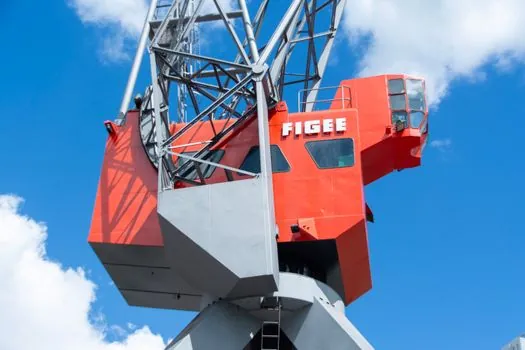
For procurement, the crane package should require the gross pounder mass, drop height, maximum and minimum operating radius, boom length or configuration, line-pull arrangement, and lift cycle. Any difference between the pounder's nominal 20-ton rating and its certified total suspended mass must be resolved before approval.
Impact Energy, Soil Depth, and Drop Pattern
The dynamic compaction design must separately account for the number of drops, passes, grid spacing, and the empirical relationship between energy and depth of influence [S5].
The Purdue design formulation for depth of influence uses an empirical factor ranging from 0.35 to 0.6, multiplied by pounder weight in megagrams and drop height in meters [S5]. Applied energy is calculated from number of drops, pounder weight, drop height, number of passes, and unit weight of soil [S5]. Those formulas support the operating design, while crane selection must cover the physical lift and controlled release at the specified height.
Recommended applied-energy ranges are 200 to 250 kJ/m³ for pervious coarse-grained soils, 250 to 350 kJ/m³ for semi-pervious soils, and 600 to 1,100 kJ/m³ for landfill material [S5]. The depth of improvement is generally limited to about 25 to 30 feet or less [S5].
Pounder Geometry Changes Ground Performance
Pounder contact pressure affects how the impact enters the soil even when mass and drop height are unchanged. Higher contact pressure promotes punching, while lower pressure tends to lower a site more uniformly [S5].
The 20-ton crane specification must therefore include pounder shape and base area, not merely mass. The same 20-ton mass distributed over a smaller footprint can produce a higher bearing pressure, increasing the need to verify both the pounder structure and the soil surface. The selected geometry should match the design intent of the primary energy phase and the final ironing pass.
A published Liebherr project used 18-ton weights dropped from about 70 ft for high-energy work, followed by 11-ton weights dropped from 20 ft for the final ironing pass [S2]. This staged approach separates deep densification from surface uniformization, allowing the 20-ton crane to focus on the high-energy phase while the final pass uses a lower-energy tool.
Soil Suitability and Operating Constraints
Dynamic compaction works best in granular fill, loose sand, uncontrolled fill, debris fill, mine spoil, and other permeable deposits; Purdue lists improvement depths generally limited to about 25 to 30 ft or less [S5]. Deep dynamic compaction literature identifies well-drained, high-permeability, low-saturation soils as the strongest candidates and states that the method is not appropriate for saturated clay soils [S3].
Groundwater introduces a second constraint. A shallow water table can absorb impact energy at the soil-water interface, build pore pressure, and extend the schedule, while the technique can generate very high vibration levels near sensitive structures [S5]. The Purdue guidance cautions against sites within roughly 50 ft of sensitive existing structures [S5].
Impact craters are a normal part of the process and can reach 6 ft or more in depth; they require backfilling before subsequent passes and final grading [S3]. Saturated soils can temporarily liquefy and then densify as pore pressure dissipates, so rest periods may be specified with piezometer monitoring [S3]. For the 20-ton crane, these constraints affect work sequencing, ground access, route width, and the number of crane repositioning cycles.
Field Proof and Procurement Tests
Published field performance provides a useful procurement benchmark: an 18-ton pounder was dropped from about 70 ft using two HS 8100 HD duty-cycle crawler cranes, while an 11-ton pounder was dropped from 20 ft for the final pass [S2]. That case does not prove capacity for a 20-ton pounder, but it demonstrates the operating sequence and the need for a controlled two-winch release system.
Before full deployment, the contractor should perform a witnessed functional test at the smallest practicable radius, verify lift height against the survey instrument, confirm free-fall release and automatic braking, and record the pounder's certified mass and rigging configuration. The test should also confirm that the crane remains within the approved load chart while achieving the required drop-point pattern.
For energy selection, the separate analysis of Dynamic Compaction Energy Selection for a 6 m Fill provides the relevant follow-on comparison for matching pounder mass, height, passes, and soil treatment depth to the crane's approved duty.
Equipment Acceptance Checklist
The crane should not be accepted for the 20-ton pounder until the supplier has documented a 20-ton gross suspended load, a project-specific load chart, and the maximum working radius for the planned drop pattern [S1][S2]. The acceptance package should also list the boom and jib configuration, two-winch line pull, maximum rope length needed for the specified height, and the automatic brake function [S2].
Three independent conditions must remain aligned: the crane's rated lift at the actual radius, the pounder's certified mass and geometry, and the drop energy required by the geotechnical design. A 20-ton pounder alone is not a crane rating, and a rated 20-ton crane is not proof that a 20-ton dynamic compaction duty is safe or effective.
The next trackable procurement signal is the signed project load chart, accompanied by the final pounder shop drawing and a witnessed lift-and-release test. If those documents confirm a 20-ton gross load at the specified height and working radius, the crane package can be evaluated against the soil treatment plan and site access constraints.