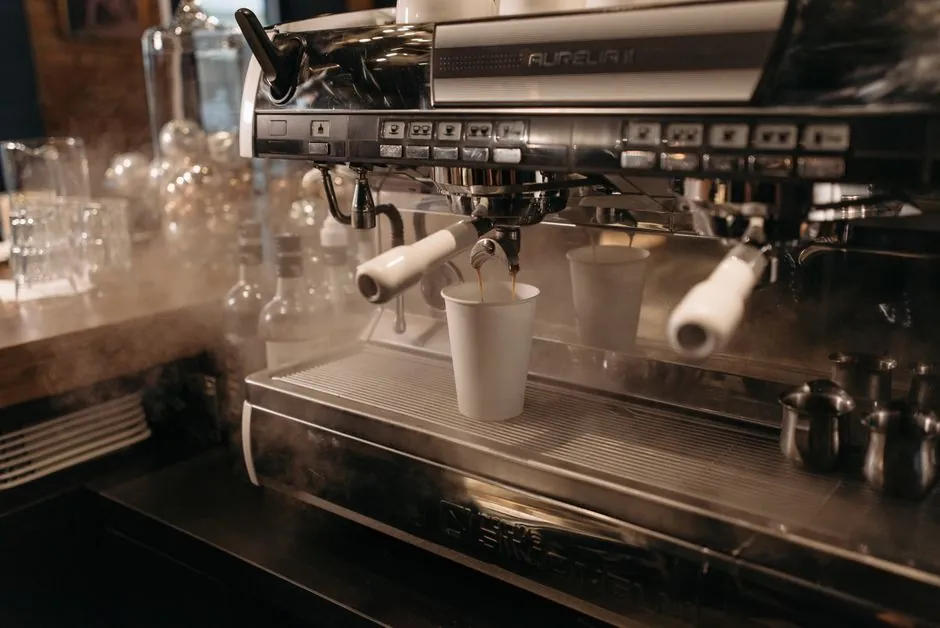
Food and beverage steam-trap selection starts with the installation duty: steam-main drainage, process heating, tracing, or a combination of product contact and clean-in-place exposure.
Pressure and temperature ratings, discharge capacity, trap technology, body material, air handling, and maintenance access determine the final model; the selected trap must also handle startup condensate and the specified condensate load.
Define the Steam Trap Duty Before Choosing a Model
A steam trap is an automatic valve that removes condensate and non-condensable gases while limiting live-steam loss. Incorrect selection can reduce heat transfer, retain condensate, increase energy use, contribute to water hammer, damage equipment, and increase maintenance [S3].
Steam traps may serve steam distribution piping, steam-using process equipment, tracer lines, heat exchangers, coils, unit heaters, drip legs, and air-venting points. A trap suitable for a steam main is not automatically suitable for process equipment with a rapidly changing condensate load [S2][S3].
For food and beverage plants, first establish whether the trap handles only clean steam condensate, or whether coffee, milk, juice, or other product can enter the trap body or outlet. Also record whether the installation is exposed to steam-in-place cleaning, chemical cleaning, washdown, or sanitary hose conditions. These are application constraints, not materials details added after model selection.
Compare Mechanical, Thermodynamic, and Thermostatic Traps
Mechanical traps operate from the density difference between steam and condensate. They suit equipment requiring continuous condensate discharge and are commonly applied to steam-using equipment and distribution lines [S2][S3].
Thermodynamic disc traps use the pressure and velocity differences between steam and condensate to open and close a disc. They are compact and durable, with common use on steam-main drainage, tracing, drip service, and selected high-pressure duties [S3]. Their performance can be affected by surrounding temperature and weather conditions [S3].
Thermostatic traps respond to temperature. They are widely used where air venting is required or some condensate subcooling is acceptable, including tracer lines and selected process duties [S2][S3]. The Emerson sizing guide groups bellows, balanced-pressure, and bimetallic constructions under the thermostatic category [S4].
This comparison is a starting method, not a universal model rule. Spirax Sarco rates application-specific combinations for boiling pans, retorts, digesters, coppers, reboilers, and evaporators as preferred or acceptable alternatives, with notes for parallel air vents, 1 m cooling legs, and anti-air-binding discs [S5].
Match Capacity, Pressure, and Steam Conditions

Trap selection should proceed through four stages: define the required discharge, select a model for pressure, temperature, orientation, and installation conditions, calculate the load and apply the manufacturer’s safety factor, then compare lowest life-cycle cost [S2]. A nominal trap size is not a sizing calculation.
The primary sizing inputs are pressure rating, differential pressure, condensate load, and temperature rating. Secondary inputs include body material, predominant failure mode, connection type, air handling, application-specific requirements, integrated strainer, spare parts, installation position, and required documentation [S4].
An Emerson worked example lists design temperature of 232 °C, design pressure of 17 bar, operating inlet pressure of 6.9 bar, operating outlet pressure of 0 bar, operating temperature of 171 °C, and operating condensate load of 100 kg/h [S4]. These values illustrate the calculation basis, not a universal selection set.
The same guide groups low-pressure service as 15 psi or less, medium-pressure service as greater than 15 psi through 600 psi, and high utility-plant pressure as greater than 600 psi. Its examples place disc, free-temperature-expansion, and bimetallic traps in drip and tracing duties at lower pressures, while float, inverted-bucket, lever, and piston technologies appear among process options according to pressure and load [S4].
Steam quality is a specific concern in food and beverage production because cold traps can affect steam consistency across the system [S4]. Check the trap model against the required steam condition and discharge temperature. The selected unit must also deliver its rated capacity at actual inlet pressure, backpressure, and differential pressure, not merely at zero backpressure.
Prioritize Product Exposure and CIP Performance
A sanitary trap for coffee or milk production must tolerate possible product contact, residue deposition, and steam-in-place cleaning. In Saputo’s coffee and milk lines, a thermostatic capsule trap was unsuitable because coffee and milk residue blocked the device and caused it to fail closed. The resulting loss of condensate discharge contributed to water hammer, equipment damage risk, and product contamination [S1].
A ball valve temporarily allowed condensate discharge during steam-in-place cleaning, but venting live steam to atmosphere created an avoidable energy loss [S1]. A permanent valve substitution also changes the drainage function and does not replace automatic trap sizing. The operating requirement remained removal of condensate without live-steam loss.
After several months of operation, no blockage was observed, and condensate flow improved [S1].
The same installation cited a standard three-year warranty for the Bestobell traps [S1]. Warranty duration is model-specific and should not be generalized across other manufacturers or trap technologies. For procurement, request the exact model’s sanitary material declaration, cleaning compatibility, installation orientation, spare-parts arrangement, and warranty rather than accepting a generic “food grade” description.
Match the Trap to Jacket and Vessel Geometry
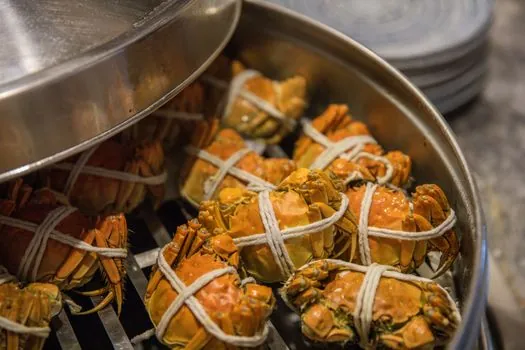
Fixed boiling pans require rapid removal of air and condensate, wide variation between startup and running loads, and short heating time. Spirax Sarco identifies the float-thermostatic trap as the ideal choice and recommends an air vent opposite the steam inlet. A thermodynamic trap can serve as an alternative, particularly when the outlet is close to ground level, but a bypass air vent may be needed for maximum production [S5].
Tilting pans present steam-locking risk because condensate must travel through a rising tube. The specified trap therefore needs a steam-lock release feature, and an additional jacket air vent improves startup when steam enters at the top [S5]. If the trap cannot be mounted below the pan, an internal fixed syphon pipe through a float-thermostatic trap with steam-lock release is the documented arrangement [S5].
Food retorts require removal of air and condensate and replacement with dry saturated steam. A float-thermostatic trap with an integral air vent is identified as suitable because it can pass large volumes of condensate at relatively low pressure. If air remains, process temperature can fall and product can spoil. Air-vent position depends on whether steam enters at the bottom or top of the retort [S5].
These geometry-driven details are more reliable than a generic trap-type label. A sanitary valve can still fail if the rising leg traps steam, the outlet is undersized, or the installation lacks the required air vent. Record the vessel orientation, steam-entry point, drain elevation, cooling-leg length, and whether the trap can be serviced without opening a product-contact boundary.
Apply Food-Grade Installation and Maintenance Controls
A food and beverage installation must control three separate risks: condensate escape onto walking surfaces, product contamination from failed or opened equipment, and loss of process temperature from blocked drainage. Emerson identifies water hammer, live-steam discharge, steam-quality degradation, corrosion, freezing, and long undetected failure periods as consequences of improper traps; its guide notes that traps are often tested only once or twice per year, so a failed trap may remain undetected for more than six months [S4].
Use the manufacturer’s installation drawing to set trap orientation, inlet and outlet connections, and service clearances. Include isolation valves where required by the site’s hygienic and maintenance philosophy, but confirm that their arrangement does not remove automatic drainage during normal operation. For SIP, verify whether the trap is rated for the cleaning temperature, pressure, chemical exposure, and installation sequence.
Air-vent requirements depend on the equipment geometry. Process heaters commonly need an air-venting function, and Emerson characterizes process duty as usually involving medium or large, fluctuating condensate loads with excellent air handling required [S4]. Steam mains have a different objective: preventing condensate pooling and associated water hammer through near-steam-temperature discharge [S2].
For comparison, a trap installed on a distribution line should not be judged by the same criteria as a trap discharging product-contaminated condensate from a coffee or milk line. The first is a steam-quality and water-hammer problem; the second also requires blockage resistance, cleanability, and hygienic containment.
Control Performance Through a Traceable Selection Record
Final selection should be documented against actual steam pressure, temperature, condensate load, backpressure, orientation, air-venting method, product exposure, SIP conditions, and the manufacturer’s sizing factor. If the condensate load fluctuates, evaluate both startup and steady operating conditions rather than selecting from one average value [S2][S3].
The shortlist logic is straightforward. Specify a mechanical or float-thermostatic trap for continuous discharge and high air-removal duty; specify a thermodynamic trap for compact steam-main, drip-leg, or tracing service where condensate subcooling is acceptable; and specify a sanitary bimetallic or other validated construction where product residue and SIP blockage are credible risks [S1][S2][S3].
Before approval, obtain the manufacturer’s selection sheet and confirm the model against the required discharge capacity at actual inlet and outlet pressure. For a coffee or milk installation exposed to SIP, the DS12 case demonstrates a specific engineering response to closed blockage and product contamination, with a three-year stated warranty [S1]. This is not a general clearance for every bimetallic trap.
Track steam-trap failure symptoms through internal inspection, trap testing, condensate-temperature checks, and comparison of steam consumption before and after replacement. Those signals verify whether drainage capacity, air venting, and process heating are performing as designed [S6].