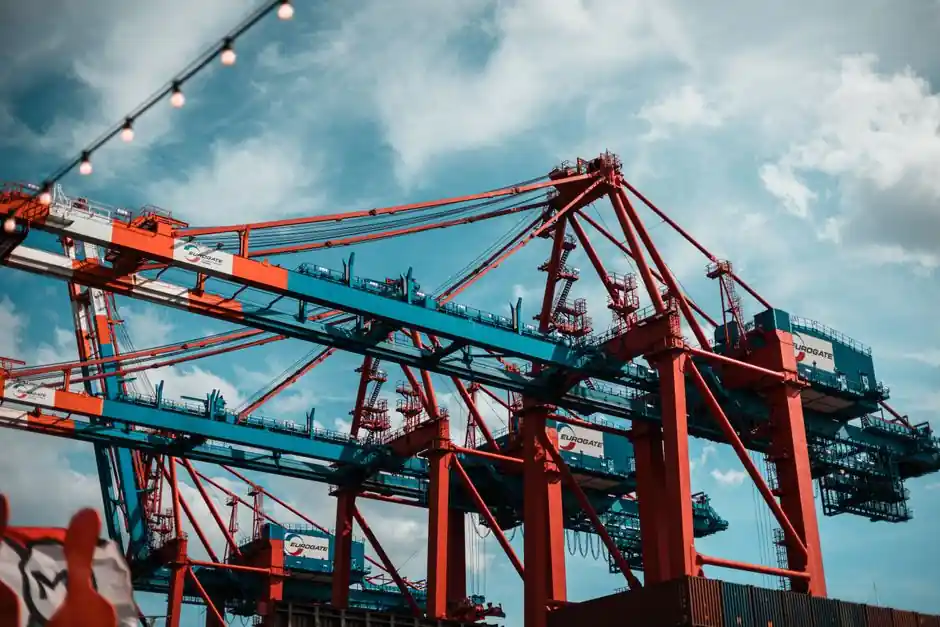
Pneumatic conveying for chemical shipping is a routing problem first and a hardware problem second: the bulk solids arrive from a truck, railcar, silo, or intermodal container, and a pressure or vacuum line must move them to a reactor, blender, or storage bin with a defined throughput, purity, and inerting profile [S1].
Three families cover the vast majority of chemical shipping duty: dilute phase, semi-dense phase, and dense phase, with the system classified by its solid-to-gas mass ratio and the air velocity inside the conveying line [S2][S5]. Major chemical OEM portfolios from Coperion, Dynamic Air, Gardner Denver, and AZO all span this same dilute-to-dense spectrum for powders, pellets, and granules [S3][S6][S7][S8].
Dilute Phase Versus Dense Phase: The Core Cut
Dilute-phase systems operate at high air velocity, typically 700–1,000 m/min (around 2,400–3,200 ft/min) for fine powders and granules, and run at line pressures below 100 kPa (15 psig) with solid-to-gas mass ratios of 15 or less [S5]. They are the default because the hardware is cheap, the piping can be large in diameter, and the same line can be reconfigured for multiple products [S1][S5].
Dense-phase systems, by contrast, run the solids as full-bore slugs, plugs, or moving-bed dunes at around 200 m/min (600 ft/min), at line pressures commonly in the 100–600 kPa window, with solid-to-gas mass ratios of 100 or more [S5]. They cost more, use smaller pipe, and minimise attrition, which is why dense-phase is the standard answer for abrasive, fragile, moisture-sensitive, or heat-sensitive bulk chemicals [S6]. Semi-dense phase sits between the two, often chosen as a compromise when neither extreme is ideal but the line geometry would over-stress a dilute-phase design [S2].
Pressure, Vacuum, and the Push-Pull Hybrid
Pressure systems push material from the feed point toward a receiver, vacuum systems pull it from multiple pickup points toward a central receiver, and a push-pull arrangement combines one vacuum leg and one pressure leg to bridge non-adjacent sources and destinations [S1][S4][S5]. For chemical shipping, the choice usually tracks the number of pickup and discharge points and whether the destination is a reactor that needs to be held at a controlled pressure above atmosphere [S4].
Vacuum conveying is preferred when multiple trucks, railcars, or storage silos feed a common line because each pickup point only needs a simple wand or lance, not a separate pressure-rated feeder [S5]. Pressure systems win on long single-run distances and where the receiving vessel must be pressurised, since a positive-displacement blower or compressor can deliver higher line pressure than a vacuum pump can sustain suction [S1][S5]. The reference design point for dilute-phase routing in the chemical industry is the four-part architecture of prime mover, feed device, conveying piping, and disengagement (cyclone or fabric filter), with each element sized for the gas flow rate and pressure drop the duty requires [S5].
Material Properties Drive the Decision First
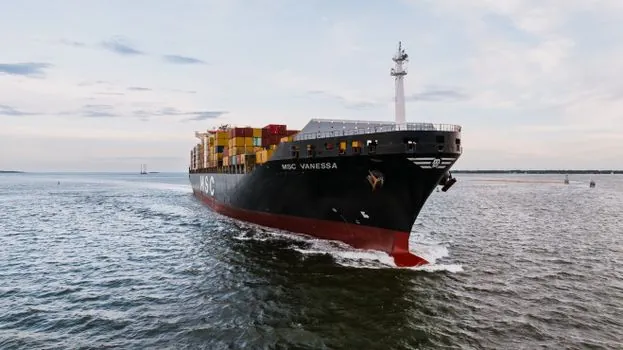
The single most important variable in selecting a pneumatic conveying system is the physical and chemical properties of the material being conveyed, which sets the minimum conveying velocity, the allowable pressure drop, and whether inerting is mandatory [S1]. A typical chemical shipping duty may include cement, fly ash, starch, sugar, salt, sand, plastic pellets, polymers, lime, soda ash, dry milk, and animal feeds, each with its own bulk density, particle size distribution, and moisture sensitivity [S1].
Free-flowing fine particles and granules with high gas permeability (such as plastic pellets) or high retention (such as cement) are strong candidates for dense-phase conveying, but vendors normally run physical tests on a specific material before committing a dense-phase design [S5]. Hygroscopic or explosible chemicals can be moved with dry air or with an inert carrier gas such as nitrogen, and the pneumatic system can feed reactors held at elevated pressure without breaking containment, which is a hard requirement for many fine-chemical intermediates [S4]. Routing flexibility is one of the real wins of pneumatic over mechanical conveying, but the resulting pipe routes often contain many bends, and each bend is a place where the solids concentration profile shifts and the rope region can dominate flow behaviour, so bend count and bend location are design variables, not afterthoughts [S4].
Safety, Inerting, and Standards for Chemical Duty
For any combustible dust or solvent-laden vapour, the carrier gas is the first safety decision: air for benign oxidisable powders, dry air for moisture-sensitive hydroscopic products, and nitrogen for explosible materials and oxygen-sensitive chemistries [S4]. This means the pneumatic line itself becomes part of the plant hazardous-area classification, and the blower package, rotary airlock valves, diverter valves, and bin vent dust collectors must be selected for the same zone as the upstream and downstream equipment [S1].
Standard engineering references for chemical pneumatic conveying treat pressure drop, bend losses, and gas-solid flow modelling as a known problem with published models, including two-fluid models derived from kinetic-theory-of-gases analogies, used to size piping and predict choking in vertical sections [S4]. Practical rules of thumb from industry training material are that velocity, not pressure, is the designer's primary handle: high velocity keeps particles suspended in dilute phase, while low velocity lets the same particles travel as a slug in dense phase, and the right velocity depends on the gas-to-solid ratio, the densities of each phase, particle size and shape, and pipe pitch [S5].
Who This Is, and Is Not, For
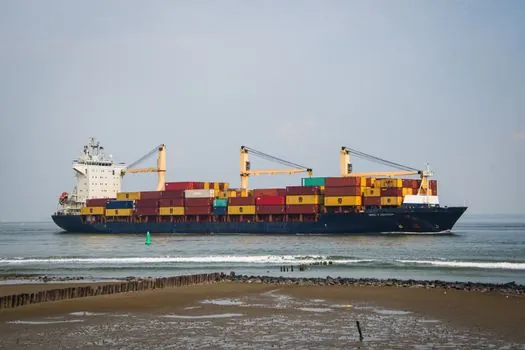
Pneumatic conveying is a strong fit for chemical shippers that handle powders and granules in enclosed transfer from railcars, trucks, silos, bins, hoppers, and storage vessels into reactors, blenders, or packaging lines where dust control, multiple-source/multiple-destination flexibility, and routing around existing structures are priorities [S1][S4][S5]. It is the standard answer when the duty is dusty, toxic, or oxygen-sensitive, or when a mechanical conveyor would be mechanically infeasible because of the building layout [S1].
It is a poor fit for very high-tonnage, single-product, straight-line transfers over long distances where a belt or drag conveyor would be cheaper to run per ton, for materials that are too cohesive or too plastic to fluidise, and for any application where a vendor test rig has shown that the specific bulk solid will not convey stably in the proposed mode [S5]. Engineers comparing pneumatic against mechanical options for a gear pump selection for pharmaceutical manufacturing line, for example, should treat pneumatic as a bulk-feed tool upstream of the pump, not a substitute for the pump itself. For mixed solids handling across a plant, an upstream sorter such as the sorting system types and classifications 2026 field reference can be staged ahead of the pneumatic line to keep out-of-spec material out of the conveying gas.
Selection Criteria: A Side-by-Side Map
For a chemical shipping spec, the four decision criteria that matter most are: (1) conveying velocity, which sets attrition and pipe wear; (2) line pressure, which sets prime-mover cost and safety class; (3) solid-to-gas mass ratio, which sets air demand and energy per ton; and (4) product compatibility, which sets whether inerting, drying, or special filtration is required [S5].
Dilute phase hits 700–1,000 m/min, under 100 kPa line pressure, mass ratios up to about 15, and is the cheapest, most flexible option for non-degradable free-flowing powders and granules [S5]. Semi-dense phase gives moderate velocity, moderate pressure, and a middle mass ratio, which is often the sweet spot for moderately abrasive or mildly fragile products [S2]. Dense phase delivers around 200 m/min, 100–600 kPa, and mass ratios of 100 or more, which is the correct answer for abrasive, fragile, moisture-sensitive, or heat-sensitive bulk chemicals at the cost of higher blower power and tighter piping [S5][S6]. Across all three, the right conveying choice still depends on the bulk material's properties tested at vendor scale, not on a generic rule.
Spec Data Sheet for a Chemical Shipping Pneumatic Line
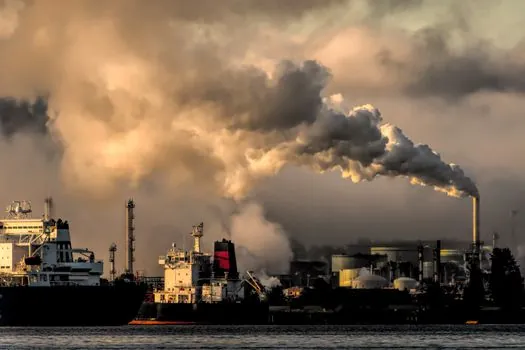
A useful rule-of-thumb specification card for chemical shipping duty reads: prime mover sized for the calculated gas flow rate and either positive or negative pressure to match routing; feed device selected for rapid particle acceleration to conveying velocity, which is itself a function of particle size, shape, and density; conveying line sized for the chosen velocity and the route's bend count; and disengagement stage with cyclone plus fabric filter sized for the receiver bin and the emission target [S5]. The system should be specified to handle the design throughput, with the blower or compressor, the rotary airlock valve, the diverter valve, and the bin vent dust collector all selected as a matched set rather than as independent line items [S1][S3].
Component choices pulled from a working chemical portfolio cover rotary airlock valves for pressure isolation, aeration cones and bin activators for reliable feed from silos, I-2 pneumatic impactors for flow aid, diverter valves for multi-destination routing, and cartridge or bin vent filters sized for the receiving bin volume [S1]. When the duty is in the chemical class and the application is bulk-feed upstream of reactors or mix tanks, the engineering answer is almost always a totally enclosed line, an inert gas option if the material is explosible or moisture-sensitive, and a vendor pilot test before final commitment [S4].
Two trackable signals to watch in the next planning cycle: first, vendor pilot-test data on dense-phase conveying of new abrasive or fragile chemical grades, which remains the gate between a desktop spec and a working line [S5]; second, any plant-level decision to switch from air to nitrogen carrier gas for existing powder lines, which is a real but measurable capital change driven by the same hazardous-area and moisture-sensitivity logic that already governs pneumatic actuator packages in the same plant.
The underlying component specifications are covered under chemical anchor.