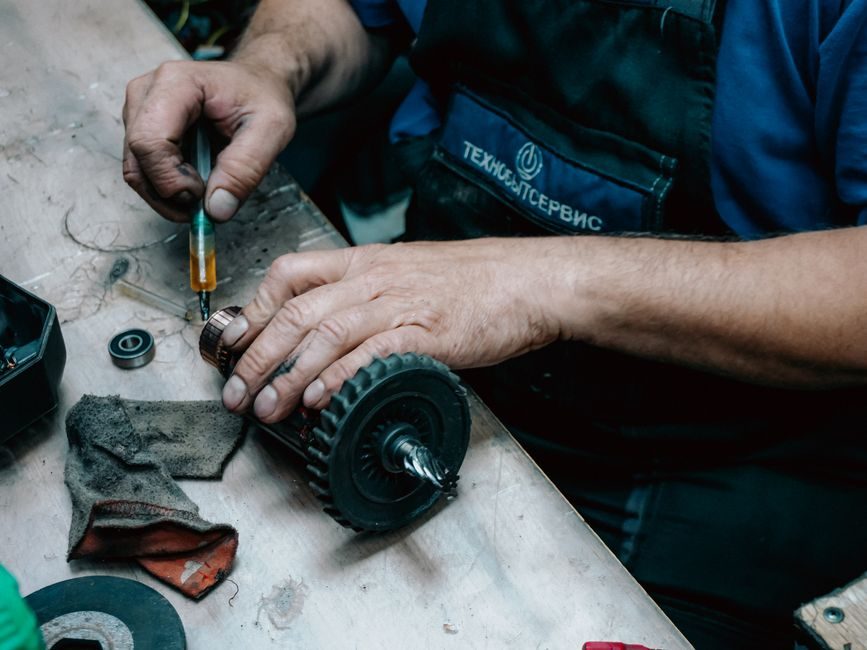
Self-aligning bearings are the go-to solution when shaft-to-housing misalignment cannot be engineered out, and the 2026 DirectIndustry product feed confirms a live, multi-vendor market spanning CMW steel units (bore 10–160 mm, OD 30–240 mm, width 15–73 mm) [S2], NTN Europe stainless food-grade units [S1], and Melucci/ASAHI pillow-block units in cast iron, pressed steel, stainless, and "Silver" zinc alloys [S3].
The category covers self-aligning ball bearings, spherical roller bearings, toroidal roller bearings, and self-aligning thrust bearings, all defined by a common raceway geometry that lets the inner ring, rolling elements, and cage swivel inside the outer ring [S4].
Operating Envelope and Defining Geometry
Self-aligning ball bearings typically accommodate 1.5° to 3° of static misalignment between shaft and housing, with the outer ring carrying a concave spherical raceway whose center of curvature coincides with the bearing axis [S6]. The double-row ball complement with a common spherical raceway is what gives the inner ring, balls, and cage the freedom to swivel relative to the outer race, the engineering reason this design tolerates mounting error and shaft deflection that would preload a deep-groove ball bearing or ball bearing [S6].
Standard metric 1200/1300/2200/2300-series self-aligning ball bearings cover bore 10–160 mm, OD 30–240 mm, and width 15–73 mm in steel [S2], and the catalog depth is broad enough that 456 Alibaba suppliers were indexed under a single "self-aligning roller bearing" query in mid-2026 [S5]. CMW's listing also documents the radial + axial + spherical + double-row configuration stack that engineers should expect on a vendor datasheet [S2].
Advantages: What the Design Buys You
Self-aligning bearings compensate shaft deflection and initial mounting error without external alignment hardware, and NSK's product literature explicitly recommends them for "applications where aligning the shaft and housing is difficult or where the shaft may bend, such as transmission shafts" [S6]. That same source confirms the small contact angle, which yields low axial load capacity but very low internal friction, an asset in long-shaft, lightly loaded, variable-alignment duty.
Material and sealing options extend the same forgiving geometry into hostile environments. NTN Europe's stainless Premium Line is specified for food-industry washdown, with a recess-free housing contact surface to prevent process deposits, high-pressure-washdown protective covers, relubrication facility on all housings, and resistance to oxidation, mould, bacteria, and chemical cleaning agents [S1]. On the unit side, the ASAHI pillow-block pattern distributed by Melucci uses an internal locking pin that prevents the bearing from rotating inside the housing slot, extending service life in radial-load applications, and is offered in cast iron, pressed metal, and stainless steel, with high-temperature and high-radial-load variants on request [S3].
For a related reference architecture, see the broader self-aligning bearing family page, and for plain-bearing alternatives with self-aligning housings the aerospace pattern in SAE AS 21233A-2012 (PTFE-lined, narrow, self-aligning plain bearing) is the documented standard for that subset [S9].
Disadvantages: Where the Design Gives Up Performance
Self-aligning ball bearings have a small contact angle, which results in low axial load capacity [S6]. They are not the right pick for heavy radial loads at high speeds, and the NSK product page states the small contact angle "have low axial load capacity" outright, which is a direct consequence of the same geometry that produces the self-aligning action [S6].
Operating conditions on the CMW datasheet are explicit: bearings must be correctly aligned with other components, stay within static and dynamic load limits, stay within speed limits, receive adequate lubrication, and stay within the manufacturer's specified temperature range [S2]. Misreading any one of those limits in a self-aligning ball bearing application is a common root cause of premature failure, because the part appears to "tolerate misalignment" but not "tolerate overload."
A second structural cost is cage and lubrication sensitivity. Pressed-steel cages are the typical stock option [S6], limiting high-temperature duty compared with brass or PEEK-caged alternatives, and the spherical-OD interface concentrates contact stress at the pivot point if the bearing is run continuously at the edge of its misalignment envelope. For linear-motion equivalents with different failure modes, the linear bearing reference is a useful contrast.
Selection Criteria: Ball vs Roller vs Unit vs Plain
The decision matrix below is grounded in the 2026 vendor data and the Springer reference entry, and is the minimum set of criteria a specifier should run through before ordering [S1][S2][S3][S4][S6].
Self-aligning ball bearings: lowest cost, lowest friction, 1.5°–3° misalignment, lower radial and low axial capacity, typical pressed-steel cage [S6]. Spherical roller bearings: higher radial load, similar misalignment tolerance, heavier and more expensive, used when ball-bearing capacity is exhausted [S4]. Self-aligning bearing units (pillow / flange / take-up): the ball bearing pre-housed in cast iron, pressed steel, stainless, or zinc-alloy housing with internal locking pin; fastest field install, common in conveyor and food duty [S1][S3]. Self-aligning plain (PTFE-lined) bearings: governed by SAE AS 21233A-2012 for narrow aerospace plain self-aligning service; very low speed, dry or boundary-lubricated, corrosion-resistant [S9]. Toroidal roller bearings (CARB-style): combine roller radial capacity with self-aligning misalignment compensation, used in paper, steel, and gearbox duty where thermal shaft growth is significant [S4].
Match the design to the dominant failure mode: misalignment and shaft deflection favor self-aligning ball; heavy radial load at moderate misalignment favors spherical roller; field-serviceability and washdown favor the housed unit; dry, slow, corrosion-loaded service favors PTFE-lined plain.
Application Fit and Sourcing Reality
Documented 2026 application fields are motors, pumps, gearboxes, machine tools, construction equipment, manufacturing, energy, construction, and marine duty, per the CMW product description [S2], while the food and beverage segment is owned by stainless Premium Line units from NTN Europe [S1] and ASAHI/Melucci stainless pillow blocks [S3]. The broad supplier base in China, with hundreds of self-aligning roller bearing vendors listed on Alibaba, supports the high-volume conveyor and gearbox aftermarket at competitive lead times [S5].
For a related 10-year cost view on a comparable bearing family, the linear bearing TCO breakdown is a useful adjacent reference because it walks through the same lubrication, seal, and misalignment cost drivers. For unrelated-duty comparison, the total station spec map uses a similar advantages-disadvantages structure for a different product class.
Operating Limits, Lubrication, and Failure Modes
Static and dynamic load limits, speed limits, and temperature limits must come from the specific vendor datasheet, because geometry is common but material, cage, and seal design are not [S2]. Standard pressed-steel-cage self-aligning ball bearings are not high-temperature parts; stainless and high-temperature-capable variants exist on the pillow-block side and must be ordered explicitly [S3].
Typical failure modes are cage wear at high speed or temperature, false brinelling in static vibration, and inner-ring fracture from combined misalignment plus overload, all of which are accelerated when the bearing is run beyond its load or speed envelope while still inside its misalignment envelope. The internal locking pin on the ASAHI/Melucci pillow block is the design feature that most directly mitigates the "bearing rotating in the housing slot" failure mode and is the single most under-specified feature on many low-cost Asian substitutes [S3].
For application-specific greases, seal choices (open, closed, high-pressure-washdown cover), and relubrication access, defer to the OEM manual, with NTN Europe stating a relubrication facility is provided on all housings of its Premium Line [S1] and ASAHI pillow blocks supplied through Melucci offering double-sealed ball bearings with tempered internal ball raceways [S3].
Standards and Sourcing Watch-Points for 2026
SAE AS 21233A-2012 is the aerospace plain self-aligning narrow bearing standard with PTFE liner, which is the documented standards anchor for the plain-bearing subset of this family [S9]. For rolling-element self-aligning bearings, ISO 15:2017 (rolling bearings — radial bearings, boundary dimensions) is the dimensional series that the 1200/1300/2200/2300 metric 22-series code prefixes reference, though dimensional conformance is what buyers should demand on the certificate of conformance, not nominal catalog claims [S2][S7]. For self-priming pump and self-cleaning filter applications that use these bearings in rotating elements, the housing selection and seal type dominate TCO more than the bearing series itself.
For a 2026 sourcing pass: shortlist at least one EU or US vendor (NTN Europe, NSK, CMW) for documented material traceability, and one cost-region vendor (Alibaba-listed, Made-in-China-listed Chinese makers offering 1205–1222, 1305–1322, 2205–2220, 2305–2322 series) for volume aftermarket [S5][S7]. Demand the cage material, seal type, radial load rating (Cr), speed limit, and misalignment limit in writing; CMW's published 10–160 mm bore / 30–240 mm OD / 15–73 mm width envelope is the format every competitive datasheet should match [S2].