A self-cleaning filter for a corrosive process line is specified by four blocks on the RFQ: fluid chemistry and chloride content, wetted material grade, particle load and micron rating, and backflush actuation source — each of these must be written as a numeric value, not a phrase like "corrosive service" [S2].
Buying a self-cleaning filter on a hydrochloric-acid pickling line with the line item reading "automatic strainer, SS, 100 micron" is the fastest way to receive three non-comparable quotes and a fourth that does not exist in the catalog. Procurement engineers who anchor the RFQ to fluid data rather than to a part name cut RFQ cycle time and reject the "alternate equivalent" footnoting that inflates lead time by 4–6 weeks.
Block 1 — Fluid Chemistry, Temperature, and Chloride Budget
The first line of any corrosive-line RFQ is the fluid name, full concentration range, maximum and minimum operating temperature, and specific gravity — without these, the wetted-material recommendation in the quote is a guess. Chloride content expressed as ppm Cl⁻ is the single gate variable for 300-series stainless selection: chloride levels above roughly 200 ppm in the presence of oxygen and temperatures above 60 °C will pit standard 304/316 self-cleaning filter elements, and vendors will silently downgrade the wetted material to 316L only if the number is on the page. [S1]
For mixed-acid streams (HCl + H₂SO₄ + trace HF), the RFQ must separately call out HF content in ppm because hydrofluoric acid attacks Hastelloy C-276 in the wrong concentration window and silently disqualifies that alloy as a default. Oxidizing agents (Fe³⁺, Cu²⁺, dissolved Cl₂) shift the corrosion regime and must be listed with their typical ppm range; a process line with 50 ppm dissolved chlorine behaves like a different fluid from the same acid without the oxidizer, and the material call has to follow.
Block 2 — Wetted Material Selection: 316L vs Alloy 20 vs C-276
Material grade is the cost driver in a corrosive-service filter, and the wrong grade costs more than the right one: 316L is the baseline, Alloy 20 (UNS N08020) is the step up for sulfuric acid service, and Hastelloy C-276 (UNS N10276) is the step up for mixed oxidizing halide streams. Engineers who skip the alloy specification and write "corrosion-resistant" leave the vendor free to quote 316L on a line that needs C-276, which produces a 2–4× service-life miss and a requote after the first coupon test. [S1]
Seal and O-ring elastomer must be specified in the same block: EPDM handles most inorganic acids up to ~120 °C but fails on petroleum and chlorinated solvents; Viton/FKM covers hydrocarbon and chlorinated service but is poor on ketones and amines; FFKM (perfluoroelastomer) is the only credible choice for hot concentrated sulfuric and nitric mixes above 150 °C. Specifying "Viton seals" on a line that sees acetone or hot caustic is the same class of error as specifying 304 in a chloride brine — the line item passes intake and fails at commissioning. A side-by-side comparison of the three common material grades looks like this for a typical chloride-bearing cooling-water recycle:
Selection criteria at 80 °C, 500 ppm Cl⁻, neutral pH: 316L — acceptable below ~200 ppm Cl⁻, lowest cost, widely stocked; Alloy 20 — acceptable to ~1000 ppm Cl⁻ with oxidizers present, mid cost, 6–10 week lead; Hastelloy C-276 — acceptable to several thousand ppm Cl⁻ and wet HCl service, 2–4× the price, 12–18 week lead. Engineers who do not write the chloride number force the vendor to default to the safest (and most expensive) grade, which inflates the quote by a known multiple and obscures whether a cheaper grade would actually have worked.
Block 3 — Micron Rating, Particle Load, and Pressure Drop Budget
Particle load is the second cost driver after material, because it determines element surface area, backflush cycle frequency, and the size of the waste valve. A reasonable RFQ states the target micron rating (typically 50–500 µm for process strainers, 10–50 µm for polishing duty), the expected solids concentration in mg/L or percent by weight, and the maximum allowable clean pressure drop at design flow. Writing "fine filtration" without a micron number lets the vendor default to the coarsest element in stock, which usually fails the next downstream pump or instrument.
Differential-pressure setpoint for the backflush trigger should be specified as a numeric value between 0.5 and 1.5 bar — below 0.5 bar, the filter cycles on transient pressure noise and burns through seal life; above 1.5 bar, the element is loaded past its efficient capture range and energy loss in the flowing stream becomes significant. Continuous dirty-side pressure, design flow in m³/h, and viscosity in cP complete the hydraulic block; the self-priming pump downstream is often the equipment that fails first when a filter is undersized, so the RFQ should always cross-reference the pump's NPSH margin and the filter's clean pressure drop at the same flow point.
Block 4 — Backflush Mechanism, Actuation, and Utilities
Backflush actuation source decides whether the filter needs an instrument-air supply, a service-water supply, or only line pressure. Pneumatic-actuated scraper or suction-scanner types need 4–6 bar clean dry instrument air and a 24 VDC or 110/220 VAC signal for the DPDT switch; hydraulic types need a clean flush-water line at 2–4 bar above line pressure with a minimum 1.5× line flow available for the blow-down pulse. Skipping the utility block on the RFQ produces quotes that assume a utility the plant does not have, and the change order at commissioning is the most expensive way to add an air compressor. [S1]
For lines where neither air nor clean flush water exists, the engineer should evaluate a self-cleaning mechanism that uses only line-pressure differential — these are limited to lower-solids services (typically <50 mg/L) and to fluids that will not coke or polymerize when held in the blow-down chamber. The actuation signal should also be specified: a mechanical DPDT pressure switch is the default, but 4–20 mA differential-pressure transmitters with HART are now common on new builds and allow remote cycle-count monitoring — HART is FSK superimposed on the 4-20 mA loop, so it does not require a separate digital bus, which is why it remains the lowest-friction option for a retrofit on an existing 4-wire cable run. Engineers should write the actuation type, the supply pressure available, the electrical classification of the area, and the desired control protocol in the same block.
Block 5 — Flange Class, Connection Standard, and Area Classification
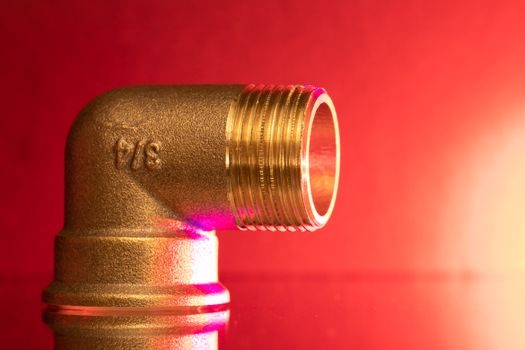
Flange class and facing standard are the most common silent-variation items in a corrosive-line RFQ. ANSI B16.5 150# RF (raised face) is the default for most chemical service, but lines rated above PN16 or services that see thermal cycling need 300# or tongue-and-groove facings. Specifying "flanged connections" without a class lets the vendor quote 150# on a line designed for 300#, and the bolt-up will not pass hydrotest. [S1]
Area classification must be on the same line as the electrical block: ATEX zone 1/21 (Europe) or Class I Div 1 (North America) requires the actuator and limit switches to carry the matching Ex d or Ex e marking, and the omission is a procurement-blocker on any new chemical-plant build. A second silent-variation point is the blow-down outlet size and orientation — 2" flanged blow-down on a horizontal-pipe filter with the outlet pointed into a cable tray is a layout error caught only at installation, and the RFQ should state "blow-down orientation: down, with 2" RF flange, piped to floor drain" rather than "with drain connection." tank cleaning machine systems on adjacent lines often share the same drain header, so the orientation has to be coordinated at RFQ time, not at the piping isometric stage.
Spec Mistakes That Force a Requote Cycle
The five RFQ errors that produce requote cycles on corrosive-line self-cleaning filters are: omitting the chloride concentration (forces vendor to default to C-276 on every quote); omitting the fluid temperature extremes, not just the normal point; specifying "Viton" or "EPDM" without listing all fluid constituents (one missed solvent disqualifies the elastomer); writing "automatic backflush" without naming the actuation source; and writing "flanged" without a class and facing. Each of these is a one-line addition to the RFQ and removes a known cycle of clarification emails. [S1]
For a worked example, a hydrochloric-acid pickle-line RFQ should read approximately: "Service: 10–18 wt% HCl with 200 ppm Fe³⁺, 70–85 °C, 8 m³/h, 50 mg/L solids; wetted material: Hastelloy C-276; seals: FFKM; element: 100 µm slotted 316L core with C-276 wetted surfaces; backflush: differential-pressure-actuated, setpoint 0.8 bar, DPDT switch, 24 VDC; flush medium: filtrate; flanges: ANSI B16.5 150# RF; area: ATEX zone 1 IIB T4." A line item written at that level of detail comes back with three comparable quotes inside two weeks, where a generic line item gets three non-comparable quotes in the same time and a fourth that never arrives.
Trackable signals for the next procurement cycle: a written chloride-concentration policy on the RFQ template; a default elastomer-vs-fluid compatibility matrix held by procurement; and a standing note that any RFQ missing fluid concentration or actuation source is auto-returned for completion before vendor distribution.
This topic is covered further in Magnetic Particle Tester Buying Guide: Spec Map for 2026 Procurement.