
Self-priming centrifugal units — typified by Zhejiang Dayuan's and Shuangqiang's ZXB lines — are routinely specified at 6 m self-priming height without a foot valve and a short priming cycle [S1][S3].
Submersible sludge pumps, by contrast, are engineered for slurry transfer with passage sizes commonly 10–80 mm and continuous submerged duty; the duty envelope is fundamentally different from a self-primer's intermittent suction lift.
Hydraulic Envelope: Suction Lift vs Submersible Submergence
A self-priming pump achieves suction lift by re-circulating a water charge in the casing, displacing air until the volute floods; ZXB units are advertised at 6 m self-priming head with direct-start, automatic water, and no foot valve [S3]. Operating economics depend on keeping that charge between starts, which is why self-primers are favored for tanker offload, well draw, and construction-site dewatering where the suction is intermittent rather than continuous.
Submersible sludge pumps do not "self-prime" at all — they sit in the medium and push it. Their hydraulic envelope is bounded by submergence depth (typically a few meters of static head above the pump), solids passage diameter (commonly 10–80 mm for standard sewage and industrial slurry lines), and a non-clog or cutter impeller. For suction-lift applications above ~3 m where the wet well is remote, a self-priming pump is the only realistic option; for in-pit slurry transfer, a sludge pump wins on simplicity.
Materials, Corrosion Resistance and Seal Architecture
Self-priming chemical units in the SBJ-HP pattern use PP, CPVC, or PVDF wetted ends with PTFE bellows seals to handle acids and brines [S6]. ZXB-series documentation lists fluoro-plastic and stainless-steel forming options with "excellent corrosion and corrosion performance" — a mis-translation of corrosion resistance — confirming a fluoropolymer / stainless material split [S3]. Seal logic on these plastic-bodied units is typically a single mechanical face seal, with the bellows design chosen for media that would otherwise attack an elastomer.
Sludge pumps carry cast-iron or high-chrome alloy casings, dual mechanical seals in oil chambers, and an agitator or cutter plate sized to the stated solid passage. Material selection there is driven by abrasion resistance, not chemistry — high-chrome white iron (≈ 25–28 % Cr) is common in mining-duty slurry units. Where chemistry and solids both apply (e.g. chemical-plant sump with crystalline deposits), a lined self-priming chemical pump often outperforms a stock sludge pump because the elastomers and seals of a slurry unit degrade faster against solvents and oxidizers.
Solids Handling and Viscosity: Where the Two Families Cross
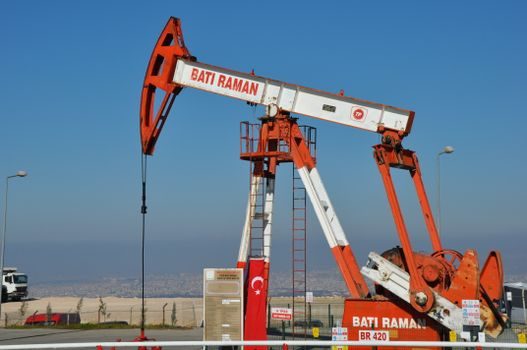
ANDRITZ's AD-series self-priming centrifugal uses a semi-open impeller to move solids-containing or viscous media — pulp, paper-mill stock, sugar, and wastewater — effectively blurring the line between self-primers and slurry machines [S4]. That crossover is genuine but bounded: a semi-open impeller can pass stringy or fibrous material only to the diameter of the impeller eye, and viscosity derates head and flow per affinity laws.
For a like-for-like spec, a self-priming centrifugal can typically handle low-solids slurries up to a few percent by volume with soft particles; a dedicated sludge pump handles dense, abrasive slurries with passage diameters of 30–80 mm and intermittent rag content. As a working rule, if the design point is clean or lightly contaminated water with intermittent suction from above the waterline, stay with a self-priming centrifugal; if the duty is continuous in-pit pumping of water with sand, grit, or organic solids, the submersible sludge pump is the safer spec. The two should not be considered substitutes — they answer different questions. For a closer reading on the priming side, see the prior walkthrough on Self-Priming Pump Selection: 5 Gates Before Brand, and for the broader centrifugal vs sump question, Multistage Centrifugal Pump vs Sump Pump lays the head-vs-fluid grid out cleanly.
Supplier Landscape, Pricing and Lead-Time Bands (2026-Q2)
Chinese OEM pricing in mid-2026 is wide: Guangdong Jiekai's chemical self-priming line posts FOB bands of USD 1.00–9,999.00 per set with 1-set MOQ on ECVV, reflecting the spread from small PP chemical units to large industrial frames [S2]. Kangqiao in Jiangsu lists a vertical self-suction acid/chemical unit at roughly USD 1,500 per piece with 1-piece MOQ on Made-in-China. Zhejiang Dayuan, founded 1990, and Shuangqiang (Jiangsu) Heavy Industry both remain active pump R&D enterprises with vertically integrated casting and assembly in Wenling and Jiangsu respectively [S1][S3].
Lead-time benchmarks from these storefronts sit at 7–30 days for stock SKUs and 30–60 days for OEM/ODM builds with custom impeller, special alloys, or ATEX/IECEx motor pairings. The centrifugal pump reference page documents the broader family that both self-priming and sludge designs sit within.
Decision Grid: Four Criteria Side by Side
Four decision axes line the families up cleanly for procurement. (1) Suction source: self-priming pumps pull from above the waterline up to ~6 m [S3]; sludge pumps require submergence. (2) Solids passage: self-priming semi-open impellers pass soft particles to the impeller-eye diameter; sludge pumps deliver 10–80 mm passage as a designed parameter. (3) Corrosion: self-priming chemical units offer PP/CPVC/PVDF with PTFE bellows seals [S6]; sludge pumps lean on cast iron and high-chrome abrasion resistance, with limited chemical compatibility. (4) Dry-run tolerance: self-primers can run dry briefly during the priming cycle without immediate damage; submersible sludge pumps tolerate dry running only with seal-protector features and are not designed for sustained dry operation.
Failure Modes, Maintenance and Sourcing Red Flags
Self-priming pump failures concentrate in three zones: the re-prime check valve (loss of prime after stop), the bellows or mechanical seal (chemical attack on standard elastomers), and the volute wear ring (cavitation and sand erosion). Sludge pump failures concentrate in the cable-entry seal, the dual mechanical seal oil chamber (leakage indicates imminent failure), and the impeller back-side clearance where grit packs and unbalances the rotor. [S1]
When sourcing from Chinese OEM storefronts, the recurring red flags in 2026 are: a single photo reused across multiple model numbers, no documented Q-curve or NPSHr data, and a chemical-pump price point below the cost of a documented PTFE bellows seal alone. Sites that publish at least a performance curve, a pressure-temperature envelope for the chosen plastic, and a seal-stack part number are the ones worth the RFQ cycle. For adjacent context on how centrifugal and sump duty diverge, the Multistage Centrifugal Pump Price 2026: Cost Bands, Spec Levers and Sourcing Reality article covers the head-vs-flow trade-offs that also govern self-priming selections.
Standards, Compliance and Sourcing Watch-Items

For hazardous-area chemical service, motor pairings should be selected against ATEX 2014/34/EU (European explosive atmospheres directive) or IECEx — the directive categorizes equipment by zone and gas group, and a chemical self-priming pump placed in Zone 1 requires the pump-motor assembly to be certified as a unit, not as loose components. ISO 5199 covers centrifugal pump testing, ISO 9905 covers heavy-duty chemical pumps, and ISO 2858 sets the original metric end-suction dimensions that most self-priming frames are built around. [S2]
For municipal and industrial wastewater service in North America, the typical reference is ANSI/HI pumps standards from the Hydraulic Institute, with material call-outs aligned to ISO 21920 surface finish and NACE MR0175 for sulfide-containing service. Buyers should require a documented curve test (per ISO 9906 Grade 2B at minimum), a hydrostatic test certificate, and a material traceability certificate for any wetted alloy or polymer part.