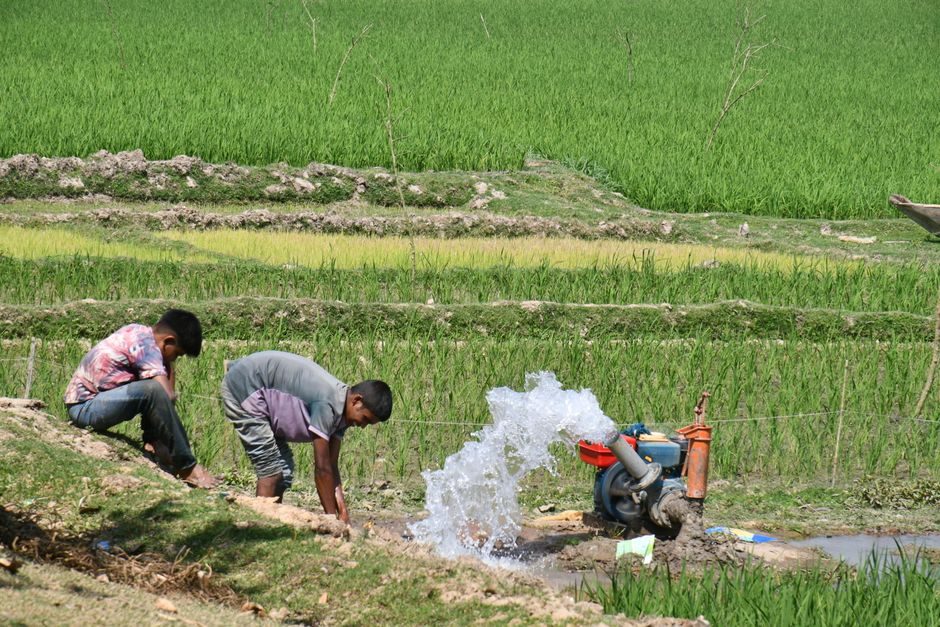
Multistage centrifugal pumps and sump pumps sit at opposite ends of the clean-water pump spectrum: one is engineered for tens to hundreds of metres of head on clear or slightly contaminated liquid, the other for low-head flooded-sump drainage. Specifying the wrong class costs shaft seizure, cavitation burn, or a flooded pit [S2].
The decision comes down to four engineering gates — total dynamic head (TDH), fluid cleanliness and solids size, NPSH margin at the first-stage impeller eye, and the duty cycle (continuous process versus intermittent drainage). Once those four are quantified, the pump family follows; brand selection is a separate exercise handled in the plunger pump selection spec gates frame of mind. Encyclopaedia reference for the multistage family: multistage pump; for the drainage side: sump pump.
Definition, Scope and Operating Envelope of Each Class
A multistage centrifugal pump stacks two or more impellers on a common shaft inside a single barrel, adding pressure stage by stage to reach discharge pressures commonly ranging from 1.6 MPa boiler-feed work up to 10+ MPa in high-pressure industrial process service. The seven-stage rotor system analysed in the published vibration study operates in the high-pressure class and demonstrates why balancing fluid-induced radial forces across stages is a primary design constraint [S2]. The patent-map survey identifies stage geometry, seal arrangement and bearing-frame design as the dominant R&D activity, with the bulk of filings concentrated in jurisdictions hosting large boiler-feed and reverse-osmosis pump demand [S1].
A sump pump is a single-stage (occasionally two-stage) centrifugal or semi-axial machine installed in, or lowered into, a collection pit. Its design ceiling is a low TDH window — typically under 30 m — with priorities inverted toward solids passage, run-dry tolerance and a quick-removal bottom strainer. Industrial / construction sump pumps routinely pass 6–12 mm spherical solids, and submersible sewage variants extend that to 50–80 mm. The <multistage>centrifugal pump</multistage> market continues to ship configurable D, DG, DF and DFSS series for boiler-feed, mine dewatering-feed and high-pressure cleaning, which sets the contrast: high head / clean fluid / continuous duty versus low head / dirty fluid / intermittent duty [S4].
Selection Criteria: Four Gates That Decide the Build
Gate 1 — Total dynamic head. Below roughly 30 m, a single-stage end-suction or sump pump usually wins on first cost, seal simplicity and efficiency; above ~50 m, a two- or more-stage machine becomes economically rational because each stage adds head at near-constant efficiency. The D-G-DF multistage pressure-pump family on the Chinese export channel quotes operating envelopes that start where sump-pump capability ends [S4].
Gate 2 — Fluid cleanliness and solids. Multistage pumps are specified for clean or slightly contaminated liquid; clear-water, boiler-feed, condensate and reverse-osmosis high-pressure streams are the norm, and the multistage class explicitly couples to clean-fluid service in the published vibration work [S2]. Sump pumps are built around a vortex or semi-open impeller plus a bottom strainer sized for the pit's expected debris. The product listing for vertical / horizontal multistage stainless self-priming units confirms the clean-fluid default: the catalog frame is food, pharma and industrial clear-water service [S5].
Gate 3 — NPSH margin at the first-stage eye. Multistage pumps concentrate NPSH risk at the first (suction) impeller because its eye sees the lowest pressure; hot boiler-feed pumps in the D/DG/DF family require a positive NPSH margin that is often tighter than the same machine on cold water, which is why D(G) variants exist for hot-feed water specifically [S4]. Sump pumps have a flooded suction (liquid level above the impeller) and therefore positive inlet pressure by default — they do not need NPSH margin in the boiler-feed sense, which is one engineering reason they dominate pit duty.
Gate 4 — Duty cycle and maintenance access. A multistage pump in continuous boiler-feed service runs 8,000+ h/year with planned bearing and mechanical-seal change intervals; a sump pump runs on float-switch or level-sensor cycles, often for short bursts during rainfall or process spills. Sump-pump service tolerates some run-dry; multistage service does not. The two duty profiles generate completely different bearing, seal and lubrication choices.
Criteria-Based Comparison: Multistage Centrifugal vs Sump Pump
On the four gates above, the two classes map cleanly into opposite design corners. The standard-datasheet norm for a D/DG/DF multistage is multi-MPa discharge, clean fluid, continuous duty, and tight NPSHr at the first stage; the industrial sump-pump norm is sub-30 m head, dirty fluid with 6–80 mm solids, intermittent duty, flooded suction [S2][S4].
This is the same four-gate logic used in plunger pump versus peristaltic pump selection — define head, fluid, NPSH and duty, and the pump family follows from the spec, not the brand.
Who Each Pump Is For — and Who It Is NOT For
The multistage centrifugal pump is the right machine for clean, low-viscosity service at high head: boiler-feed pumps, reverse-osmosis high-pressure boosters, mine dewatering-feed pumps feeding clean headers, district heating circulating pumps, and clear-water process pumps [S1][S2]. It is wrong for raw sewage, pit drainage with rocks and rags, slurry with >5% solids, or any service where the strainer cannot keep debris off the first-stage eye. For raw sewage or stormwater, see sump pump.
The sump pump is the right machine for flooded-sump drainage, construction-pit dewatering, basement flood removal, elevator-sump service and light industrial sumps with limited solids [S3]. It is wrong for boiler feed, high-pressure cleaning, RO boosting, or any continuous-duty high-head loop. For high-head clean service, the multistage pump family is the only candidate. For very high head oil / chemical service in the same spec-driven way, centrifugal pump variants and positive-displacement options split on viscosity and shear sensitivity, while gear pump, diaphragm pump and hydraulic pump cover distinct niches the multistage cannot reach.
Real Use Cases and Failure Modes
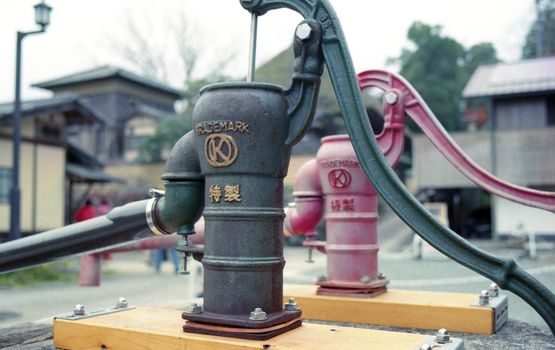
Case A — boiler-feed. A 7-stage high-pressure pump was modelled with rotor dynamics and tested on a vibration bench to keep rotor natural frequencies away from the running-speed and vane-passing excitation bands; the paper's central engineering point is that the inter-stage fluid coupling shifts the rotor's lateral modes and must be included in any resonance check [S2]. Failure mode if missed: a first lateral mode lands on a harmonic of running speed and the shaft fails in service.
Case B — high-pressure RO feed. Multistage stainless / duplex pumps in the export channel (4/40 horizontal/vertical multistage series) deliver the head needed for seawater RO at multi-MPa discharge, and the catalog frame explicitly cites food, pharma and industrial clear-water service [S5]. Failure mode: cavitation burn at the first-stage eye if NPSH margin is miscalculated, with characteristic pitting on the suction-side shroud within hours of upset.
Case C — flooded-pit drainage. Submersible sump pumps with float switches cycle on rainfall or process spill, pump 5–25 m head, and tolerate 6–12 mm solids in general industrial variants [S3]. Failure mode: seal-chamber oil contamination, followed by water ingress and stator burn, if the seal is not serviced on the maintenance schedule.
Limitations, Constraints and Sourcing Levers
Neither class is a substitute for the other. The published multistage product listings cluster around boiler-feed, high-pressure cleaning, mine dewatering-feed and RO high-pressure work, with no overlap into raw sewage [S4][S5]. Sump-pump listings cluster around construction dewatering, pit drainage, sewage handling and basement flood service [S3]. Trying to oversize a sump pump to cover a 60 m head requirement means an impeller operating far from its best-efficiency point, with elevated vibration, seal wear and energy cost; trying to use a multistage on dirty sump water means a clogged first-stage eye and burned seal faces within hours.
On sourcing, the D, DG, DF, DFSS series and the 4/40 stainless multistage line are the dominant export-channel offerings as of mid-2026, with negotiable 1-piece MOQs typical on made-in-China listings [S4][S5][S6]. Engineering specification should fix TDH, fluid, NPSHr, materials, mechanical-seal code and duty cycle on the datasheet before any supplier shortlist is built — the same logic the plunger pump buying guide 2026 applies to positive-displacement selection.
Verifiable next node: the export-channel product lines for D/DG/DF multistage pressure pumps and 4/40 stainless multistage clean-water pumps carry the boiler-feed and high-pressure-cleaning envelope as of 2026-06 [S4][S5]. Watch item: any new certification marking (CE-PED, ATEX 2014/34/EU) on a D-G-DF datasheet published in the second half of 2026, and any new explosion-proof sump-pump listing on industrial sales channels, will be the leading signal of the next design-cycle shift.