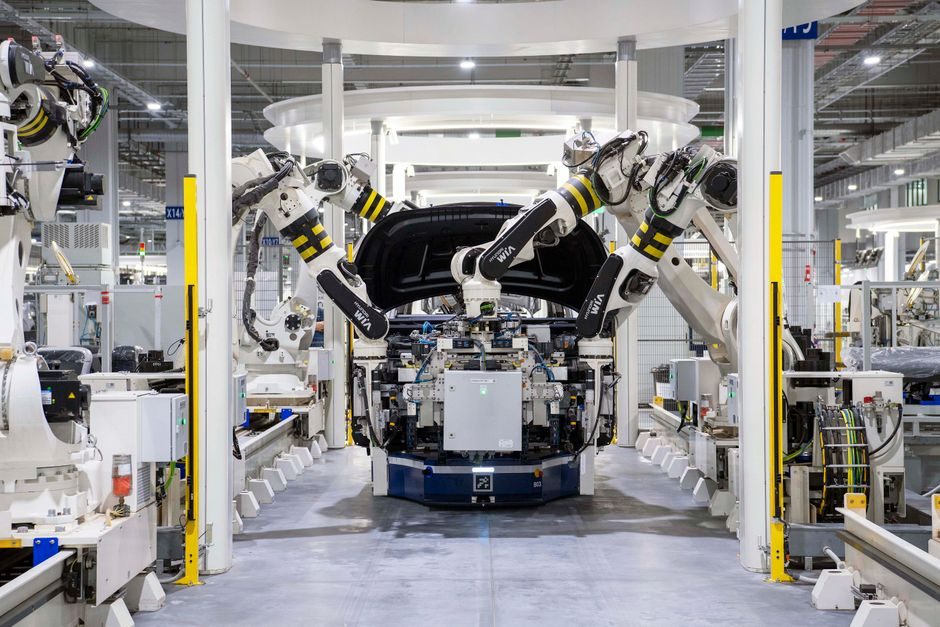
SEMICON China 2025 (Shanghai, 2025-03-27) hosted a "Smart Manufacturing Forum — Factory of the Future" under the SEMI Smart Manufacturing Initiative, focused on an "Accelerating Sustainability with Smart Manufacturing" roadmap for brownfield device-making fabs leveraging Industry 4.0/5 [S5]. The June 18, 2026 SEMI Smart Manufacturing Chapter meeting extended that workstream into a measurable Automation Maturity Model for legacy fabs [S3].
Cimetrix, Onto Innovation, Balluff, Sancode and METTLER TOLEDO all published 2026-06 software, inspection, sensor and weighing offerings aimed at OSAT and front-end lines [S2][S4][S6][S7][S9], while IEEE Spectrum's Imec interview projects the next 15 years of Moore's Law through the next transistor evolution [S1]. The purchasing buyer question for 2026 is therefore not whether to automate, but which automation stack — GEM300, OPC UA, AI/ML, weighing and vision — buys the most yield per dollar on a brownfield retrofit.
GEM300 and SECS/GEM Are the Connectivity Floor, Not the Ceiling
GEM300 (E84, E87, E90, E40) remains the mandatory fab-automation handshake between host MES and tool sets, and Cimetrix positions its 2026-06 factory-automation software suite as the off-the-shelf path to GEM300 compliance for equipment suppliers and OSATs [S2]. The SEMI Smart Manufacturing Chapter, at its 2026-06-18 session, treats GEM300 conformance as a baseline gate before any AI/ML layer is even evaluated for brownfield fabs [S3].
Balluff specifies RFID, IO-Link and vision sensors sized for FOUP/Wafer-carrier tracking and cleanroom ISO Class 3 environments, with the semiconductor industry page updated 2026-05-27 [S4]. Buyers comparing 2026 MES/SCADA platforms should score candidates on documented E87 (carrier management), E90 (substrate tracking) and E40 (process-job management) conformance, not on brochure-level "Industry 4.0" claims [S2][S3].
AI and Machine Vision Are the Active Yield Levers in 2026
Onto Innovation, listed on the 2026-06-27 corporate page, packages optical inspection, metrology, lithography and software under "The Power of Connected Thinking" and is funding the buildout with a $1.3 billion 0.00% convertible notes offering [S6]. METTLER TOLEDO's 2026-05-25 on-demand webinar, "Maximizing Yield in Semiconductor Manufacturing — First-Time-Right Weighing," targets nanometer-scale IC packaging with precision gravimetric dosing and in-line mass verification [S9].
Sancode's 2026-06 OSAT/AI/IoT pitch is the integrator-layer mirror image of OEM tools: an MES/ERP connector stack aimed at brownfield OSAT lines that cannot justify a full Onto-class inspection capex [S7]. For a process engineer, the practical decision is whether the gain sits in 1) defect-detection deep learning, 2) in-line mass/weighing verification, or 3) scheduling/throughput AI — the 2026 SEMI Chapter argues these must be sequenced, not stacked [S3][S9].
Brownfield Retrofit: The Actual 2026 Buyer Problem
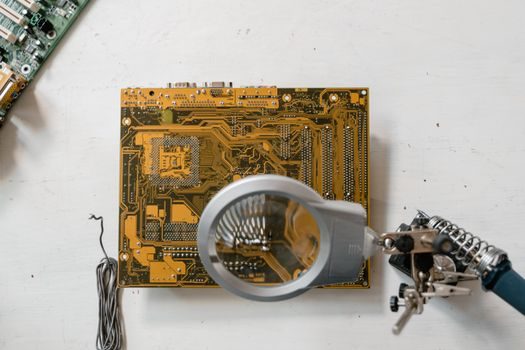
Greenfield fabs are settled science; the open problem is brownfield maturity, and the 2026-06-18 SEMI Smart Manufacturing Chapter blog is explicit that the working group exists to "formulate a roadmap of best practices for pre-existing, brownfield device-making fabs" [S3][S5]. The cited pain points are legacy tool buses (SECS-II over RS-232 vs HSMS over Ethernet), shadow MES, and recipe data trapped in vendor-proprietary formats [S2][S3].
For a buyer sizing a 2026 retrofit, the practical sequence is: (1) lock GEM300 conformance, (2) deploy an OPC UA broker on top, (3) add AI on the unified data model, (4) only then consider closed-loop APC. Skipping straight to AI on unaudited tool data is the dominant failure mode flagged in the SEMI brownfield discussion [S3]. This mirrors the Industry 4.0/5 framing from SEMICON China's 2025 roadmap and the Factory Physics and Automation 2026-06 working notes [S3][S5].
Sensor and Actuator Layer: Where the Real Throughput Gains Live
Onto's 2026-06 process-control portfolio adds optical critical-dimension (OCD) and overlay metrology to that sensor baseline, tying each tool into the same data backbone as the MES [S6].
For automation buyers, the question is not "which sensor brand" but "which sensor family" survives a 200 mm vs 300 mm transition and an FOUP-to-Open-Front-Pod handoff. RFID-on-carrier tracking, vision-on-alignment, and mass-on-dosing cover ~80% of the recurring fab yield loss modes the 2026 SEMI chapter and the METTLER TOLEDO 2026-05-25 webinar jointly surface [S3][S4][S9]. Vision and weighing are complementary — vision catches geometry, mass catches dosing, neither alone is enough at sub-7 nm [S9].
Standards, Reference Models and the 2026 Vendor Scorecard
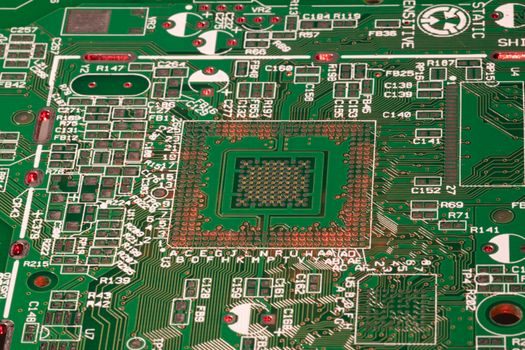
The recognized reference stack is SEMI E10 (GEM), E40/E87/E90/E84 (GEM300 cluster), E84 (load-port handshake), and ISA-95 / IEC 62264 for the MES-to-ERP boundary, with OPC UA bridging brownfield tool buses [S2][S3]. Cimetrix, Onto and Balluff all position their 2026-06 offerings against this stack rather than against a vendor-specific framework [S2][S4][S6].
A short comparison, scoring the 2026-06 vendor set against the same four buyer criteria, illustrates the choice: (a) GEM300 native — Cimetrix "yes, software-first" [S2]; Onto "yes, integrated with metrology" [S6]; Balluff "no, sensor-layer only" [S4]. (b) AI/ML on tool data — Cimetrix "via partner" [S2]; Onto "native in inspection software" [S6]; Sancode "native, OSAT-focused" [S7]. (c) Brownfield retrofit services — Cimetrix "limited, partner-led" [S2]; SEMI Chapter "framework-led" [S3]; Sancode "core business" [S7]. (d) Sensor/actuator hardware — Balluff "yes, broad" [S4]; Onto "metrology-only" [S6]; Cimetrix "no" [S2]. This 4-criteria cut is the structure to use when RFQs cross-reference "smart manufacturing" as a requirement.
Constraints, Failure Modes and What the 2026 Stack Will Not Fix
No software layer can rescue a fab with dirty tool data, and the 2026-06 SEMI working notes flag the data-quality problem — not the AI model — as the binding constraint on brownfield maturity [S3]. METTLER TOLEDO's 2026-05-25 webinar is equally explicit that "first-time-right" weighing is a dosing-and-calibration discipline first, an analytics layer second [S9].
Capex is the second constraint: Onto's 2026-06 $1.3 B 0.00% convertible notes raise signals that top-tier process-control kit is still priced for tier-1 IDMs and foundries, not for mid-tier OSATs [S6]. For OSATs the realistic 2026 path is the Cimetrix / Sancode / Balluff software-and-sensor layer with deferred metrology capex, then a measured migration to Onto-class inspection once wafer volumes justify it [S2][S4][S6][S7]. Across the IEEE Spectrum 2026 Imec interview, the SEMI 2026-06 chapter, and the METTLER TOLEDO 2026-05-25 webinar, the same verdict recurs: smart manufacturing in 2026 is a connectivity + data-discipline problem first, an AI problem second, and a capex problem third [S1][S3][S9].
Trackable near-term signals: the next SEMI Smart Manufacturing Chapter meeting (date to be confirmed), the next METTLER TOLEDO semiconductor webinar slot in the "First-Time-Right" series, and any 2026-Q3 brownfield-retrofit case study published under the SEMI Smart Manufacturing Initiative working group [S3][S5][S9]. For buyers evaluating the underlying motion and control hardware, see the motion controller cost guide 2026 and the connector smart manufacturing 2026 piece; for the display side of the supply chain, the top OLED companies 2026 capacity map covers the wafer-of-glass handoff.
For component-level specifications, see additive manufacturing material, smart camera, and smart meter.