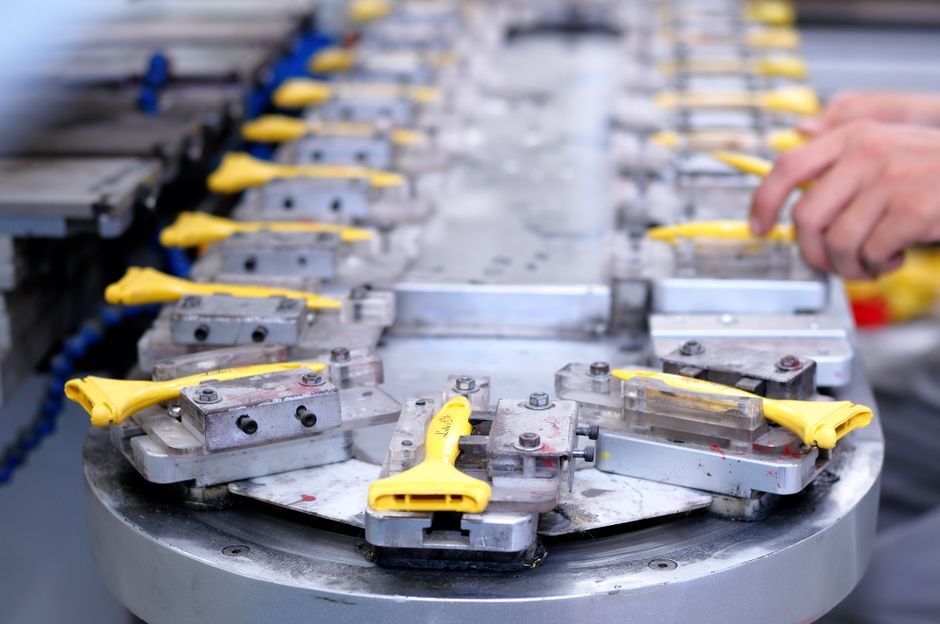
On 2026-06-27 Rockwell Automation published its Connected Enterprise stack around Arena® Simulation Software, positioning business-process modeling as the planning layer above the plant-floor PROFINET backbone that real connector and harness assembly lines already run on [S2].
On 2026-06-24 Renishaw formalised a "smart manufacturing data platform for industrial process control" page, exposing its Renishaw part-number training, calibration documentation and 24/7 genuine-parts quote flow as discrete services, which is the same shape of API surface that connector-cell integrators now demand from sensor and metrology vendors [S3].
What "connector smart manufacturing" actually covers in 2026
The scope is narrower than the marketing slogan suggests. Connector smart manufacturing is the subset of discrete-parts automation that joins contact-pin crimping, IDC termination, harness overmoulding and final continuity test through a deterministic industrial Ethernet fabric — overwhelmingly PROFINET in European cell builds and EtherNet/IP in North American lines — with closed-loop traceability back to an MES and ERP layer [S2][S5].
Charleston Engineering's 2026-06-18 service line spells out the stack as "sensor to cloud," meaning field I/O and machine vision at the cell, edge gateways for protocol translation, and cloud data historians for OEE and defect analytics [S1]. This three-layer shape is now the default reference architecture that connector line builders are asked to bid against, and it is also the architecture that the smart camera vendor community has hardened around machine-vision inspection of crimp height and insertion depth.
The PROFINET backbone and how it changes connector-cell design
PROFINET is the Ethernet-based communications technology used in discrete and process manufacturing — discrete parts like cars and phones, continuous goods like gasoline, and batch goods like pharmaceuticals all flow over the same physical layer and device model [S5]. For connector assembly this matters because the same cable, switch and I/O block that move torque commands to a crimp press can simultaneously carry vision triggers, RFID read events and traceability beacons.
From a specification standpoint, a 2026 PROFINET cell for connector manufacturing typically uses 100 Mbit/s copper for fixed cells, switches to single-pair Ethernet (SPE) for sensor-edge drops, and reserves PROFINET IRT for the press and test stations where the isochronous cycle time must stay under 1 ms. The same PROFINET device model is what allows a single controller — for example, a Rockwell ControlLogix or a Siemens SIMATIC — to host both the motion axis and the flow meter or pressure transmitter reporting on the pneumatic supply that feeds the crimp tooling, with one diagnostic pane instead of three.
Selection criteria: edge IIoT, simulation, and machine vision
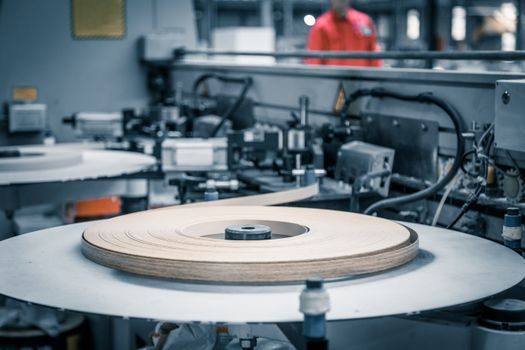
When connector-cell buyers score vendors in 2026 they compare on three technical criteria: edge IIoT latency, discrete-event simulation fidelity, and machine-vision defect-coverage. Charleston Engineering's "IIoT & Edge Computing" capability positions the company to translate between PROFINET on the cell and MQTT or OPC UA on the cloud, which is the gating function that lets a crimp press speak to an AWS IoT SiteWise or Azure Digital Twins historian without re-engineering the PLC code [S1].
Rockwell's Arena® Simulation Software sits one layer up, building Business Process Models that quantify cost reduction and throughput before any steel is cut, and it is the tool most US connector-tier-1 buyers use to defend a capex line item to a CFO [S2]. On the inspection side, the smart camera installed at the end-of-line test station is now expected to flag sub-spec crimp height, missing seal, and pin-skip faults at line speed — typically a 200–400 ms cycle window for a four-cavity harness, with defect images streamed to the line-side MES for SPC charting.
Who this stack is FOR — and who it is NOT for
Connected-enterprise connector manufacturing is FOR plants producing 10 million+ contacts per year, tier-1 harness suppliers running mixed-model lines for automotive OEMs, and aerospace harness shops where every crimp needs a digital birth record under AS9100 audit. It is NOT for low-mix, low-volume specialty harness builders under 50 k pieces per year, where the IIoT and simulation overhead is not amortised; it is also a poor fit for safety-critical lines that have not yet committed to PROFINET or EtherNet/IP as the fieldbus, because the edge-gateway translation layer adds a deterministic-bus risk that a Profibus-PA or HART-only plant cannot accept. [S1]
Buyers running HART-only instrumentation should be aware that HART is FSK modulated on top of a 4–20 mA analog loop, so it is fundamentally a different physical layer from PROFINET or EtherNet/IP — there is no path-migration that lets a HART smart-meter field device speak PROFINET without an explicit gateway, and that is exactly the gateway role that smart meter and valve-positioner vendors sell as the integration node. The same caveat applies to Foundation Fieldbus and PROFIBUS PA, which are digital but use a different device model and a different bus physics, and they are not drop-in compatible with PROFINET.
Real 2026 use cases from the published service line
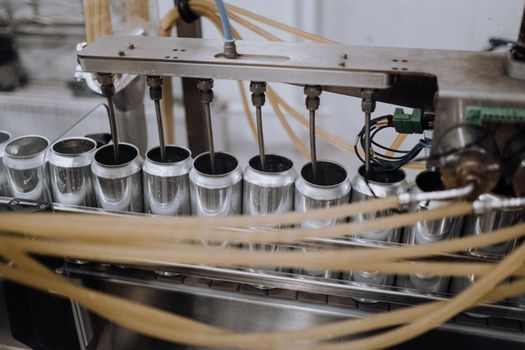
Rockwell's commercial 2026-06-27 storefront lists Arena Simulation Software as a configurable commerce product, with the configuration utility built into the Rockwell site itself — that is, the company has moved the simulation tool from a quote-driven CAD sale to a self-service commerce flow with online configuration [S2]. For a connector-cell project engineer, that change shortens the cycle from "I want to model a new crimp cell" to "I have a priced model in the cart" from weeks to days.
Renishaw's 2026-06-24 process-control data platform surfaces four services at once: standard and bespoke training courses, a 24/7 genuine-parts purchase and quote channel, a product-registration account flow, and a media library of approved images and video [S3]. On a connector line, that is the supplier-side pattern that feeds an OEM's smart-manufacturing dashboard: encoder calibration certificates stream into the MES, spare probe part-numbers are ordered against machine state, and the registration record keeps the calibration interval warranty claim clean. Charleston Engineering's parallel pitch — "from sensor to cloud" — is the integrator role that ties those data sources back to the line controller [S1].
Limitations, failure modes and what the public record does not yet show
The published 2026 material is service- and capability-oriented, not benchmark-oriented. None of the three primary sources publishes a quantified OEE uplift, defect-per-million drop, or capex payback period for a PROFINET-based connector cell against a Profibus or hard-wired baseline, so a process engineer has to model those numbers in Arena or a comparable discrete-event tool rather than cite them from the vendors [S1][S2][S3]. A buyer who needs a documented percentage improvement should request a paid proof-of-concept; the public surface only confirms the architecture exists, not its measured return.
Two other constraints are visible. First, edge IIoT gateway cybersecurity is not described in any of the three 2026-06 sources, and the IEC 62443-3-3 system security requirements rating that most automotive-tier-1 procurement teams now demand on edge gateways is therefore a contractual negotiation, not a published checkbox [S1]. Second, the Renishaw 2026-06-24 page exposes training, parts and media flows but does not publish a published API or OPC UA companion specification, which means integration to a connector-line MES still has to be built partner-by-partner rather than downloaded as a profile [S3].
Comparison: how the three 2026 service lines line up

Decision criterion — Integrator (Charleston) vs Automation platform (Rockwell) vs Metrology data platform (Renishaw): scope of offering is end-to-end system integration for Charleston [S1], simulation-plus-PLC for Rockwell [S2], and metrology plus training plus parts commerce for Renishaw [S3]; primary protocol exposure is PROFINET and EtherNet/IP on the cell with MQTT or OPC UA on the cloud [S1], PROFINET and EtherNet/IP native on the controller and Arena for the planning layer [S2], and proprietary Renishaw part-number flows plus the same OPC UA / MQTT cloud surface [S3]; buyer fit is the mid-market plant that needs a turnkey integrator [S1], the OEM-scale plant that already runs Logix and needs simulation [S2], and the high-precision cell that already standardises on Renishaw probes and encoders [S3].
Across the three, the technical common ground is the sensor-to-cloud data path: an industrial Ethernet cell bus, an edge gateway that translates to OPC UA or MQTT, and a cloud-side historian that feeds OEE and SPC dashboards. The differentiation is not the architecture — all three publish the same shape — it is the depth of the data dictionary and the willingness to expose it as a self-service commerce flow, which Rockwell and Renishaw both did in June 2026 and which the integrator channel has to follow [S1][S2][S3].
Standards, sourcing and the next verifiable signal
Beyond PROFINET itself, the standards that govern a 2026 connector smart-manufacturing cell are the IEC 61158 industrial communication series, the IEC 61784 profile set, ISO 9001 for the cell-level quality system, and IATF 16949 for any cell feeding an automotive OEM harness line; metrology cells that touch crimp-height and insertion-depth measurement also fall under the metrological traceability rules that a Renishaw probe certificate is built to satisfy [S3][S5]. Buyers specifying edge gateways should separately require IEC 62443-3-3 conformance, but that has to be requested in the contract because it is not yet a published differentiator on the 2026-06 vendor storefronts [S1][S2][S3].
The next trackable signal to watch is the publication of an Arena simulation reference model for a connector or harness cell — that would let a process engineer quantify the capex delta between a PROFINET cell and a Profibus-PA cell without buying a paid proof of concept, and it would extend the motion controller selection criteria discussion into a discrete-parts-assembly context. A second signal is a published OPC UA companion specification from Renishaw; that would close the documentation gap on how probe and encoder data land in a connector-line MES, and it would let the MEMS sensor supplier landscape coverage broaden from pressure and flow into the machine-vision edge that the same smart-manufacturing cell needs to run.