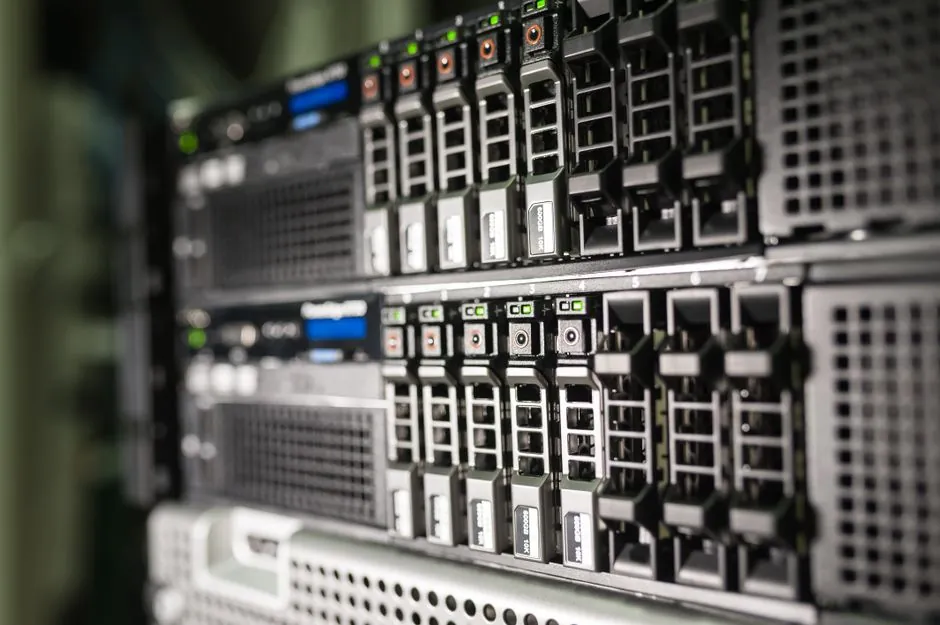
Server hardware in 2026 is no longer a commodity procurement decision: the IDC Worldwide Quarterly Server Tracker, released on 15 June 2026, put the global server market at US$122.6 billion in vendor revenue, while server DRAM prices surged nearly 95% in early 2026, both directly tied to a single AI-driven capex wave from the largest cloud providers [S2][S3].
Combined capital spending among the top hyperscalers (Microsoft, Google, Amazon, Meta) is forecast to exceed US$710 billion in 2026, and that spend is consuming the same High Bandwidth Memory, high-performance DRAM, and NVMe capacity that standard enterprise servers depend on, a structural constraint rather than a cyclical blip [S3].
Why 2026 Looks Different From the Last Two Refresh Cycles
Worldwide IT spending was projected to reach US$5.5 trillion in 2025 (up 10% YoY) and to surpass US$6 trillion in 2026, with data center systems the fastest-growing segment inside that stack [S1]. Spending on compute and storage hardware for AI deployments alone surged 166% year-over-year to US$82 billion in Q2 2025, a signal that AI silicon is no longer a side category but the dominant line item [S1].
Semiconductor revenue, the upstream feed for every serial server build, was forecast to rise over 22% to US$772 billion in 2025, then another 25% to US$975 billion in 2026, driven by AI-optimized processors, edge-computing devices, and high-performance chips [S1]. The upshot for buyers is that allocation, not list price, is the binding constraint on the 2026 server refresh.
Component-Level Pressure: DRAM, HBM, and NVMe
Server DRAM is the cleanest single number to anchor a budget conversation: up ~95% in early 2026, with the underlying supply dynamics not pointing toward a quick resolution, because the AI buildout is a multi-year capital cycle, not a spot shortage [S3]. High Bandwidth Memory, the stacked-DRAM variant that feeds into GPU accelerators, is being pulled into AI SKUs at a margin profile that standard server DIMMs cannot match, so merchant supply for dual-rank DDR5 RDIMMs tightens even when fab utilization is at record levels [S3].
NVMe storage faces the same allocator pressure, because the same controller and NAND packaging lines that feed hyperscaler AI training pods also feed mainstream 2U general-purpose servers [S3]. Lead times for high-capacity E1.S and E3.S drives have lengthened, and the practical consequence for procurement teams is that 2024 cost models are no longer a defensible baseline; the v5 hardware tiers published by infrastructure providers in 2026 explicitly reflect current market pricing [S3].
Hyperscaler Pricing vs Dedicated Infrastructure
Public cloud and dedicated infrastructure absorb supply shocks differently, and that difference is the core budget-planning decision in 2026. Hyperscalers buy at scale, so they negotiate real leverage on the inflated DRAM and NAND cost basis, but they also layer margin on top of that inflated basis; a 95% server DRAM increase does not translate one-for-one into cloud compute list price, but it does translate into something, and customers typically see it as a bill change rather than a forecast line item [S3].
Reserved-instance pricing locks in today's rates for a commitment period, which is the closest analogue to a long-term supply contract, but the commitment itself creates flexibility constraints that carry an implicit cost when AI workload shapes shift mid-cycle. Dedicated private infrastructure exposes the supply shock directly in the procurement quote, which is the worst part for a CFO and the best part for a model that has to defend unit economics to a board. For organizations with tight infrastructure budgets, the variable billing model of public cloud makes the underlying cost-basis shift harder to model in advance, a planning problem that is structural to consumption pricing [S3].
Vendor Map: Where the Volume Is Going
The top four hyperscalers account for the majority of 2026 server unit and dollar volume, with the balance distributed across ODMs (white-box integrators serving the same hyperscalers), Tier 1 OEMs (Dell, HPE, Lenovo, Supermicro), and regional system builders. AI-optimized rack systems with liquid-cooling-ready configurations have moved from a niche engineering sample in 2023 to a default quote line in 2026, and the rack-level power envelope (often 40-100 kW per rack, against a 2022 baseline closer to 10-15 kW) is the new constraint that facilities teams have to plan around [S1].
For non-hyperscaler buyers, this concentration means two practical shifts: first, allocation priority is given to long-term contracted customers, so spot-market buyers face the longest lead times; second, the OEM order book increasingly mirrors the hyperscaler bill of materials, so general-purpose 1P/2P servers using the same CPU SKUs as AI training nodes will see second-priority allocation when DRAM and HBM are tight. Suppliers that historically carried deep channel inventory are running leaner in 2026, so multi-source qualification on the CPU platform (Intel Xeon Scalable, AMD EPYC, and emerging Arm-based server SoCs) is the most defensible single mitigation [S1][S3].
Selection Criteria: What to Lock In Before Q4 2026
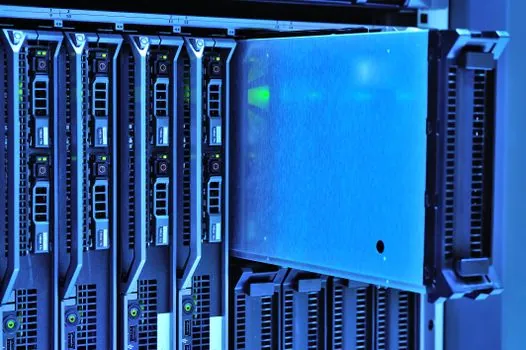
For a 2026 server refresh, four criteria separate a defensible spec from a budget casualty. First, memory headroom: a minimum of 16 DDR5 RDIMM slots per socket and a confirmed supply path for the specific RDIMM speed grade (4800 MT/s baseline, 6400 MT/s preferred) at a contracted price, not a list price [S3]. Second, accelerator optionality: chassis that can accept a 600-1000 W GPU or a lower-power inference accelerator without a full platform swap, because the workload mix in 2027 is unlikely to match the 2025 baseline.
Third, thermal envelope: rack-level kW assumptions need to be confirmed with the data center operator, because 2026 architectural hardware standards for new builds are designed around higher power densities than most raised-floor rooms can deliver without retrofit. Fourth, storage tier: a mix of high-performance NVMe (for AI-adjacent databases and vector stores) and capacity-tier QLC NAND, sized so that the 2026 NAND cost basis is locked in via multi-quarter purchase commitments rather than month-to-month procurement [S1][S3].
Side Effects: Power, Cooling, and the Rack Itself
Data centers are reinventing themselves around higher power, liquid cooling, and ultra-fast optical networks, and the rack is the unit at which this shows up in the BOM [S1]. Liquid-to-air and liquid-to-liquid CDUs that were custom-engineered line items in 2023 are now catalog offerings from the major OEM rack families, and the secondary effect is that any 2026 server spec that ignores coolant supply and return temperatures risks being a stranded asset when the data center operator revises its PUE target mid-cycle.
Ultra-fast optical networks (800 GbE and the ramp toward 1.6 TbE) are reshaping the ToR switch layer as well, so the building pipe hardware that carries coolant and the structured cabling that carries data have to be planned as one system, not two separate vendor scopes. The vendors that can deliver rack-scale (server plus switch plus CDU plus rack PDU) as a single warranted unit have a structural advantage in 2026, and that is reflected in the OEM order book concentration [S1].
Limits of the Story: What 2026 Data Does Not Tell You
Three caveats keep this picture honest. The 36.5% server growth figure is an analyst projection, not a reported actual, and Q1-Q2 2026 reported numbers from individual vendors will revise the baseline once they land in earnings cycles [S1]. The 95% server DRAM price increase is a spot-data-point from early 2026, and the trajectory through the second half of the year depends on HBM yield curves at the leading memory IDMs, which are not publicly disclosed in real time [S3]. The US$710 billion combined hyperscaler capex is a forecast that aggregates four different corporate guidance ranges and assumes no material capex pullback, a tail risk that any infrastructure budget model should stress-test [S3].
None of these caveats invalidates the 2026 procurement problem, but they bound how far any single number can be trusted. For a more granular view of the AI silicon side of the same demand wave, the GPU market share 2026 breakdown lines up the accelerator vendors against the same hyperscaler capex pool, and the AI chip demand 2026-2030 forecast set provides the upstream supply signal that feeds the server-side constraints discussed above.
Trackable signals for the next 90 days: Q3 2026 hyperscaler capex updates in October earnings calls, the September 2026 IDC Worldwide Quarterly Server Tracker refresh, and any DRAM contract price revision from the leading memory IDMs, all of which will recalibrate the 36.5% growth and 95% DRAM figures cited above [S1][S2][S3].