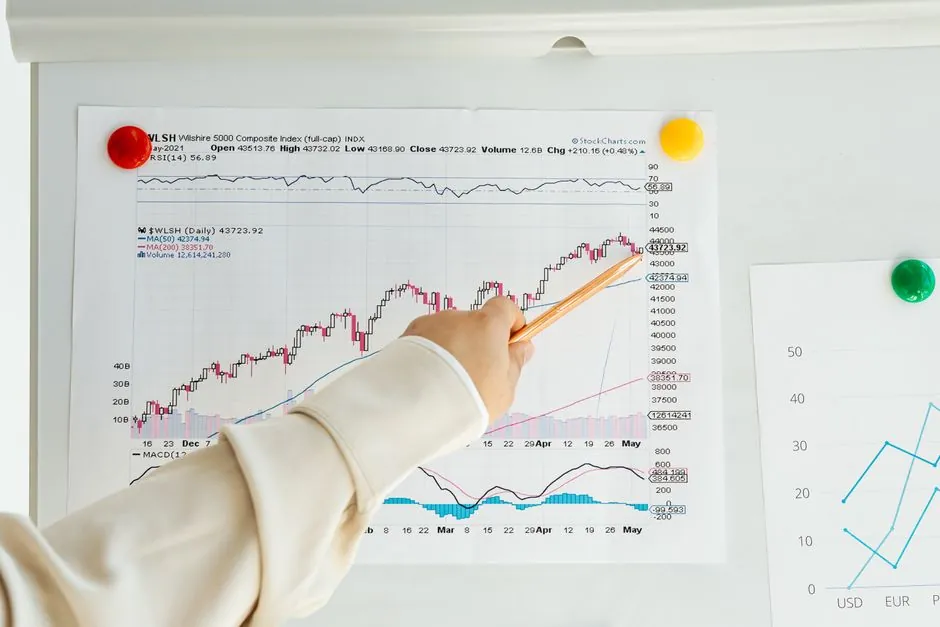
Global lithium-ion battery demand is on track to grow roughly 33% per year through 2030, while the cell-level price per kWh is expected to fall from $132 in 2018 to about $80 by 2030, crossing the $100/kWh parity threshold around 2025 [S5].
In dollar terms, the global lithium-ion battery market is sized at USD 136.28 billion in 2026 and is projected to reach USD 366.82 billion by 2031 [S7], while the broader secondary-battery segment is forecast to add USD 52.56 billion between 2026 and 2030 at a 27.3% CAGR [S9]. The U.S. Department of Energy's 2021 National Blueprint for Lithium Batteries 2021-2030 framed the same demand curve as a 5x-10x expansion of the worldwide lithium-battery market over a decade [S1].
Demand volume and the 30% step-up in 2024
Lithium demand jumped about 30% year over year in 2024, a single-year step consistent with the multi-year 3x-by-2030 / 4.2x-by-2035 trajectory published in mid-2026 industry tracking [S2]. EVs and stationary battery energy storage already account for roughly 61% of lithium consumption and are expected to exceed 90% by 2040 [S2]. Battery energy storage systems (BESS) specifically are projected to compound at roughly 30% CAGR through 2030 [S3]. The IEA's executive summary on Batteries and Secure Energy Transitions projects a further ~40% drop in global average lithium-ion battery costs from 2023 to 2030, the cost-side counterpart to the volume ramp [S4].
Cell price trajectory: $161 high, $80 floor, $100 parity
The 2018-2030 cell price path is now well-anchored: $132/kWh in 2018, a 2021 peak of $161/kWh, and a projected $80/kWh by 2030, with the $100/kWh milestone (the commonly cited price-parity point for EVs against internal-combustion rivals) crossed around 2025 [S5]. That 50% real decline over eight years is the single most-cited input in EV total-cost-of-ownership models, and it is the reason a 33% annual demand CAGR is matched by a unit-cost curve that compresses margins on commodity-grade cells. For buyers sourcing lithium-iron-phosphate (LFP) prismatic cells for stationary storage, the curve implies that pack cost, not chemistry choice, will dominate 2026-2030 procurement decisions [S5].
Supply-side ceiling: 420 GWh in 2022, surplus through 2030
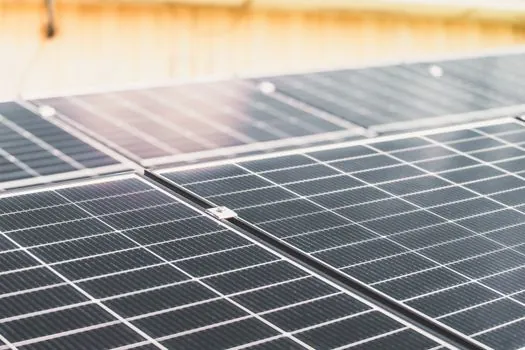
Lithium-ion manufacturing capacity is forecast to stay above global demand through 2030, with 2022 consumption already at 420 GWh and the gap between nameplate capacity and absorbed demand remaining positive across the forecast window [S5]. That surplus is what enables the 50% cell-price compression in the same period: when cell makers run below nameplate, fixed cost per kWh falls even as raw-material costs fluctuate. Reused Li-ion is expected to represent about 11% of the supply chain by 2030, with material impact beginning around 2027 [S5], which is the inflection point where recycled feedstock starts to displace newly mined lithium equivalent in the cell bill-of-materials.
Where the estimates diverge: 5x vs 3x, 27.3% vs 33% CAGR
The forecast envelope itself is wide. The DOE blueprint (June 2021) puts the 2021-2030 expansion at 5x-10x [S1]; secondary-market sizing for the broader category shows a 27.3% CAGR adding USD 52.56 billion by 2030 [S9]; the dedicated lithium-ion segment is tracking closer to a 33% annual demand CAGR [S3]; and the consumer-mobile-battery subset grows far slower, at 5.2% CAGR from $26.19 billion in 2026 to $32.11 billion in 2030 [S6]. For procurement teams, the practical reading is that the highest growth sits in EV and grid-scale BESS, not in portable-electronics cells.
Regional and end-use split: EVs at 40%+ of new car sales by 2030
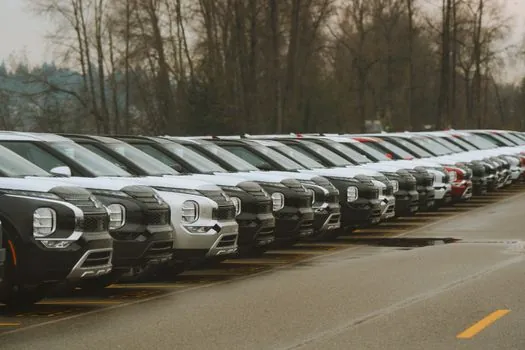
Under stated policy settings, electric cars are projected to exceed 40% of global car sales by 2030, the IEA reference scenario cited in mid-2026 lithium-market coverage [S2]. That is the demand pull behind the cell-price curve. On the U.S. side, the Department of Defense's 2024 aggressive electrification scenarios imply lithium-ion demand reaching 1 GWh per year by 2053, a smaller but strategically tracked sub-segment of the national demand base [S8].
Chemistry direction and what it means for spec sheets
LFP is gaining share in entry-level EVs and stationary storage, while high-nickel NMC and NCA chemistries continue to dominate long-range EV packs; both paths still require lithium as a core input, which is why the 3x demand forecast survives chemistry mix shifts [S2]. For buyers cross-referencing battery cell selection with adjacent power-conversion hardware, the cell-level price collapse ($80/kWh by 2030 [S5]) directly lowers the capital cost of any system pairing batteries with industrial pressure transmitters or flow meters for process monitoring. The same electrification curve is also reshaping adjacent material markets, with vanadium demand pulled up by long-duration vanadium-flow storage competing in the same grid-scale BESS segment.
What to track next: 2027 recycling inflection, 2025 parity, 2030 cost floor
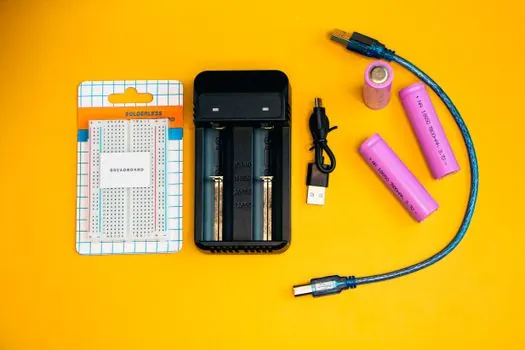
Three verifiable forward nodes anchor the 2026-2030 outlook: the 2025 EV price-parity crossing at $100/kWh [S5], the 2027 inflection where recycled Li-ion begins to materially displace mined feedstock (reaching ~11% of supply chain by 2030 [S5]), and the 2030 cost floor near $80/kWh combined with a USD 366.82 billion lithium-ion market size [S7] against a 3x-4.2x demand multiplier [S2].
For component-level specifications, see industrial valve.