The 2026 lithium-ion battery market sits between USD 136.28 billion and USD 174.9 billion across major forecasters, with Mordor Intelligence tracking USD 113.61 billion in 2025 expanding to USD 366.82 billion by 2031 at a 21.90% CAGR, while Grand View Research projects USD 405.4 billion by 2033 from a USD 151.0 billion 2025 base [S1][S3].
Cell shipments split by chemistry, with lithium iron phosphate taking roughly half of 2025 cell volume on a USD 47 per kWh cost edge, while lithium nickel manganese cobalt oxide retained 44.5% of market share and continues to anchor long-range electric vehicles, per the same January 2026 Mordor dataset [S3].
Chemistry Split: LFP Scale vs NMC Premium
Lithium iron phosphate captured approximately 50% of 2025 cell shipments and is projected to compound at 23.5% CAGR through 2031, driven by stationary storage, entry-level EVs, and Chinese cell-to-pack designs [S3]. LFP's lower material cost and improved cycle life are pushing prismatic formats, with 3,000-10,000 mAh cells commanding 35.1% of 2025 market share and cells above 60,000 mAh forecast to grow at 27.9% CAGR [S3].
Nickel-rich NMC chemistries continue to dominate premium long-range vehicles, where energy density per kilogram still matters more than cost, and InsightAce Analytics' February 2026 segmentation lists cathode chemistries as NMC, LFP, LCO, lithium titanate oxide, LMO, and NCA as distinct product lines under the same competitive umbrella [S2]. Cylindrical cells retained 49.3% of 2025 revenue share, while pouch architectures that enable cell-to-pack integration are expanding at 22.7% per year [S3].
Form Factor and Capacity: Cylindrical Holds, Pouch Climbs
Cylindrical cells held 49.3% revenue share in 2025, but the cylindrical-versus-p-versus-prismatic decision increasingly maps to chemistry: LFP skews prismatic for cost and pack-level integration, while NMC splits between cylindrical 21700/4680 formats and pouch for cell-to-pack, with the energy storage segment adding further demand for 60,000+ mAh large-format prismatic cells [S3][S4].
The market bifurcation shows automotive taking 54.6% of 2025 revenue while stationary energy storage is growing 29.4% annually, with U.S. utility procurement alone contracting 96 GW of four-hour systems for renewable integration [S3]. This dynamic reshapes supplier strategies: gigafactories that once optimized for EV-grade cylindrical NMC are now adding prismatic LFP lines for grid storage, which the battery electrolyte market 2026 analysis tracks through additive and solvent-mix shifts.
Regional Capacity: China Concentration Slowly Dilutes
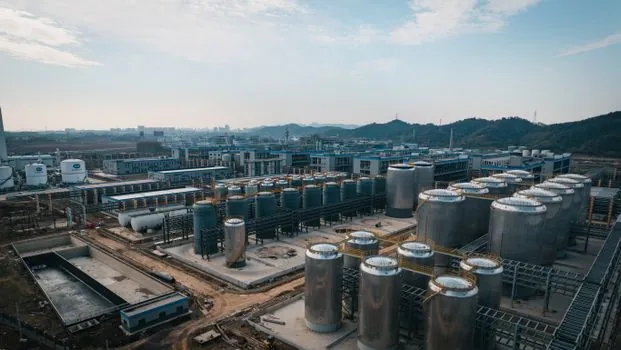
China still holds roughly 80-85% of global cell manufacturing capacity, with Asia-Pacific capturing 55.7% of 2025 market share and projected to post 30.8% CAGR, the highest regional rate [S3]. The U.S. Inflation Reduction Act and European Battery Regulation are driving parallel gigafactory build-outs in North America and Europe, gradually diluting Chinese dominance, though InsightAce Analytics still names Asia-Pacific as the leading region for the 2026-2035 forecast period [S2][S3].
Utility-scale storage procurement in the United States (3.6% impact on CAGR forecast) and Nordic data-center backup migration from VRLA to lithium-ion (1.1% impact) are now material demand vectors, with the latter driven by SCADA-monitored DC power architectures in Sweden, Norway, Finland, and Denmark [S3]. Maritime IMO GHG targets are pushing marine-grade Li-ion adoption in Europe at 1.4% CAGR impact, broadening the addressable market beyond vehicles and stationary racks [S3].
Supplier Tier: The Big Four Plus BYD and the Challenger Cohort
Contemporary Amperex Technology Co. (CATL), BYD, LG Energy Solution (LG Chem), Panasonic, and Samsung SDI anchor Tier 1, with Tesla, EVE Energy, CALB, Guoxuan High-Tech, Envision AESC, Farasis Energy, Gotion, and Saft forming the competitive challenger cohort listed in the February 2026 InsightAce vendor roster [S2]. EVE Energy's own product line spans prismatic LFP cells from LF100LA (3.2V, 102Ah) to MB31 (3.2V, 314Ah), prismatic NCM cells around 3.62-3.73V nominal, and storage systems from 48V/100Ah rack modules to 1331.2V/5015kWh containerized ESS, illustrating the form-factor breadth suppliers now need to cover [S4].
Smaller specialty players, including Sila Nanotechnologies (silicon-anode chemistry), Lithiumwerks, Varta, and Lithium Energy Japan, hold niche positions in primary Li-SOCl2 (3.6V nominal, with cells from ER14250 at 1200mAh up to ER34615 at 19000mAh) and Li-MnO2 coin cells (CR2032 at 225mAh, CR2450 at 600mAh), markets where industrial DC electronic load testing of pulse discharge profiles is part of buyer qualification [S2][S4].
Forecast Divergence: Why the Numbers Disagree by USD 38 Billion

Grand View Research's USD 174.9 billion 2026 valuation and Mordor's USD 136.28 billion differ by roughly USD 38 billion, while Research Nester's USD 166.2 billion and Precedence Research's USD 137.33 billion for the same year cluster in two bands, and Fortune Business Insights' 22.85% CAGR pushes the market to USD 865.33 billion by 2034 [S1][S3][S4][S6][S7]. The gap reflects different scope definitions: Mordor and Precedence exclude certain primary-cell and ESS service revenue, while Grand View and Fortune fold in consumer electronics, mobility beyond road, and grid-services revenue [S1][S3][S7].
InsightAce's February 2026 read is the most conservative at USD 63.0 billion for 2025, which appears to count only rechargeable cell shipments rather than pack-level and system revenue, illustrating how segmentation choices alone swing reported 2026 size by a factor of two to three across the same calendar window [S2].
Selection Criteria: Matching Cell Format to Application
For an automotive buyer prioritizing energy density, NMC cylindrical 21700/4680 cells remain the default; for entry-level EVs, fleet vehicles, or commercial trucks, LFP prismatic cells around 100-314Ah (3.2V nominal) deliver the lowest USD per kWh and best cycle life; for stationary storage, large-format LFP prismatic above 60,000 mAh or containerized ESS racks (5015kWh at 1331.2V) are the standard build blocks; for primary backup in metering and remote sensing, Li-SOCl2 cells (3.6V) with 1200-19000mAh capacity are the established choice [S2][S3][S4].
Key decision criteria beyond chemistry and form factor include cycle life at 80% depth of discharge, calendar life at stated state-of-charge and temperature, UN 38.3 transport certification, IEC 62133-2 safety compliance, and EU Battery Regulation 2023/1542 recycled-content thresholds now binding for new industrial placements in 2026. Stationary storage buyers are also weighing UL 9540A fire-propagation test outcomes, particularly for indoor containerized installations, as part of procurement gate reviews.
Limitations and Risk Anchors

Concentration risk remains the dominant structural concern, with four to five suppliers holding the bulk of gigawatt-hour capacity and pricing leverage, and any single supplier's thermal-runaway recall event (Samsung SDI 2016, LG Energy Solution 2020-2021) historically moving OEM sourcing within weeks. Lithium price volatility, nickel-cobalt supply concentration in Indonesia and the DRC, and the EU Battery Regulation's recycled-content thresholds (16% cobalt, 6% lithium, 6% nickel by 2031, stepping up in 2026) add procurement-side volatility that buyers need to hedge in multi-year contracts. [S3]
Trackable signals for the next 12 months: U.S.
Spec-level background on the components involved: pressure transmitter, flow meter, and industrial valve.