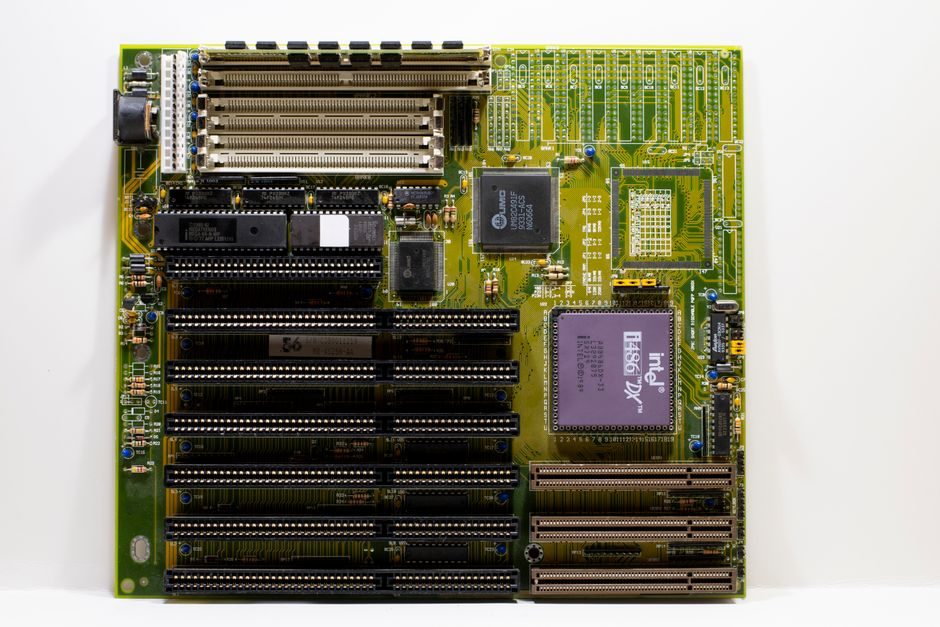
Server hardware manufacturing quality in 2026 is governed by three layers: a quality-management system (ISO 9001) at the assembly site, ENERGY STAR / 80 PLUS efficiency tiers on the power supplies, and component-level validation rules defined by the OEM and the OS vendor (Microsoft, Oracle, IBM, Atlassian) [S1][S2][S3].
For B2B buyers, the practical deliverable is a documented spec sheet that names the processor TDP band, ECC memory population, RAID controller level, NIC speed, and the platform certifications the chassis ships with; without those five items, the build cannot be audited against any recognized standard.
Quality-Management Backbone: ISO 9001 and Documented Control
A server-class assembly line starts with an ISO 9001-certified QMS covering incoming inspection, in-process checks, and final functional test, with traceable lot numbers on every chassis leaving the line [S2]. Contract manufacturers in the Guangdong corridor (Dongguan, Shenzhen, Qingxi) routinely advertise ISO certification alongside industry-standard compliance, with on-demand customization and rapid prototyping as the service differentiator [S2].
For buyers, the audit ask is the ISO 9001 certificate number, the certificate's issuing CB, the surveillance-audit date, and the FAI (First Article Inspection) report for the specific SKU. The hardware configuration error alarm 32502 on Oracle's Diameter Signaling Router platform flags "one or more of the server's hardware components are not in compliance with specifications" with severity Minor — a reminder that QMS non-conformances surface in production as platform alarms, not paperwork [S6].
Power and Energy: TDP, 80 PLUS, and Idle Draw
Microsoft's Windows Server hardware guidance frames the energy decision as a TDP trade-off: opt for the lowest-TDP processor that meets the performance goal, since frequency, operating voltage, cache size, and process node all swing energy consumption [S1]. On the supply side, improving power-supply efficiency is the single largest kWh/year saving per server, and fans contribute a second non-performance trade-off via variable-speed curves [S1].
The MSFT guidance also gives a concrete idle-loss figure: volume servers that are "powered off" can still draw up to 30 W per chassis, which is why remotely managed PDUs are specified at the rack level rather than per server [S1]. The comparison most procurement teams should run is: (a) TDP band of the CPU SKU, (b) 80 PLUS tier of the PSU (Bronze / Silver / Gold / Platinum / Titanium), (c) idle watts published on the ENERGY STAR dataset, and (d) selective-suspend support for USB and NIC ports at the BIOS level [S1].
Component-Level Rules: ECC, RAID, and NIC Tiers
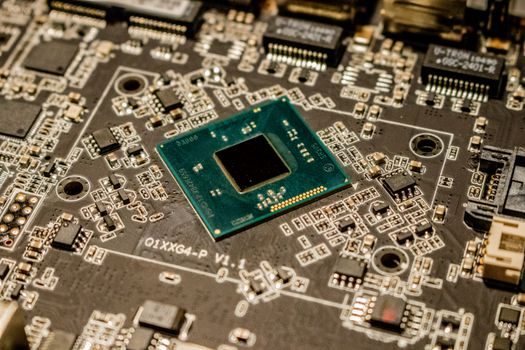
Enterprise sizing rules from Oracle's Enterprise Management documentation split deployments into Small (1–100 sites), Medium (100–250 sites), and Large (250–1000 sites), with RAM stepping 2 GB → 4 GB and NIC stepping 10/100 → 10/100/1000 between the small/medium and medium/large brackets [S3]. The same spec requires "RAID configuration and features must be implemented through the hardware controller instead of the operating system" — a hard line against software RAID for any server that will hold production data [S3].
Microsoft's hardware guidance reinforces ECC: memory accounts for an increasing fraction of system power, and DIMM selection is driven by technology, ECC presence, bus frequency, capacity, density, and rank count — so power and reliability are decided at the BOM stage, not in the field [S1]. Storage rules compound the choice: SSD is more power-efficient than rotational media, 2.5-inch drives draw less than 3.5-inch drives, and a 4–8 Gb storage link is heavy enough that idle-power behavior on the HBA matters [S1]. The data-center build quality chain that ties these components to MOM/QMS loops is laid out in this spec-first map of MOM, QMS, and IIoT loops for 2026 data-center builds.
Validated Platforms and Reference Architectures
IBM's Linux-on-System z reference stack ships an LPAR with 4–6 CPUs, 16 GiB RAM, and 1 Gbit Ethernet as the baseline client profile — a level of disclosure that lets a buyer reproduce the test bench before signing an SoW [S4]. Sun Management Center 3.6.1 documents four server classes, with the small tier built on a Sun Blade 100-class machine, one 502 MHz UltraSPARC IIe CPU, 1 GB RAM, and 512 MB swap — a useful floor for legacy rack planning [S10].
Crypto-accelerator slotting on the IBM z13 and zEnterprise EC12 is capped at 16 features per machine, with each feature configurable as a CCA coprocessor, a PKCS #11 coprocessor, or an accelerator — a hard physical ceiling that affects how many HSMs can be partitioned into a build [S7]. For live sizing, Atlassian's guidance is the most direct: "Because server load is difficult to predict, live testing is the best way to determine what hardware a Confluence instance will require in production" — peak-visitor counts, not CPU benchmarks, are the sizing unit [S8].
Failure-Mode Discipline: Alarm Hierarchy and Service Manuals
Oracle's X6-2L service manual structures troubleshooting around component fault isolation, with dedicated sections for the troubleshooting overview, the resources index, and the diagnostic-information list — the three sections a field engineer must know before opening a ticket [S9]. The 32502 alarm text is also explicit that the operator must "refer to the appropriate hardware manual," meaning the alarm is a pointer, not a fix [S6].
Process-manufacturing quality stacks on top of the hardware QMS: Oracle Process Manufacturing Quality Management Release 12.2 (Part No. E49067-01, dated September 2013) is the application-layer QMS that inherits its audit trail from the underlying server's hardware trust chain, so the manufacturing MES/QLM tier cannot be specified independently of the platform's tamper-evidence and storage-integrity guarantees [S5].
Sourcing Signals to Track Through 2026-H2
Three signals will tell you whether the QMS tier is actually changing rather than being relabeled: (1) whether 80 PLUS Titanium becomes the default tier on Tier-1 OEM 1U/2U quotes instead of an upcharge, (2) whether contract manufacturers in Dongguan and Qingxi publish per-SKU FAI reports alongside the ISO 9001 certificate [S2], and (3) whether ECC + hardware-RAID is still a hard line on enterprise quotes or starts being downgraded to ECC + software-RAID on price-sensitive SKUs [S3]. Procurement teams should also keep an eye on the spec-driven map of PE pipe selection gates and the ball-screw supply chain levers for 2026 as reference points for how other capital-equipment categories are tightening their BOM documentation in the same window.
The underlying component specifications are covered under architectural hardware, serial server, and additive manufacturing material.