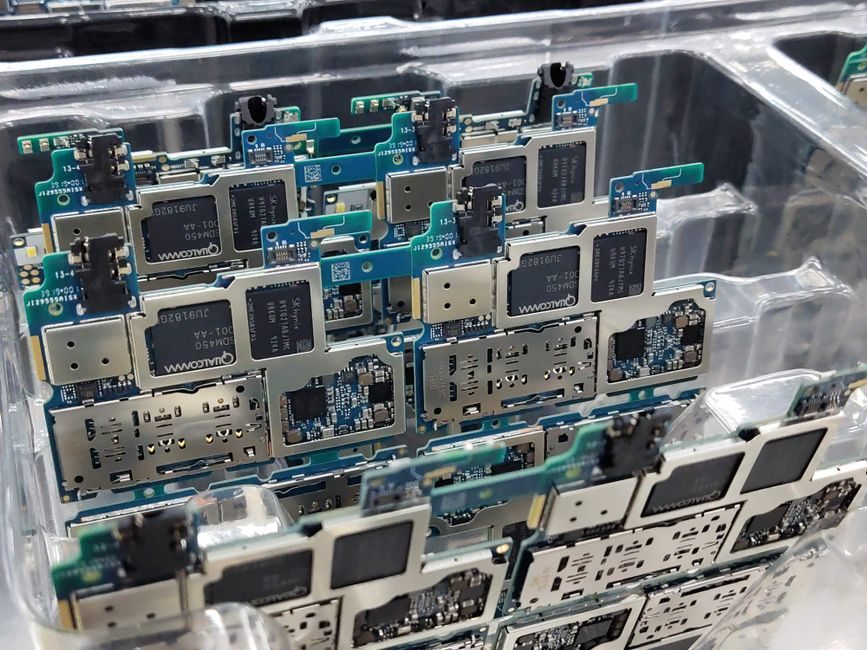
Quality oversight on data-center hardware lines has converged around three layers — Manufacturing Execution System (MES) / MOM, Quality Management System (QMS), and Industrial IoT (IIoT) analytics — each with explicit standards hooks. Siemens positions Opcenter Manufacturing Operations Management as the connective tissue between product engineering, production planning, and shop-floor execution, sitting inside the Xcelerator portfolio [S1].
For server, switch and power-rack OEMs, that translates into traceable build records, statistical process control (SPC) on critical characteristics, and calibration evidence held against named instruments, not loose spreadsheets. Oracle's Process Manufacturing Quality Command Center frames the same discipline for process-style production: role-based dashboards for quality manager, lab manager, analyst and inspector, with KPIs, charts and network diagrams applied to sample inspection, sample analysis and instrument calibration [S2]. On top, Sciemetric's manufacturing quality analytics stack automates defect detection, ties digital records to test signals, and feeds continuous improvement programs [S3].
What "Manufacturing Quality" Actually Covers in a Data-Center Fab
Data-center build quality stretches across PCBA, rack integration, busbar termination, and final burn-in, and each stage has its own evidence pack. Sciemetric's framing of OEE, MES, SPC, QMS, SCADA and operational historians is the working vocabulary procurement teams use when scoring a vendor's quality system [S3]. OEE has long been treated as a gold standard for measuring manufacturing productivity, and MES extends that by capturing both machine and operator data for throughput and product quality [S3].
Closed-loop defect detection requires that test data, not just pass/fail labels, flow back into the line. Sciemetric states the engineering intent plainly: switching defect detection from paper to digital records is what makes a continuous-improvement program auditable rather than rhetorical [S3]. The data-center operator buying a fleet of 10,000 GPU sleds should expect serialized test records, SPC charts on solder joint temperature profiles, and deviation handling that maps to a named standard.
Standards and Frameworks Behind the Stack
IEC 61400-25 — the wind industry's condition-monitoring reference — illustrates the broader pattern: a domain-specific data model that turns equipment into addressable nodes, exactly the model data-center wind-turbine process control and digital-twin programs are borrowing for facility assets. For electronics manufacturing specifically, IPC-A-610 and IPC-7711/7721 govern assembly acceptance and rework; ISO 9001:2015 still anchors the QMS umbrella; IATF 16949 applies where server OEMs also serve automotive customers; and AS9100D where defense SKUs are in the mix. [S2]
Process and discrete quality systems are increasingly pulled onto shared semantic rails. The Industry 4.0 digital-twin stack reuses the same RAMI 4.0 reference architecture that wind and discrete factories are adopting, and the convergence is what lets Siemens call Opcenter a "digital thread" rather than a point MES [S1]. For buyers, the practical gate is: does the vendor's QMS expose data through an API, with role-segregated access, to a historian that a third party can audit?
Side-by-Side: Siemens Opcenter, Oracle QMS, and Sciemetric Analytics
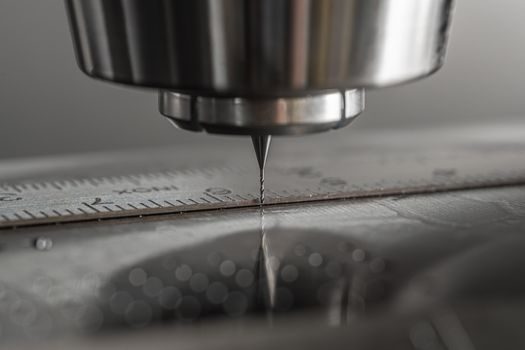
Three reference stacks dominate the 2026 shortlist. The comparison below lines them up against the criteria that show up in every data-center OEM RFQ.
Siemens Opcenter MOM: scope is full lifecycle from production planning through execution and analytics; ownership of traceability, genealogy and non-conformance; integration via Xcelerator and Teamcenter; best fit for greenfield MES deployments and discrete lines [S1]. Oracle Process Manufacturing Quality Command Center: scope is process-industry QMS with EBS integration; dashboards cover sample inspection, sample analysis and instrument calibration; configuration prerequisites sit behind My Oracle Support Knowledge Document 2495053.1, Installing Oracle Enterprise Command Center Framework, Release 12.2 [S2]; best fit for batch/process operations feeding an existing EBS estate. Sciemetric quality analytics: scope is real-time test analytics and defect detection layered on top of an MES; emphasis is on switching paper records to digital and exposing process data for root-cause analysis [S3]; best fit as a bolt-on to legacy lines lacking modern SPC.
On data model, Siemens inherits the Xcelerator digital thread, Oracle ties to EBS sample/inspection tables, and Sciemetric ingests plant-floor signals via industrial protocols. On calibration evidence, Oracle's Instrument Calibration dashboard explicitly tracks the calibration lifecycle of laboratory or production equipment, with metrics for the instrument calibration process [S2]. On continuous improvement, Sciemetric positions its stack specifically around simplifying troubleshooting and enabling continuous improvement through accessible data [S3].
Selection Criteria for the 2026 Data-Center Buyer
A practical scoring sheet for server, storage and switch OEMs now weights four items. First, traceability: each unit must carry a serialized genealogy recordable to component lot, operator, machine, and shift, which is precisely the gap Siemens Opcenter and Oracle QMS both try to close [S1][S2]. Second, statistical process control: SPC must run against control limits that are versioned, not ad-hoc, with out-of-spec deviations routed into a named workflow [S3].
Third, calibration governance: instruments on the line — torque drivers, X-ray counters, hipot testers — must have calibration records that survive an external ISO 17025 or customer audit, and Oracle's Instrument Calibration dashboard exists exactly to track that lifecycle [S2]. Fourth, analytics export: a customer audit team, or an internal yield team, must be able to pull raw SPC data and process parameters, not just summary KPIs, which Sciemetric positions as a core capability [S3].
Use Cases Already Deployed in the Data-Center Supply Chain

Three use cases consistently appear in 2026 sourcing briefs. Hyperscale server OEMs run MES-gated SMT lines where every panel is paired with solder paste inspection (SPI) and automated optical inspection (AOI) data, all bound to a serialized part number, and the genealogy feeds warranty analytics downstream. Power and rack integrators use a QMS layer to enforce torque, hipot and continuity test sign-off per build sheet, with deviations automatically creating a non-conformance record. [S2]
Thermal and additive sub-suppliers feed additive-manufacturing material data — powder lot, machine, build chamber, post-cure profile — into the same genealogy so a cold-plate traceability query can resolve back to the metal LPBF build record, an extension of the additive-manufacturing materials trade-off map. Across all three, real-time shop-floor data is captured by SCADA-style systems, which Sciemetric notes gather data from sensors and machines across the factory floor and display it through a graphical interface, letting operators quickly adjust equipment, resolve issues, and fine-tune performance [S3].
Limits, Failure Modes, and Where the Stack Breaks
Closed-loop quality systems are only as good as the data they ingest. Operational historians store time-based process data instead of serial-number-keyed data, which is fine for plant-level KPIs but weak for per-unit traceability, exactly the gap Sciemetric flags when contrasting historians with serialized MES records [S3]. SCADA gives operators visibility but does not by itself enforce standards; the discipline sits in the QMS and MES layers above it [S3].
Oracle's Quality Command Center is explicitly a downstream consumer of EBS data, and the documentation warns that data must be accurate and current before loading [S2]; loading dirty data produces dashboards that look authoritative but mislead. Siemens Opcenter, meanwhile, is part of a much broader Xcelerator portfolio, which means integration cost and license sprawl are real risks for buyers who only need shop-floor execution [S1]. The same caveat applies to the digital-twin pattern discussed in the Industry 4.0 wind context: a model that cannot be validated against a real calibration record is decoration, not a tool.
Sourcing, Audit, and What to Demand in 2026
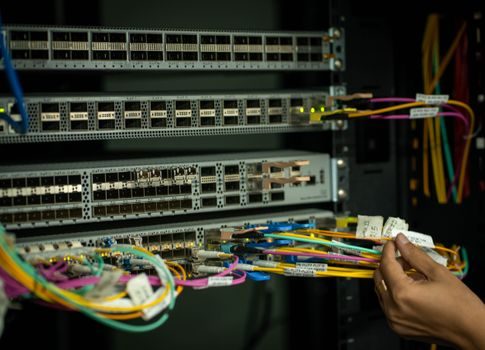
Buyers writing 2026 RFQs should ask vendors for three artifacts. A serialized build record sample with at least PCBA, sub-assembly and rack-level stages, with timestamps, operator IDs, machine IDs and lot codes visible. A live SPC dashboard with versioned control limits, out-of-spec deviation routing, and an exportable raw data feed. A calibration register covering every instrument on the line, with due-date visibility and a path back to the OEM's accreditation. [S2]
Two trackable signals will mark whether a vendor's quality stack is keeping pace. First, whether the vendor's QMS exposes APIs to common historians (PI, AVEVA, InfluxDB) rather than only vendor-proprietary dashboards. Second, whether the vendor participates in industry working groups tied to IPC, IEC and ISO standards, since the standards cited in marketing material are only as reliable as the audit trail behind them [S1][S2][S3]. Procurement teams that anchor RFQs on these three artifacts, rather than on feature checklists, will see fewer warranty escalations across the first three years of fleet operation.
Component reference pages worth checking: data logger, and air quality monitor.