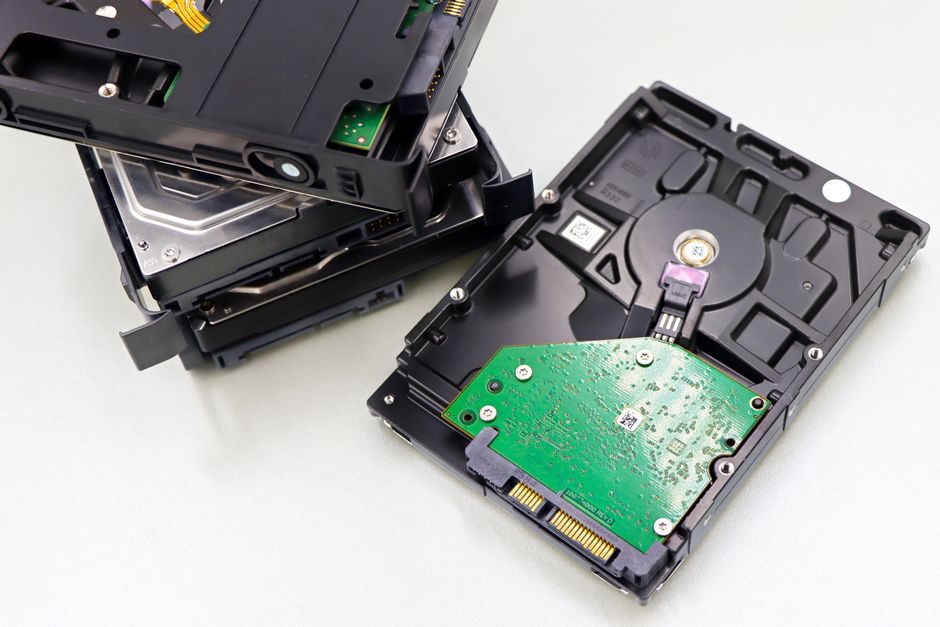
Server hardware production today is gated by three concrete disciplines: identical-node procurement for clustered software (Oracle RAC explicitly requires identical hardware per node to remove resource-contention debugging noise [S1]), minimum-footprint verification (the Sun Java System IM 7 2005Q4 baseline calls out roughly 300 MB disk for the software plus 5 KB per user, with at least 256 MB of RAM scaling with concurrent client connections [S6]), and crypto accelerator inventory control (IBM z13 / zEnterprise EC12 mainframes cap cryptographic features at 16 per system, each feature configurable as CCA or PKCS#11 coprocessor [S3]).
For greenfield acquisition, a server is not a single line item — it is a chassis, a power cord, an RJ-45 twisted-pair Ethernet cable, a Configuration Utilities diskette, a Recovery CD, and the full paper set (Installation, Service, Storage Device, and User manuals), as the Netra 150 unboxing checklist documents [S4]. Production engineering treats the inventory list as the acceptance gate, not the box.
Identical-Node Builds: The Clustered Production Floor
Oracle RAC explicitly mandates identical server hardware on each node of the cluster so maintenance, firmware patching, and capacity planning stay on one curve [S1]. When you mix CPU stepping, DIMM population, or NIC model between nodes, you inherit non-deterministic cache-line behaviour and per-node interrupt-affinity drift — the failure modes that RAC's shared-cache fusion protocol cannot hide. Production planners therefore freeze a single bill of materials before the first chassis ships to the rack.
For the Linux footprint underneath that hardware, the Red Hat sysadmin acquisition flow treats server build as four checkpoints: chassis selection (1U/2U/tower/blade), CPU socket count validated against workload concurrency, ECC memory population balanced across channels, and out-of-band management (IPMI/iLO/iDRAC) reachable on a segregated VLAN [S2]. Skipping the out-of-band step is the single most common production-day regret.
Sizing Thresholds: From 1 Site to 1,000 Sites
Oracle Enterprise Management publishes a four-tier size matrix for the management server itself: Small (1–100 sites), Medium (100–250 sites), Large (250–1,000 sites), plus the polling-against-corporate variant sized for up to 400 days of retained data [S7]. Each tier maps to a specific CPU count, RAM envelope, and disk capacity, and the document treats them as guidelines rather than hard floors because polling frequency dominates the retention arithmetic.
The lower floor for small-footprint deployments is set by Sun Java System Instant Messaging 7 2005Q4: approximately 300 MB of free disk for the software, ~5 KB per user account, and at least 256 MB of system RAM, with the RAM figure scaling linearly once the multiplexor is co-deployed on the same host [S6]. For Sun Management Center 3.5, the reference platform table goes further into silicon — a Small server class is defined as one 502 MHz UltraSPARC IIe CPU with a defined RAM and swap envelope on Netra X1, Netra T1, or Sun Blade 100 chassis [S8].
Crypto Coprocessor Production: z13 and EC12 Inventory Rules

Mainframe production planning treats cryptographic hardware as a capped, configurable inventory rather than a binary on/off. The IBM z13 supports a maximum of 16 cryptographic features, each feature code configurable as a CCA coprocessor, a PKCS#11 coprocessor, or an accelerator — installed against the same DES Enablement licence pool [S3]. The zEnterprise EC12 carries the same 16-feature ceiling with the same per-feature configurability [S3]. Production engineering therefore plans key-rotation throughput against feature count, not chassis count.
For sites running on the Netra 150 unboxing baseline, the cryptographic story is intentionally minimal — no coprocessor slots are listed in the standard inventory; encryption is delegated to the OS and the application layer, with the documented inventory limited to chassis, power, RJ-45 cable, Configuration Utilities diskette, Recovery CD, and the four-paper manual set [S4]. This is the cost-optimised tier in the production matrix, not a missing feature.
Hardware Recommendation Tables as Production Specs
The Oracle Enterprise Management sizing document reframes the spec question: it does not sell hardware, it publishes a recommendation table driven by site count, polling frequency, and 400-day retention [S7]. Process engineers should read that table the same way they read a pressure transmitter datasheet — three columns, three constraints, one decision.
Equally, the Sun Management Center 3.5 platform table lists four machine classes (Small through Enterprise) with explicit CPU type, RAM, and swap figures per class, all anchored to the UltraSPARC IIe reference silicon [S8]. When the production spec drifts off that table — newer SPARC, x86, or ARM — the document is explicit that alternate configurations can deliver equivalent performance, but the engineer is on the hook to prove it with their own benchmarks, not vendor marketing.
Build vs Buy: The Serverless Production Question
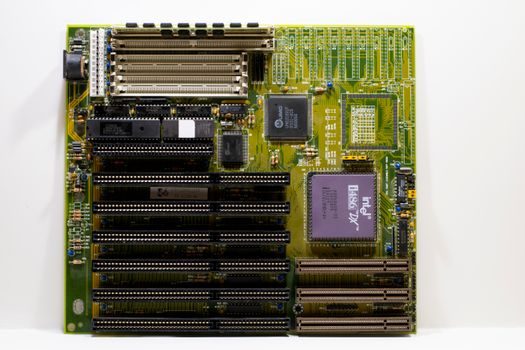
Serverless computing does not eliminate the server; it moves it behind a managed-service boundary where the cloud provider provisions, scales, and maintains the physical host [S5]. The economic case is that most applications use only a small fraction of a server's hardware, so buying a fixed chassis for peak load wastes idle silicon [S5]. For production engineering, the trade-off is concrete: lose direct BMC/IPMI access, gain elastic capacity and pay-per-invocation billing. A team that needs deterministic NUMA pinning, fixed-frequency CPU, or hardware crypto offload (the z13's CCA/PKCS#11 features [S3]) cannot move that workload to a serverless tier and retain the spec.
For physical production runs, the checklist in [S1] is the practical close-out: identical-node hardware, validated OS, validated firmware, validated storage, and a documented Recovery CD in the rack — the same five items a serial server deployment also tracks for out-of-band management. A side-by-side reference for non-server production hardware sits in this case packing machine buying guide, which uses the same throughput-tier-and-pattern logic that the Small/Medium/Large site tiers in [S7] use. Where a line needs flow-controlled pneumatics, the comparison in needle valve vs solenoid valve follows an identical decision-gate pattern.
Trackable signals for the next planning cycle: (1) whether your management-server tier has crossed the 250-site Large boundary and whether polling cadence has been re-baselined against the 400-day retention limit [S7]; (2) whether the cryptographic feature count on any z13 or EC12 partition is within the documented 16-feature ceiling and whether CCA vs PKCS#11 mode is still the right per-feature assignment for the current key-rotation workload [S3]; (3) whether identical-node enforcement has held across the latest firmware refresh, or whether a single node has drifted off the frozen BOM and re-introduced the contention patterns RAC explicitly tells you to avoid [S1].
For component-level specifications, see architectural hardware.