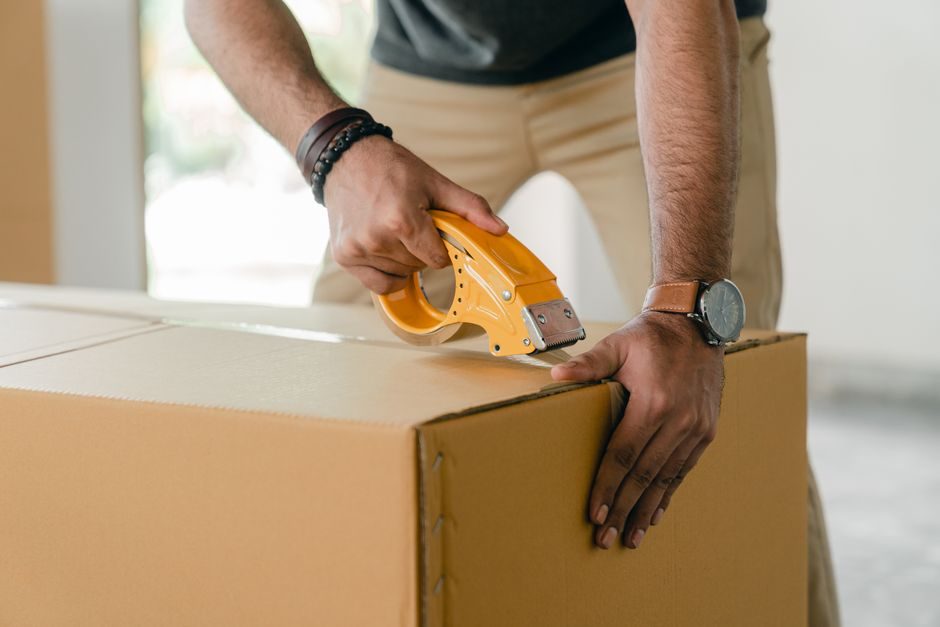
A case packing machine is the unit that collates primary packs — bottles, cartons, pouches, bags — into a corrugated outer, then seals that outer with hot-melt, tape or glue. The 2026 buying decision is dominated by four engineering gates: throughput in cases per minute, pack-pattern flexibility (top-load vs side-load vs wrap-around vs robotic pick), line-side integration protocol, and the OEM's after-sales footprint in the buyer's region.
Entry-level Chinese-built shrink/case pack combinations on Made-in-China.com are listed at USD 12,300–13,000 per set FOB with a 1-year warranty and "Installation Videos and Technicians" support across food, commodity, chemical, medical and beverage end-uses [S3]. Custom turnkey builders such as Yespack and Climax Packaging Machinery publish an inquiry-only pricing model and return a project quote inside one business day, with on-site commissioning in the buyer's country [S1][S4]. Alibaba's bag-case-packing category (2026-05) groups bag-in-case systems under CN shipping, signalling that bag-handling case packers are now a stocked, not custom, sub-segment [S5].
Pack Patterns: Top-Load, Side-Load, Wrap-Around, Robotic
Top-load case packers handle RSC (regular slotted container) cases at typical speeds of 20–60 cpm and dominate FMCG bottling lines; the product is dropped vertically into an erected case before flap closure with hot-melt or tape. Side-load units suit lay-flat pouches, flow-wrapped bars and bag-in-box formats where vertical drop would damage the product; speeds sit in the 15–40 cpm band with longer changeover between sizes [S1][S4].
Wrap-around case packers form the case around the collation using a flat blank, which cuts corrugated cost by 10–20% versus RSC and is the default for canned beverage and bagged snack lines at 30–80 cpm [S4]. Robotic pick-and-place case packers use a 4- or 6-axis arm with vacuum or gripper EOAT to handle mixed-SKU collations, retail-ready trays, and unstable products; throughput drops to 10–25 cpm but SKU-changeover becomes near-zero. Yespack explicitly lists 2023-spec "new case packer" platforms on its homepage, indicating a refresh cadence inside its standard product tree rather than custom build [S1].
Throughput Sizing and Changeover Logic
Case packer throughput is rated in cases per minute, not products per minute, and the published figure assumes a specific case size, glue set time and collation count. A 30 cpm unit paired with a 2×3 bottle collation delivers 180 bottles/min into cases, but the same machine on a 4×6 collation only delivers 720 bottles/min if the infeed can sustain it — most plants over-buy the case packer and under-buy the upstream collator [S3][S4].
Changeover between case footprints is the hidden cost driver: servo-driven width/height adjustment on premium units cuts changeover to under 5 minutes with recipe recall, while hand-wheel adjusted frames on entry-level Chinese units typically need 20–40 minutes per SKU [S1][S3]. For lines running more than 6 SKUs/shift, the servo-adjust premium recovers its capex inside 6–12 months on labour alone.
Integration: PLC, Fieldbus and Line SCADA

2026-spec case packers ship on Rockwell ControlLogix, Siemens S7-1500 or Beckhoff CX platforms, with EtherNet/IP, PROFINET or EtherCAT as the dominant fieldbus — the HMI panel exposes case-size recipes, throughput counters and reject diagnostics [S1][S4]. PackML (ISA-TR88.00.02) state-machine modelling is now common on US/EU OEM builds, allowing the case packer to plug into a line-level MES/SCADA stack with consistent state tags across machines from different vendors.
Entry-level Chinese units typically expose Modbus TCP or PROFINET with a vendor-proprietary HMI; integration into an existing plant network often needs a small protocol-conversion gateway. Climax Packaging's site copy advertises "automation of your packaging operation" as the scope boundary, indicating turnkey integration responsibility sits with the OEM rather than the buyer's controls team [S4]. For multi-machine lines, see how the same gate logic applies upstream on capping and sealing hardware — throughput, format change and protocol handshake are identical decision axes.
Materials of Construction and Hygienic Build
Frame and guard construction on Chinese FOB units is typically carbon steel with powder coat, with stainless contact parts (SS304) as the standard upgrade for food, beverage and pharma end-uses [S3]. US/EU integrators ship 304L/316L stainless frames as default on hygienic lines, with USDA/FDA and 3-A sanitary compliance as line items on the quote — Climax and Yespack both list food and beverage in their headline application matrix [S1][S3][S4].
Washdown-rated builds (IP66 control cabinets, NEMA 4X enclosures, stainless electrical conduit) add 15–25% to the FOB price but are non-negotiable on meat, dairy and ready-meal lines where daily chemical cleaning is enforced by the customer's food-safety plan [S3][S4]. For corrosive chemical or detergent end-uses, frame material moves to 316L with FRP guarding, and the glue-tank and case-erection vacuum pumps must be specified for chemical resistance — a regular spec check the buyer's process engineer should run on every quote [S3].
Pricing Bands, MOQ and Lead Time (June 2026)
The Made-in-China shrink/case packer listing for 2026 carries an FOB price band of USD 12,300–13,000 per set with a 1-set MOQ and 1-year warranty; freight, installation and commissioning are line-item adders not in the headline price [S3]. Alibaba's bag-case-packing category (2026-05) groups multiple OEM listings with "CN" shipping origin, confirming that bag-handling case packers have dropped into a stocked, multi-vendor sub-segment at price points below the shrink-wrapper tier [S5].
Custom turnkey integrators (Yespack, Climax) do not publish price: the inquiry form captures pack size, throughput, purchase plan and contact details, and the OEM returns a project quote inside 1 business day [S1][S4]. As a working envelope, a US/EU turnkey top-load case packer at 30 cpm lands in the USD 250,000–450,000 FOB range when sized for food-grade stainless and PackML integration; a wrap-around unit at 60 cpm runs USD 400,000–700,000 with installation; robotic pick-and-place case packers sit at USD 350,000–800,000 depending on EOAT count and guarding scope. These bands align with the OEM "request a quote" model on Yespack and Climax rather than any public price list [S1][S4].
Who a Case Packer Is For — and Who It Is Not
A semi-automatic or entry-level Chinese FOB case packer is the right call for contract packers running 1–3 SKUs on a single shift, where capex recovery inside 12–18 months matters more than changeover speed or SCADA depth [S3]. A servo-driven top-load or wrap-around unit from a US/EU integrator suits FMCG plants running 6+ SKUs per shift, where the labour saving from sub-5-minute recipe changeover alone clears the price premium versus a hand-wheel unit [S1][S4].
Robotic pick-and-place case packers are over-spec for a single-SKU bottling line but the only credible answer for retail-ready tray packs, mixed-SKU subscription boxes, and unstable products (tubes, blister cards, doypacks) where a drop-load or side-load would generate damage rates above the line's allowable reject threshold [S1]. If your line does not need robotic dexterity and you are not running mixed SKUs, a robotic case packer is a capex trap. For end-of-line pallet patterns downstream of the case packer, the hot box core shooter buying guide uses a similar throughput/MOQ/sourcing frame and is a useful cross-reference for line builders standardising their spec-gate checklist.
Failure Modes and Constraints to Spec Against

The most common commissioning failure on case packers is case-erection vacuum loss, usually traced to worn vacuum pumps or undersized suction cups on warped corrugated — specifying a regenerative blower with 20% flow margin and a cup-replacement schedule in the purchase order prevents the typical 6-month reliability cliff [S3][S4]. Hot-melt glue applicators fail when glue stringing contaminates the case-flap closer; specifying an electric hot-melt tank with pattern-control (rather than a pneumatic bead) cuts stringing and reduces the operator's daily clean-down from 30 minutes to under 5 [S1][S4].
Spec the reject lane for full-rate discharge, not for nominal reject rate — this is the single most common reason FMCG lines trip the case packer during a downstream bottleneck [S3][S4].
Sourcing and Standards Gates for 2026
For buyers in regulated end-uses (food, beverage, pharma, medical), the 2026 sourcing checklist should hard-require: USDA/FDA food-contact documentation on all wetted parts, 3-A sanitary certification on dairy lines, 21 CFR Part 11 electronic-record compliance on pharma lines, and CE/UL on the control panel per the destination market [S1][S3][S4]. For hazardous-area lines (solvent, chemical, alcohol), ATEX/IECEx zone classification on the control panel and any pneumatic cabinets is a non-negotiable line item — confirm the certification scope (panel only vs full machine) before issuing the PO [S3].
Trackable signals for the next buying cycle: (1) whether Chinese OEM case packer listings on Made-in-China and Alibaba add explicit PackML/OPC-UA support to the spec sheet, narrowing the integration gap with US/EU integrators [S3][S5]; (2) whether US/EU integrators begin publishing indicative USD price bands alongside their inquiry-only model, as competitive pressure from Chinese FOB units forces price transparency [S1][S4]. Watch the capping and sealing machine cost guide for parallel price-band disclosures on adjacent end-of-line equipment, which will set the 2027 transparency baseline for case packers as well.
For component-level specifications, see gland packing, and linear guide.