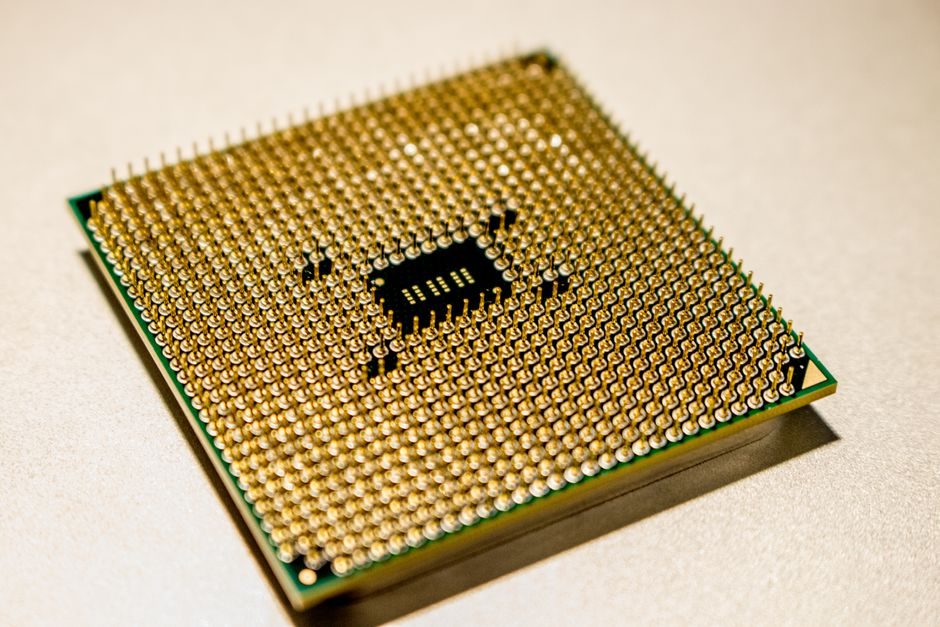
Server chassis, backplanes, copper busbars, PCB substrates and connector housings all draw from a fixed set of industrial raw material grades, and the spec sheet for a 1U/2U server pulls cold-rolled steel (SPCC/SECC 0.8–2.0 mm), electrolytic copper (C1100 equivalent), FR-4 laminate and glass-filled thermoplastics as the four main cost buckets [S1][S3].
The target audience is OEM/ODM procurement, contract-manufacturing sourcing teams and industrial-encyclopedia buyers who need to translate a server BOM into mill-grade specifications rather than vendor SKUs; readers looking for a finished server quote or branded hardware comparison should stop at the spec sheet and route through OEM channels instead [S3].
Chassis Steel: Cold-Rolled, Galvanized and Stainless Choices
Cold-rolled steel (SPCC, JIS G3141, 0.8–2.0 mm typical for server top cover, side panel and 1U/2U rails) is the default chassis substrate, with surface finish 2B or BA for exposed panels and SECC (electrolytic galvanized) preferred for 0.6–1.2 mm internal brackets where zinc coating mass of 20/20 g/m² (single-spot/double-spot) is typical for indoor-server corrosion class [S3].
Stainless steel 304 (1.4301, EN 10088) is reserved for outdoor edge servers and NEBS-style builds where 72-hour salt-spray exposure is specified, with 316L reserved for coastal or chemical-exposed sites; SUS304 2B 1.0 mm coil price normally tracks LME nickel and adds roughly 4–6× over SPCC at the mill gate [S3].
For reference server build sheets such as Oracle Grid Infrastructure deployments, the document trail lists supported server make/model, host bus adaptor, runlevel 3 or 5, display at least 1024 × 768, and minimum 8 GB RAM — none of which tells the buyer the chassis gauge, but every OEM publishable spec ultimately reduces to a steel callout on the chassis drawing [S1].
Copper and Aluminum: Busbars, Heat Spreaders and Shielding
Pure copper C1100 (JIS H3100, equivalent to UNS C11000 / ISO Cu-ETP) at 99.90% Cu minimum drives the busbar, ground strap and high-current PCB-plane layer, with typical thickness 1.0–3.0 mm, conductivity ≥ 58 MS/m and ½H to ¾H temper for stamped parts; see the copper material reference for grade cross-reference and temper tables. [S1]
Aluminum 6061-T6 (ASTM B221, yield ≥ 240 MPa) and 6063-T5 (extrusion-grade, yield ≥ 130 MPa) cover heat-spreader plates, server-rack side panels and CPU cold plates; 5052-H32 is used for formed brackets where weldability is not required, and anodized 6063 is typical for visible rack rails at 10–25 µm anodic film [S3].
The 4–6× cost multiplier between SPCC and 304 stainless disappears the moment current-carrying capacity enters the BOM: copper density 8.96 g/cm³ versus aluminum 2.70 g/cm³ means a 1 mm-thick copper busbar can be replaced by an aluminum busbar of roughly 1.6× thickness for equal DC resistance, so material substitution is a real lever on every server backplane, not just a procurement slogan [S3].
PCB Laminate and High-Speed Substrate

FR-4 (Tg ≥ 130 °C standard, ≥ 150 °C mid-Tg, ≥ 170 °C high-Tg) dominates server main boards and backplanes, with CEM-3 used in low-cost consumer-adjacent boxes; mid-loss (Df 0.012–0.020) and low-loss (Df 0.008–0.012) variants are specified for 25 Gbps and above signalling channels, and the high-speed layer count usually sits at 8–16 layers for a 1U server main board [S1][S3].
Server checklists for enterprise databases call out minimum 8 GB RAM, supported server make/model, and host bus adaptor compatibility, all of which drive the high-speed layer stack-up — 4–6 signal layers, 2–4 ground/power planes, 0.1–0.2 mm trace/space on inner layers, and 0.075–0.1 mm on outer layers, with impedance control 85 Ω differential for USB 3.x and 90/100 Ω for SATA/SAS [S1].
Copper-clad laminate uses 1 oz/ft² (35 µm) or 2 oz/ft² (70 µm) copper foil on each side; for high-current server VRM planes the inner plane steps up to 3 oz/ft² (105 µm) and the press-cycle count rises from 6–8 lamination cycles to 10–14, which directly lengthens PCB fab lead time by 2–3 weeks versus a standard 4-layer consumer board [S3].
Plastics, Connectors and Fasteners
Connector housings and fan shrouds use glass-filled thermoplastics — PA66 (heat-stabilized, 30% GF, CTI ≥ 600 V) for ATX power headers, PBT (30% GF) for DIMM slots, PC (polycarbonate) for transparent LED light pipes, and ABS for cosmetic bezels; the UL94 V-0 flame rating is mandatory on any plastic within 5 mm of a heatsink or current-carrying conductor [S3].
Standoffs, server-rack mounting screws and chassis screws split between steel (zinc-plated, 4.8/8.8 grade) and stainless (A2/A4-70, 1.4301/1.4401), with M3×0.5 and M4×0.7 the two most common thread patterns; torque spec for server-rail screws is typically 0.6–0.8 N·m into a captive nut, and 0.4–0.5 N·m for self-tapping into a 1.0 mm SPCC panel [S3].
Cable ties, grommets and edge protectors use PA66 (UL94 V-2 minimum) and PVC, while silicone gaskets with Shore A 40–60 are standard for IP54-rated outdoor server doors; none of these plastics is a high-cost line on its own, but the total plastic content of a 2U server typically runs 1.5–3.0 kg and should be called out as a separate BOM line for sourcing purposes [S3].
Sourcing Logic: RFQ Structure, Lead Time and Substitution

A raw-material RFQ for server hardware should standardize four fields: mill-grade designation (e.g. SPCC-SD 1.0 mm 2B, C1100 ½H 1.5 mm, FR-4 Tg150 1 oz/ft²), quantity in kg or m², dimensional tolerance, and surface finish; structured RFQ with matrix pricing makes supplier quotes directly comparable and shortens the sourcing cycle by removing the back-and-forth on spec interpretation [S3].
For steel, mill lead time is 15–30 days for SPCC/SECC coil at standard gauges and 45–60 days for SUS304; for copper C1100 sheet and bar it is 20–35 days, and for FR-4 laminate 25–45 days depending on Tg class and copper-foil weight; lead time scales with customization, so a non-standard 0.7 mm SPCC gauge pushes out to 40–50 days versus 20–25 days for the mill's standard 1.0 mm [S3].
Spec bands for linear-guide and rack-slide rails used in 1U/2U server drawers normally call for cold-drawn steel C45E (1.1191) or 50CrMo4 (1.7228) induction-hardened to HRC 58–62 on the raceway, with surface-ground or rolled finish and a typical section size of 15 mm × 15 mm to 20 mm × 20 mm; this is a separate BOM line from the chassis sheet steel and is frequently missed when the server is sourced as a single SKU [S3].
Magnetics, EMC and Specialty Materials
Switch-mode power supply magnetics inside a server use silicon-steel laminations (M4, M6, or 50W470 grade, 0.35–0.50 mm) for the main transformer core and ferrite (MnZn, PC40/PC95 type) for PFC and output chokes; for inductance reference see the magnetic material page covering ferrite grades and core loss data. [S2]
EMC shielding inside the chassis uses tin-plated copper braid (C1100, 0.1–0.2 mm strip) and beryllium-copper finger strips at the I/O panel; for non-shielded slots, conductive-coated ABS (surface resistivity ≤ 10⁴ Ω/sq) replaces raw ABS at 2–3× the polymer cost [S3].
Server management-card add-on modules (BMC, iLO-style) typically use a small FR-4 4-layer board 30 mm × 50 mm with 1 oz/ft² copper, polyimide flex tail 0.1 mm thick, and a 16-pin board-to-board connector rated to 30 V/0.5 A per pin; these are commonly co-sourced with the main board and should be priced separately to avoid being absorbed into the main PCB line [S1][S3].
Cost Bands and What the Buyer Can Negotiate
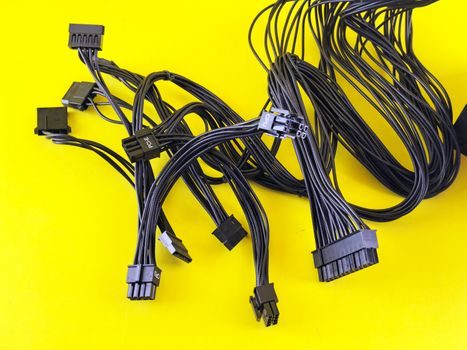
At mill-gate level, SPCC 1.0 mm cold-rolled coil typically trades 700–900 USD/t in the LME-tracked band, SECC 1.0 mm at 900–1,100 USD/t, SUS304 2B 1.0 mm at 2,800–3,500 USD/t, C1100 1.0 mm sheet at 9,500–11,500 USD/t, and 6061-T6 10 mm plate at 3,200–4,000 USD/t; FR-4 Tg150 1 oz/ft² laminate sits at 8–14 USD/m² at the laminate-maker gate, with high-Tg 170 variants at 18–30 USD/m² [S3].
The levers the buyer can actually move: coil width and gauge (mill standard widths cut 8–15% off vs custom), copper-foil weight on inner planes (2 oz/ft² adds 30–40% to laminate cost versus 1 oz/ft²), surface finish (2B versus BA versus mirror-8 adds 5–15% to stainless processing), and temper (½H versus O for copper affects stamping yield by 5–10%) [S3].
For a fuller comparison of metal-grade cost bands and a related steel pipe selection reference, the same SPCC-versus-SECC-versus-304 hierarchy applies to thin-wall server chassis as to industrial pipework, and the same LME nickel/copper exposure carries through to the busbar line item.
For a multi-decision-criteria comparison of server raw materials, the four main cost buckets line up as: SPCC/SECC cold-rolled steel — lowest cost, gauge 0.6–2.0 mm, mill lead time 15–30 days, finishing limited to zinc plating or powder coat; SUS304 stainless — high cost, 4–6× SPCC, 45–60 day lead, suited to NEBS-class outdoor; C1100 copper — high conductivity 58 MS/m, 20–35 day lead, used for busbar/ground/PCB planes; FR-4 high-Tg laminate — 8–30 USD/m², 25–45 day lead, 8–16 layer stack-up, drives high-speed signalling [S1][S3].
Track the next two signals: (1) copper C1100 ½H coil LME-published USD/t on the first business day of each calendar quarter, since a 5% move at the LME carries through to roughly 3% on the stamped busbar line; (2) FR-4 Tg150 / Tg170 mill allocation status, which historically tightens 6–8 weeks before a server-ODM peak-season build and is the most likely place a server raw-material RFQ will be re-quoted on lead time [S3].