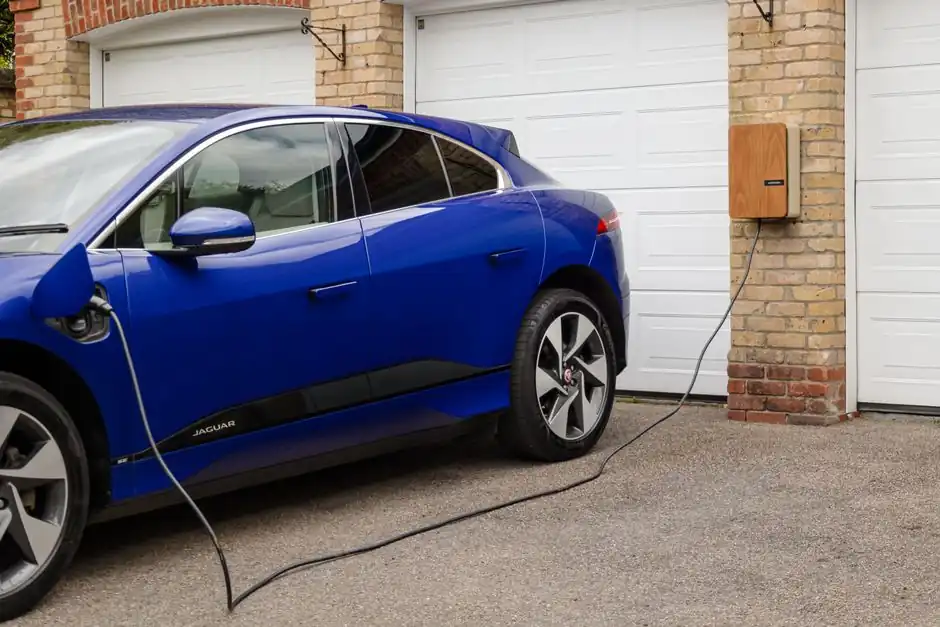
Industrial battery chargers and wireless power modules for AMRs are not in a finished-goods shortage; the binding constraints in 2026 are upstream skilled labor for cell and pack assembly, supercapacitor cell supply, and qualified BMS integration capacity, with 82% of US battery employers reporting skilled-labor shortfalls per a 2024 Center for Automotive Research survey of 158 industry professionals [S5].
The relevant product stack covers three layers: on-board or off-board lithium/lead-acid/super-cap chargers from 350 W to 44 kW (Delta-Q, Delta MOOV, GEBAT), inductive wireless charging pads in the 1-30 kW range with up to 95% pad-to-pad efficiency, and 24 V/48 V DC-DC converter modules that ride next to the traction pack, all of which are in active production rather than allocation [S1][S3][S4].
What the 2026 charger catalog actually spans
Delta-Q's mobile-robotics line is organised by power class: RQ Series at 350-700 W for low-power robots, IC Series at 650 W-1.2 kW, RC Series at 900 W-1.2 kW, ICL Series at 900 W-7.5 kW, XV Series at 3.3-10 kW, and a High-Voltage family covering 7.2-44 kW for larger AGVs and heavy mobile platforms [S1].
Delta's MOOV base modular charging system extends that envelope with output power from 1 kW to 32 kW across single-phase and three-phase modules, paired with MOOV base PM1350 and PM3000 power modules that are CAN-controlled from a system controller and accept a wide range of battery chemistries [S3]. On-board MOOV on 720 W chargers and 13 V/24 V 400-600 W DC-DC converters target pallet trucks, scissor lifts and floor-cleaning machines, the same duty profile as small AMRs [S3].
Contactless and supercapacitor paths: efficiency, air gap, cycle life
Delta's M∞Vair wireless charging family spans 1-30 kW with a 0-150 mm operating air gap and a peak pad-to-pad efficiency of 95%, maintained through Delta's patented PPL (Pad-Pad-Link) magnetic-field communication protocol, which keeps the link stable in dusty industrial environments [S3].
For ultra-high duty cycle AMRs, GEBAT specifies supercapacitor (ultracapacitor) banks as the preferred energy store: supercaps deliver charging in seconds and cycle counts in the hundreds of thousands, occasionally above one million, compared to a few thousand cycles for gel and lead-acid packs [S2][S4]. The trade-off is energy density: lithium-ion still wins on watt-hours per kilogram and per litre, so supercap systems are typically deployed as peak-power buffers or short-range opportunity-charge stores, not as primary traction packs [S2].
Lithium vs lead-acid vs supercap: a decision-grid view
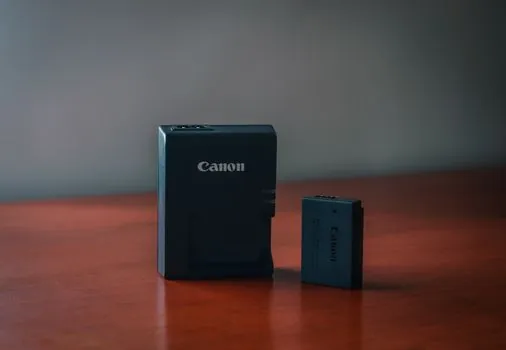
Across three decision criteria the chemistries split cleanly: cycle life favours supercaps (≥100,000 cycles) over lithium (typically 1,000-3,000 cycles) and lead-acid (≤1,000 cycles); charge time favours supercaps (seconds) and lithium (10-30 minutes for an 80% opportunity charge) over gel/lead-acid (6-12 hours for a full cycle); energy density favours lithium, with lead-acid roughly 30-50 Wh/kg and supercaps often below 10 Wh/kg at the pack level [S2][S4].
Wiferion's mobile-manipulator power module demonstrates the third option: simultaneous wireless energy delivery to both the AMR base and an onboard cobot arm from a single inductive link, which removes the cobot battery and shifts the entire platform onto the same opportunity-charge cycle as the mobile base [S6]. For cold-storage or cleanroom AMRs, that single-link architecture also reduces ingress points and simplifies cleaning.
Where the actual shortage sits in 2026
The constraint on AMR power systems is not the charger box; the 2024 CAR survey of 158 US battery and EV professionals found 82% reporting shortages of skilled local applicants, with the largest gaps in upstream mining and refining, followed by cell manufacturing and pack assembly, and 40% of employers naming worker retention as a top challenge [S5]. The same report identified chemistry, chemical engineering and battery management systems as the most undersupplied skill sets, all of which feed directly into AMR-grade lithium pack production, the upstream of every charger, module and DC-DC converter that AMR buyers install [S5].
Downstream, GEBAT and Wiferion both stress that the binding engineering item is no longer the charger's kW rating but its DC ripple, BMS communication and CAN-bus integration: GEBAT specifies "extremely clean DC output" to limit thermal stress in lithium packs and to keep supercap banks stable, with controlled current and voltage transitions to protect cell chemistry across 24/7 micro-cycle duty [S4]. For buyers, that means a 7 kW opportunity charger that meets ripple and CAN requirements is more available than a skilled BMS engineer to commission it, a ratio that is now the real lead-time variable.
What AMR buyers should spec and verify in 2026
For 24/7 fleets, opportunity charging with modular three-phase cabinets in the 7-32 kW band is the dominant 2026 architecture, paired with 24 V or 48 V 400-600 W on-board DC-DC converters for auxiliary rails [S3]. Wireless links at 1-30 kW with a 0-150 mm air gap and ≥90% efficiency are appropriate for cleanroom or mixed-traffic sites where contact wear is a maintenance concern [S3].
For peak-power or ultra-short-cycle AMRs (tuggers, sortation bots in parcel hubs), specify a supercap buffer with a dedicated ultra-low-ripple charger and confirm the BMS protocol (CANopen, J1939 or vendor proprietary) is exposed to the fleet manager, since the charger-to-BMS handshake is the most common commissioning failure mode flagged by integrator literature [S4]. Related coverage of upstream cell-pack lead times is in the battery cell lead-time 2026 buyer guide, and the cost-side picture sits in the 2025-2026 EV pack price-per-kWh breakdown. For AMR builders also specifying auxiliary lighting equipment and electric lamps on the platform, the same 24-48 V DC rail that feeds the power distribution block typically drives the machine-vision ring lights, so a 400-600 W DC-DC module often serves both loads from a single converter.
For component-level specifications, see construction machinery and equipment.