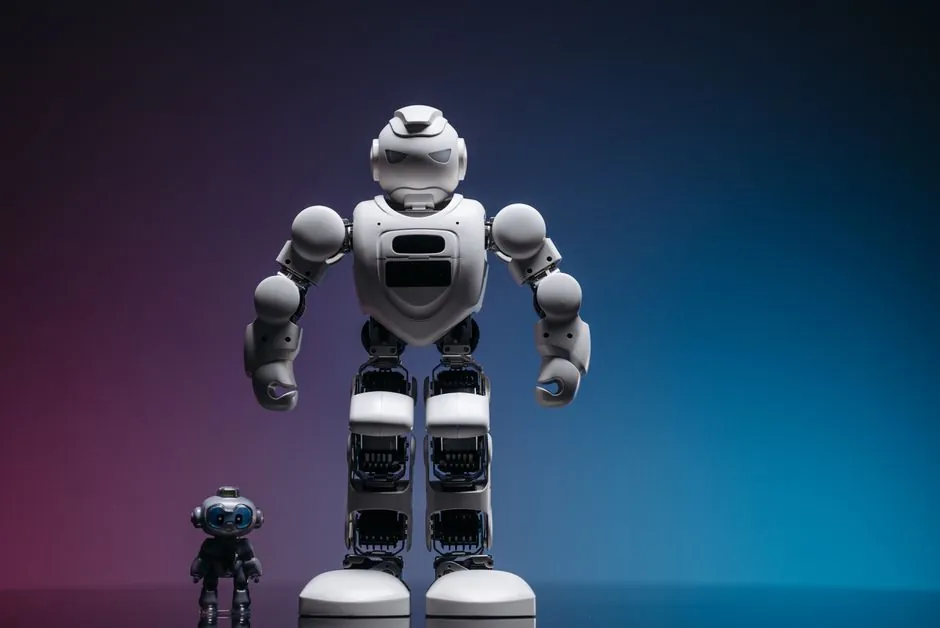
Across a 10-year service life, the robot arm plus its controller typically accounts for only 25 to 40 percent of a functioning cell's total cost of ownership, with one worked example pegging hardware at 11 percent of the 10-year bill [S1][S6].
The remaining 60 to 75 percent is split across end-of-arm tooling, safety infrastructure, integration engineering, energy, preventive and corrective maintenance, consumables, floor space, software licences, and end-of-life decommissioning. A 6-axis industrial arm lists in a $50,000 to $150,000 range depending on payload and reach, yet a fully outfitted welding or assembly cell normally runs two to four times the cost of the bare manipulator once EOAT, safety, and peripherals are added [S1].
Acquisition: Where the Sticker Price Gets Multiplied
Acquisition cost extends well past the manipulator, controller, teach pendant, and cables. EOAT (grippers, welding torches, dispensing heads, tool changers, or custom fixtures) commonly drives the next-largest line item, and safety systems (light curtains, area scanners, safety-rated PLCs, fencing, interlocked gates, E-stop circuits) are non-negotiable for industrial cells [S1]. Peripheral equipment (conveyors, part feeders, vision cameras, force-torque sensors, fixturing) and software licences for offline programming, simulation, and vision processing round out the acquisition phase.
Warranty pricing is a meaningful swing factor in acquisition: extended warranty typically runs 10 to 14 percent of the robot's purchase price, with one OEM offering a one-year extension on a compact arm for 6 percent of list [S4]. For a typical welding or assembly cell, total acquisition cost commonly lands at two to four times the bare robot cost once tooling, safety, and peripherals are folded in [S1].
Integration: The 30 to 50 Percent Phase Most Budgets Underestimate
Integration is the cost phase that quietly dominates industrial TCO models. It bundles engineering and design (mechanical layout, electrical schematics, pneumatic and hydraulic circuits, panel design, controls architecture), programming and simulation (robot paths, PLC logic, HMI development, vision training, device-to-device comms), installation (rigging, anchoring, electrical drops, compressed-air and utility drops, network), commissioning and debug, and runoff/acceptance testing [S1].
Industry rule-of-thumb places integration at 30 to 50 percent of total project cost, with the figure climbing as part variants, cycle-time tightness, and quality requirements grow [S1]. A worked comparison of three robot tiers shows integration labour ranging from $1,000 for a research arm, to $5,000 for a commercial cobot, to $25,000 for an industrial six-axis cell, with a 3-year TCO of $10,450, $56,700, and $123,500 respectively (purchase price 43 percent, 62 percent, and 28 percent of TCO) [S5]. Operators comparing articulated robot configurations should size integration hours against the planned process complexity before issuing the PO.
Operations: Energy, Consumables, Floor Space, and Tending Labour
Once the cell is running, operating cost compounds continuously. A typical industrial robot draws 5 to 15 kW depending on size and duty cycle, and that excludes the welding power source, conveyors, vision lighting, and enclosure climate control that add to the electrical load [S1]. Consumables (welding wire, shielding gas, adhesives, abrasives, gripper wear parts) and the fully burdened cost per square foot of manufacturing floor (utilities, HVAC, property taxes) sit alongside tending labour that even highly automated cells still require.
Floor space allocation differs sharply by robot class. A worked comparison values 3-year floor space at $1,350 for a research arm, $2,700 for a commercial cobot, and $13,500 for an industrial arm, all computed at $150 per square foot per year, demonstrating how a larger safety envelope multiplies recurring occupancy cost [S5]. Specifiers building a robot cell layout should audit cell footprint at the layout stage, not after tender, because the operating-cost line moves with every added safety margin.
Maintenance: The 5 to 15 Percent Annual Drag
Industrial robot maintenance typically runs 5 to 15 percent of the robot's purchase price per year, which for a EUR 100,000 arm translates to roughly EUR 5,000 to EUR 15,000 annually for scheduled service, spares, and the occasional repair [S2]. A brand-new articulated robot purchased for EUR 80,000 commonly costs EUR 4,000 to EUR 6,000 per year in scheduled maintenance for the first five years, then climbs past EUR 10,000 from year seven or eight as gearboxes, cables, and seals approach end-of-life [S2].
Preventive maintenance delivers a 3 to 5x return versus a reactive, fix-when-broken posture, and unplanned downtime is the single costliest factor in any TCO model, with a single hour able to exceed EUR 10,000 in lost production on an automotive line [S2]. Cobots carry lower absolute maintenance (EUR 1,500 to EUR 4,000 per year) but handle lighter payloads and simpler tasks, so the per-axis saving is offset by lower per-cell output. One structured 10-year model shows total cost of ownership roughly doubling the upfront investment once unplanned downtime, spare parts, software updates, and labour are stacked against the original purchase [S2].
Downtime, Spares, and the Failure Modes That Drive Unplanned Spend

The cost line that swings the most across TCO studies is unplanned downtime. Common failure modes that drive unplanned spend include gearbox wear on J1 to J3 axes under heavy payload, cable fatigue at the dress pack on high-duty-cycle cells, seal and bellows failure in contamination-heavy environments (welding fume, coolant mist, food-grade washdown), and controller fan or battery failure on units that skip preventive checks [S2].
Protective covers that shield joints, sensors, and controllers from contamination measurably reduce maintenance frequency, and one supplier reports its 5,000+ protected installations since 1998 have kept contamination-heavy environments at the low end of the 5 to 15 percent annual maintenance band [S2]. Budgeting 10 to 20 percent of hardware cost annually for spares and breakage is a common rule of thumb in research and prototyping cells [S5]. Buyers sizing AMR robot fleets or mixed-cell automation should include a structured preventive-plus-predictive plan from day one, because post-failure replacement parts are typically the most expensive line in the maintenance column.
Cost Comparison by Robot Tier Over 3 Years
A side-by-side model from [S5] illustrates how the same TCO formula behaves across three robot classes at a $150 per sqft per year floor-space cost:
Research arm (OpenArm 1 class): robot $4,500, gripper $200, cameras/sensors $1,500, safety $0, integration labour $1,000, training $500, 3-year maintenance $900, software $0, 3-year floor $1,350, 3-year downtime $500, giving 3-year TCO $10,450 with purchase price at 43 percent of TCO [S5].
Commercial cobot (UR5e class): robot $35,000, gripper $2,500, cameras/sensors $2,000, safety $0, integration labour $5,000, training $2,000, 3-year maintenance $4,500, software $0, 3-year floor $2,700, 3-year downtime $3,000, giving 3-year TCO $56,700 with purchase price at 62 percent of TCO [S5].
Industrial arm (FANUC LR Mate class): robot $35,000, gripper $3,000, cameras/sensors $5,000, safety $15,000, integration labour $25,000, training $5,000, 3-year maintenance $6,000, software $6,000, 3-year floor $13,500, 3-year downtime $10,000, giving 3-year TCO $123,500 with purchase price at 28 percent of TCO [S5].
The contrast is the point: as you move up the robot class, safety infrastructure, integration labour, software licences, and floor space grow faster than the headline robot price, and the purchase price share of 3-year TCO falls. Over 10 years, the same dynamics push the hardware share down to 11 percent in one published worked example [S6]. Operators who only compare sticker prices will systematically over-buy industrial arms when a commercial cobot meets the duty cycle, and under-buy industrial arms when payload, reach, or contamination rating genuinely demand them.
End-of-Life, Residual Value, and the 10-Year Tally
Disposal and residual value are the last line items but they swing the 10-year number noticeably. A worked 5-year model found the robot purchase price equal to 11 percent of the 10-year bill when end-of-life and residual value are tallied [S6]. High-quality robots can remain in service for 10-plus years with proper maintenance, which improves residual value but also extends the maintenance cost tail because gearboxes, servos, and controllers all have wear-out windows [S7].
Leasing versus buying shifts this calculation: a worked lease break-even of 5.6 months on a $4,500 research arm versus $4,500 in cumulative lease payments, and 16 months on a $40,000 commercial cobot, shows that short-cycle or grant-funded projects (12 to 18 months) often lease even when per-month cash outflow is higher, because the maintenance, support, and software updates are bundled [S5]. For multi-year production cells, the calculus inverts and the total cost of ownership advantages of owning tend to dominate from year two onward.
What to Track in the Next Planning Cycle
Track two signals in your next cell ROI review: the maintenance-to-purchase ratio, which should stay inside 5 to 9 percent per year for the first five years and below 12 percent per year through year ten if preventive work is current [S2]; and the integration-share percentage, which is the single most common line item that blows past the original budget, normally landing between 30 and 50 percent of the project [S1].
For readers planning a similar TCO exercise on a different asset class, the lithium carbonate indexation analysis uses the same multi-year TCO logic on a commodity, and the FRP pultruded cost guide applies equivalent per-ton versus per-shape pricing to a 20-year ownership window. Both confirm the rule: purchase price is the starting point, not the answer.