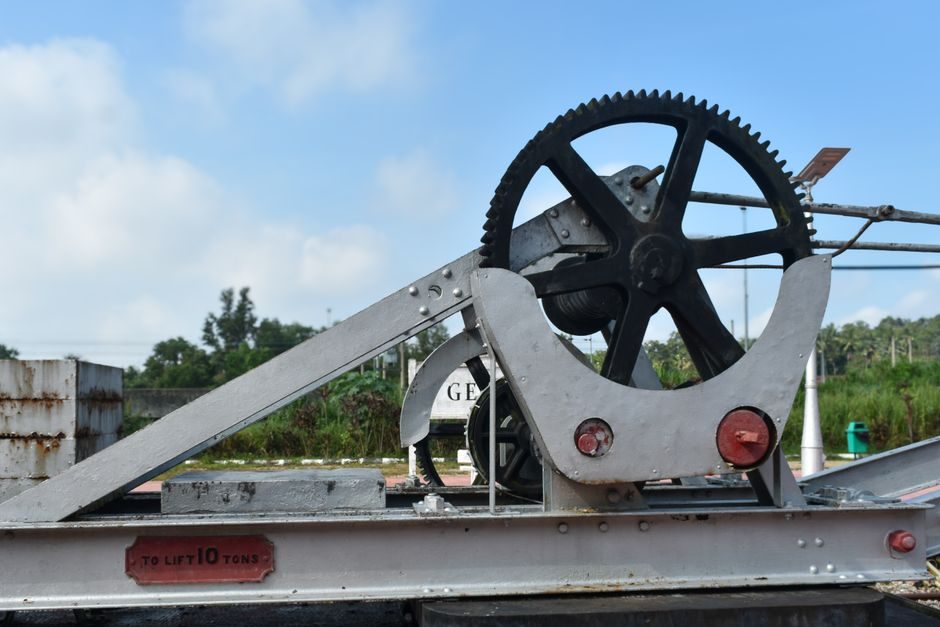
A shakeout machine is the workhorse unit between the mold line and the shot-blast / fettling station, vibrating or impacting a flask until the green-sand or chemically bonded mold collapses and free castings drop onto a discharge conveyor. On high-duty iron foundries, single-deck vibratory shakeouts routinely run 30-80 t/h throughput with residual sand-on-casting rates under 5% when matched to the mold's bond system [S1].
The specification lives or dies on three numbers: peak vibration amplitude (typically 4-12 mm on grid-type units), static load per deck (15-60 t for medium-size iron flask lines), and exciter drive power (2 x 7.5 kW up to 2 x 55 kW for heavy steel-molding decks). Get any of those wrong and the unit either grinds the flask flanges or leaves the casting half-buried in sand, so procurement engineers anchor the spec to the mold mass and casting cooling curve rather than to catalog headlines.
Where the shakeout earns its place: throughput, decoring labor, and reclamation upstream
On a manual decoring line, a fitter clears 1.5-3 t/shift of molding sand with an air chisel; on a matched grid shakeout, the same fitter supervises 20-40 t/shift, with the residual lump sand going straight to a sand reclamation unit feed. The economic break-even is widely cited around 8-12 t/day of poured iron for European-style green-sand lines, dropping to 4-6 t/day where labor rates are higher and reclaimed-sand value offsets the capex within 18-30 months.
Three operating regimes dominate the buying list. Grid (grizzly) shakeouts use a static finger-deck above a vibrating carriage and tolerate tramp iron, sprues, and chilled runners without damage. Rotary-drum shakeouts tumble the casting and sand together inside a rotating shell — gentler on thin-wall castings but limited to roughly 8-15 t/h. Vibratory-cone (or "shakeout-deck") units sit between the two, handling 20-50 t/h with amplitude control tied to a VFD on the eccentric weights.
For automation cells feeding a cutting machine or fettling machine downstream, the shakeout becomes a buffer: its deck length and stroke determine how many minutes of casting cooling the line can absorb before the next flask arrives, which is why high-mix jobbing foundries over-size the deck rather than the drive.
What the shakeout does badly: noise, dust, and the maintenance tax
Unbalanced eccentric weights turn a shakeout deck into a 90-110 dB(A) source depending on load, frequency (typically 800-1500 rpm), and whether the unit sits on rubber isolators or is grouted to the civil foundation. EU foundries working toward the 87 dB(A) action value under workplace-noise directives usually end up installing acoustic hoods or relocating the deck into a sound-attenuating enclosure, adding 8-15% to the installed cost.
Dust is the second tax. The same violent fracture that frees the casting also fractures the bond, and the airborne fines load is on the order of 50-200 g/t of poured metal for green-sand systems, scaling with the -75 µm fraction in the system sand. Without a matched baghouse or wet scrubber, the shakeout becomes the dominant point source on the molding line, which is why spec sheets almost always quote the shakeout's exhaust port in m³/h and pair it to the labeling machine-style dust collector on the fettling cell.
Maintenance is mechanical and unforgiving. Spring failures, bearing overheating on the eccentric shafts, and cracked cross-beams from tramp metal account for the bulk of unplanned downtime; mean-time-between-overhaul on a grid shakeout in a two-shift iron foundry typically lands at 8,000-12,000 operating hours, with a 4-6 h planned service window per month for spring and tensioner checks. The vibratory amplifier drive and the rubber buffers are the predictable wear items, not the deck plate itself.
Selection criteria: matching the unit to the mold, the metal, and the downstream cell
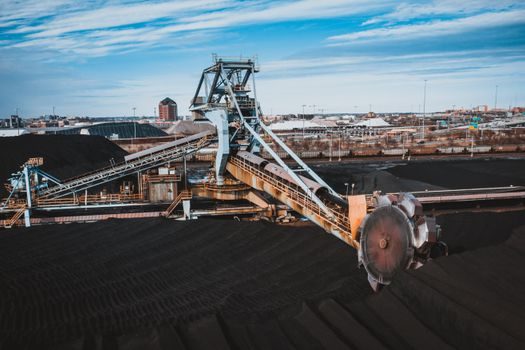
The first gate is flask mass and mold size. A 1,200 mm x 1,000 mm matchplate line and a 2,500 mm x 1,800 mm box line cannot share a single deck without a throat-plate redesign or a dual-stage cascade. Buyers should pin the deck width to the largest flask plus 100-150 mm clearance, and the deck length to keep residence time above ~8 s for green-sand iron and ~14 s for chemically bonded steel-mold shakeout, where lump sand stays cohesive. [S1]
The second gate is the metal and its cooling curve. Ductile iron at 1,200-1,350 °C shakeout tolerates heavy impact without cracking; thin-wall gray-iron castings under 4 mm section need a gentler amplitude, sometimes a rotary-drum substitute. Steel castings in phenolic-urethane or furan-bonded molds demand an after-cooler and a longer deck because the bond's hot strength keeps lumps intact for several minutes post-pour.
The third gate is the downstream cell. If castings feed a robotic fettling cell with vision-based pickup, residual sand-on-casting and orientation consistency become first-class spec items, pushing the choice toward grid or vibratory-cone units with low-vibration hand-off rails rather than rotary drums that tumble the castings. A manual grinding station, by contrast, accepts wider variation and lets the buyer favor the cheaper grid unit.
Who it is for, and who should keep a hammer
Foundries pouring above 15 t/day of iron or steel on a repetitive flask signature are the natural buyers; below 5-8 t/day, the capex rarely clears a 36-month payback once power, spares, and dust collection are priced in. Jobbing shops running one-off short runs can stay on manual decoring plus a simple shot-blast machine downstream without losing margin. Non-ferrous founders handling aluminum and copper alloys rarely need a shakeout at all — the mold is typically a sand core inside a permanent die and the casting pops out on the disassembly stroke. [S1]
Buyers locked into a green-sand-only bond system and a closed-loop sand reclamation unit get the strongest ROI, because the shakeout's lump-sand output is the reclamation feed's input. Buyers on chemically bonded molds with dumped sand going to a non-reclaimable landfill see the unit as a pure labor-saving device, which lengthens the payback by 6-12 months but rarely flips the decision negative.
Specification comparison: three shakeout types against four decision gates
Grid (grizzly) shakeouts lead on capital cost and tramp-iron tolerance, but they expose castings to a single-direction impact that can crack thin sections and they sit at the upper end of the noise band. Rotary-drum units win on casting-handling gentleness and low dust at the discharge, but they cap throughput around 8-15 t/h and they need more floor footprint per ton of capacity. Vibratory-cone (or deck) units hit the middle: 20-50 t/h, amplitude adjustable via VFD, gentler hand-off to a robotic fettling cell, and a noise signature that drops 4-6 dB(A) when the unit is mounted on rubber isolators instead of grouted to the foundation. [S1]
On the four practical gates: throughput favors vibratory-cone; casting-handling favors rotary-drum; capital cost favors grid; integration with a sand reclamation unit and dust collection favors grid or vibratory-cone, which both let sand fall by gravity through a sealed chute. Most mid-size iron foundries therefore land on a grid or vibratory-cone unit with optional acoustic hood and a matched VFD on the exciter, and revisit the rotary-drum option only when the mix is heavily skewed to thin-wall castings.
Standards, sourcing map, and what to verify before signing the PO
Two standards dominate the spec. The deck's dynamic balance and bearing-life calculations are normally checked against ISO 1940-1 balance grades for rotating machinery, and the noise declaration follows ISO 3744 / ISO 11201 sound-power measurement protocols. CE-marked units supplied into the EU carry the Machinery Directive 2006/42/EC declaration; for foundries in ATEX zones 1-2 around the dust pickup, the exciter motors and the junction box are specified to ATEX 2014/34/EU category 2 or 3, which adds a measurable 6-10% to the unit price but is non-negotiable for any green-sand line that has ever flashed. [S1]
Sourcing has consolidated. Chinese foundries buy heavily from domestic OEMs in Shandong and Jiangsu, which offer grid units in the 5-30 t/h range at aggressive price points. European buyers still source from German, Italian, and Spanish OEMs for heavy steel-mill decks, where cast steel side-frames and 2 x 30-55 kW exciters are standard. Indian and Turkish producers occupy the mid-tier, often as OEM partners for European brand owners.
Three things to verify in the PO. First, the exciter motors must be named by brand and frame size, not "equivalent." Second, the spring pack and the rubber buffers must carry a quoted part-number and lead-time, because these are the consumables that take the line down. Third, the dust-exhaust port location and ducting interface must match the baghouse flange on the fettling cell; a 50 mm offset on the duct forces a flexible connector that leaks dust and defeats the dedusting system.
Track the next two signals before the next capex cycle: a published noise-reduction retrofit kit for grid decks that drops the open-field reading by 6-8 dB(A) without changing the deck geometry, and a vendor offering integrated VFD-driven amplitude control tied to a flask-mass sensor, which would let one deck handle a wider flask mix without re-tensioning the springs. Either of those would shift the spec gates outlined above and is worth watching in the next sourcing round.