Warehouse-automation buyers in 2026 narrow the labeling-machine shortlist by walking four gates in order: container geometry, label stock and adhesive platform, line throughput, and the level of control integration the plant already runs on its coding machine and filling machine cells [S2].
Skipping a gate compounds downstream cost: a sleeve-label choice made before container OD is measured, for instance, locks the line into a 1.2-2.2 m heat-shrink tunnel and 2.0-4.0 kW heater draw before throughput is even discussed [S2].
Three Platforms, Three Cost Curves
OPP hot-melt roll-fed, self-adhesive pressure-sensitive (PSA), and sleeve (heat-shrink) labelers cover roughly 90% of warehouse-automation procurement, with the public line-ups of Chinese OEMs Laizhou Tonle, Shanghai Consung, and Dongguan Epin (ISO 9001) spanning all three with cataloged round-bottle, semi-automatic, and OPP variants [S2].
Pressure-sensitive adhesive gives the cleanest changeover, with label-size swaps completing in under 5 minutes, and is the workhorse for cosmetics, food, and pharmaceutical SKUs [S2]. OPP hot-melt extrudes adhesive at 150-170 °C, cuts adhesive cost by 30-50% versus pre-applied PSA, but needs a 20-30 minute warm-up and rejects label changes mid-shift [S2]. Sleeve platforms (typically 40-50 µm PETG or PVC) win on 360° graphics but consume 0.8-1.2 kWh per 1000 containers in tunnel heat alone, a line item that flips total cost of ownership for high-volume water and beverage plants [S2].
Container Geometry Gate
Round-bottle labelers above 60 containers per minute use servo-driven star-wheel orientation to align a seam with the label edge, a configuration Dongguan Epin markets as its "Round Bottle Labeling Machine" family [S2]. Square or flat-panel containers reject star-wheel orientation and need belt-wrap or pneumatic-tamp modules, otherwise label skew drifts past 1.5 mm at speeds above 40 cpm [S2].
Container OD dictates the sleeve heat-shrink tunnel length: a 50-80 mm OD bottle needs roughly a 1.2 m tunnel with a 2.0-2.5 kW steam or infrared heater, while a 150 mm OD canister extends that tunnel to 1.8-2.2 m and the heater draw climbs to roughly 4 kW [S2]. For warehouse-automation cells running mixed SKUs, labeling machine selection for automotive parts logistics follows similar container-OD logic and is worth reading in parallel for narrow-format tubular parts.
Throughput and Automation Tier Gate
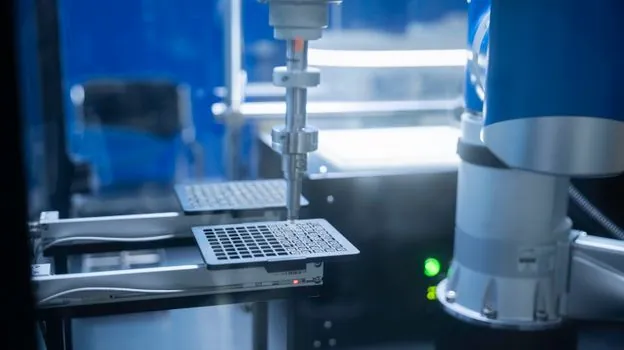
Labeling machines in 2026 split into three throughput brackets. Semi-automatic benchtop units sit at 20-40 containers per minute and need one operator per station, while automatic inline units start at 60 cpm and climb past 200 cpm with dual-head configuration [S2]. Standard reference ranges for industrial labelers span 20-200 PPM, with high-speed models customizable up to 300 PPM, label widths of 10-180 mm, label lengths of 15-300 mm, and placement accuracy from ±0.5 mm to ±1 mm (customizable up to ±0.2 mm) [S5].
Below 30 cpm, mechanical cam-driven indexing still works and saves roughly 20% on capex versus servo; above 80 cpm, servo indexing on each label head is the de facto floor for ±0.5 mm placement accuracy [S2]. Real-world throughput runs 40-60% of the theoretical maximum on a vibrating, soft carton, so a 40 cartons-per-minute requirement should be matched to a unit rated for 80-100 labels per minute [S1]. This margin prevents misfeeds, reduces wear, and gives operators breathing room during peak shifts [S1].
Corrugated and Carton-Specific Criteria
Corrugated board is the substrate that punishes entry-level labelers: it has a fluted internal structure, a slightly waxy outer coating, and flexes under pressure, so a standard tamp applicator pushes the board inward, the label springs back partially, and air gets trapped in the flutes [S1]. The 2023 packaging efficiency data cited in industry guidance put the cost clearly: nearly 34% of manual rework in e-commerce fulfillment centers is caused by poor label adhesion on fibrous board surfaces [S1].
Brush or roller applicator heads wipe the film onto the board and push air out from the center to the edges, the safer choice for large shipping containers [S1]. For sensor selection, optical photoelectric sensors get confused by dark brown corrugated, black-printed cartons, or high-contrast graphics, while ultrasonic sensors detect the physical presence of the box regardless of color or print and are significantly more reliable on mixed-SKU lines [S1]. The basic auto-carton process remains a controlled sequence: sensor detects position, label head dispenses, rollers or brushes improve contact, optional vision-rejection or coding station inspects, then discharge [S4].
Selection Criteria Compared
Three platform options stack up against four procurement criteria as follows, drawn from 2026 OEM catalogs and selection guidance [S2][S5]:
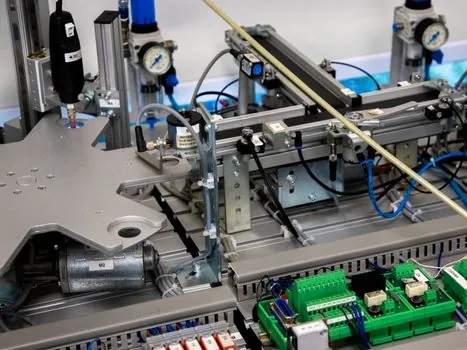
Platform vs criterion matrix: OPP hot-melt scores medium on changeover time (20-30 min warm-up, no mid-shift label swap), best on adhesive cost (30-50% below PSA), medium on graphics (single-panel only), and best on 360° wrap (no, sleeve only). Pressure-sensitive scores best on changeover (under 5 min), medium on adhesive cost, medium on graphics, and worst on 360° wrap. Sleeve scores worst on changeover, worst on energy use (0.8-1.2 kWh per 1000 containers in tunnel heat), medium on graphics, and best on 360° wrap [S2].
Buyers should not assume a multi-head system is always better, because additional heads increase mechanical complexity, maintenance requirements, and changeover considerations [S4]. A standalone machine fits manual loading or flexible workstation duty; an inline system is generally more suitable when cartons already move through a conveyorized packaging process [S4]. For plants running a centralized PLC and HMI on adjacent cells, Ethernet/IP or PROFINET on the labeler is the common ask so recipes push from one node, while standalone bottling lines still get away with a labeler-local HMI and discrete I/O [S2].
Mounting, Conveyor Integration, and Power
Mounting flexibility is the most underestimated cost line. Slotted mounting plates, horizontal adjustment knobs, and an independent floor-stand option are the three features that prevent custom metalwork, which one Midwest operations manager pegged at $3,500 in welding and brackets on top of a $2,000 labeler savings [S1]. Standard power supply on industrial labelers is 110/220 V at 50/60 Hz, adjustable to regional standards, with rated power consumption spanning 300-1500 W depending on configuration [S5].
Standard machine footprints run from 800 × 600 × 1400 mm for compact desktop units up to 2500 × 1200 × 1800 mm for vertical high-speed configurations, with host weights from 50 kg to 500 kg [S5]. Automation tier also dictates integration: adding vision-rejection of mis-aligned labels, a feature some OEMs now bundle, requires a 50-100 mm conveyor gap and a reject bin at the labeler exit [S2]. Buyers running brownfield cells that already contain core machine or cutting machine stations should confirm interface standards, conveyor height, and control-system compatibility before procurement to avoid post-installation rework [S5].
Standards, Vendor, and After-Sales
ISO 9001 is the baseline quality-management reference across the major Chinese OEM catalogs, with label-accuracy and production-capacity numbers normally traceable to in-house test stands rather than third-party certification [S2]. For warehouse-automation cells, the practical procurement question is whether the supplier provides installation guidance, operation training, and long-term spare-parts supply, since these three items materially cut lifetime opex [S5].
Sample testing on the actual carton stock is non-negotiable: a realistic project specification may include a target of 60 products per minute, a label accuracy requirement of ±1 mm, a product height range of 50-180 mm, and a 220-240 V, 50 Hz electrical supply, but these values must be confirmed through testing rather than assumed [S8]. For higher accuracy industries, the spec floor moves to ±0.5 mm placement, with some OEM packages offering ±0.2 mm on customized builds [S5]. Buyers can deepen the warehouse-automation picture by reviewing labeling machine selection for automotive parts logistics, which applies the same four-gate framework to tubular automotive components.
Trackable signals to watch through Q4 2026: (1) whether OPP hot-melt warm-up time drops below 15 minutes as new glue-pot designs ship from major Chinese OEMs, and (2) whether ultrasonic sensors become standard rather than optional on entry-level carton labelers, given the rework data on dark and high-contrast corrugated [S1][S2].