
Automotive parts logistics demands a labeling system that handles small batch counts of irregular SKUs (brackets, axles, gearboxes, plastic trims) at sustained throughputs of 10,000-30,000 units/hour, with placement accuracy of ±1 mm and full barcode or DataMatrix verification upstream of palletizing [S4][S7].
Container profile in this segment is dominated by flat-faced cartons, polybagged fasteners, and irregular tray-packed subassemblies, not the cylindrical bottles most labeling catalogs optimize for. A buyer who treats this as a standard FMCG job will retrofit the line within 18 months; the spec gate starts with product profile, not with machine class [S3][S8].
Define the Labeling Problem Before the Brand Shortlist
The first filter in any automotive parts labeling project is the part-handling problem, not the dispense head. Measure at least 10 representative cartons from normal production and record length, width, height, weight, flap position, and whether the carton is empty or filled during labeling, since underfilled or compressed cartons are the single largest source of misregistration on a parts line [S3]. A machine selected against nominal drawings alone routinely fails the first time a real production batch lands on the conveyor.
For automotive Tier-1 suppliers, the label is rarely just a brand mark. It carries the part number, batch or lot code, supplier code, country of origin, and a 2D code that downstream WMS reads at goods-in. This means the labeling cell is part of the traceability chain, not a stand-alone finishing step, and a misregistered 2D code is the same defect class as a missing bolt [S1][S5].
Inline Linear vs Rotary: Which Architecture Fits a Parts Warehouse
Inline linear labelers with stationary dispense heads and servo-driven web handling are the default for parts logistics because they accept cylindrical, oval, square, and flat containers on the same base frame by swapping only the label head and orienting wheels, with semi-automatic benchtop units rated 600-1,500 units/hour and fully automatic inline systems clearing 10,000-30,000 units/hour on stable SKUs [S4]. Rotary cells price 2-4x the equivalent inline system and demand a fixed number of heads matched to the SKU, which is the wrong economic shape for a parts warehouse that runs dozens of SKUs per shift [S4].
For parts logistics specifically, the architectural decision comes down to SKU count per shift, not peak speed. A plant rotating three or more formats in steady volume justifies rotary; a warehouse or Tier-1 line changing SKUs every shift is better served by an inline system with quick-release heads and recipe-driven changeover in under 10 minutes [S2][S4].
Drive, Control, and Sensor Stack: The Spec Gate Inside the Machine

Servo synchronization of web speed to product speed is the single most important determinant of placement accuracy at line speed, and a stepper-driven entry machine will not hold ±1 mm above roughly 6,000 units/hour on flat cartons [S6]. Buyers who accept a stepper drive to save capital typically see placement drift the moment a second shift is added, and the retrofit is more expensive than the original upgrade would have been [S2][S6].
Sensor selection is the next gate. A registration-mark or eye-mark sensor times printed roll-fed and sleeve film, and ultrasonic gap detection is worth specifying for transparent or foil labels that optical sensors misread, causing missed or double labels on clear polybags or foil-faced label stock [S6]. For a parts logistics line running mixed paper, polyester, and polybagged SKUs, specifying ultrasonic gap detection as standard, not optional, removes a recurring false-reject class.
Vision verification of the printed 2D code is now table stakes in automotive parts logistics because Tier-1 customers reject shipments with unreadable DataMatrix codes regardless of label placement. A practical project specification should lock a target of 60 products per minute, label accuracy of ±1 mm, product height range of 50-180 mm, and 220-240 V, 50 Hz supply as a starting point, then confirm these against test runs before the order is released [S7].
Selection Criteria: A Side-by-Side Comparison
Comparing the realistic options for an automotive parts logistics line against four binding criteria gives a defensible shortlist rather than a brand preference. The table below is the working spec gate used by most Tier-1 procurement teams on 2026 RFQs. [S4]
Inline linear (servo): throughput 10,000-30,000 units/hour, placement ±1 mm achievable, changeover under 10 minutes with recipe, footprint moderate and price band lower than rotary [S4][S6]. Inline linear (stepper): throughput up to ~6,000 units/hour on flat cartons, placement ±1.5-2 mm typical, changeover 15-30 minutes manual, price band entry-level [S2][S6]. Rotary continuous-motion: throughput 20,000+ units/hour sustained, placement ±0.5 mm on stable cylindrical SKUs, changeover mechanical head swap, price band 2-4x equivalent inline [S4]. Pre-cut / cut-and-stack applicator: throughput low to medium, ideal for tamper-evident seals and small-batch promotional SKUs rather than daily parts flow, price band low but labor higher [S4].
For a parts warehouse running mixed SKUs at 8,000-15,000 units/hour with a future growth path, the inline servo architecture dominates on every criterion except raw peak speed. Rotary wins only when the volume is sustained above 20,000 units/hour on a fixed SKU count, which is rare outside beverage and personal care [S4].
Integration With Coding, Conveyors, and WMS
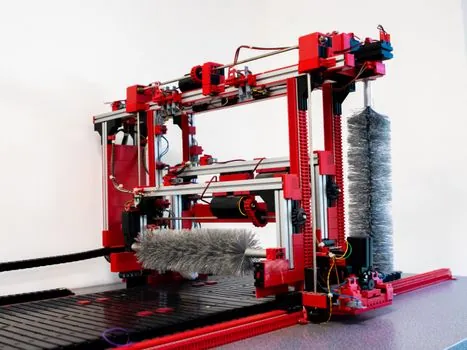
Integration points are where automotive parts labeling projects actually fail, not the labeling head itself. Identify upstream and downstream equipment, sensors, conveyors, printers, scanners, and reject devices before the RFQ goes out, and confirm that the chosen labeling cell talks the same protocol as the WMS and the line PLC, since a mismatch here forces a custom middleware job on day one [S3]. For plants running variable-speed conveyors and roller beds upstream, the labeling head's trigger signal must come from the conveyor encoder, not from a fixed timer, or placement will drift the moment line speed changes.
For parts carrying regulated information such as country of origin or recall codes, the same cell often pairs a coding machine for variable data and a labeling machine for the static artwork, since printing batch data directly onto a pre-printed label is cheaper than reprinting the full artwork for every batch. This split architecture is standard on 2026 automotive Tier-1 lines and should be specified as such, not bolted on after commissioning [S3][S5].
Who This Spec Is For, and Who It Is Not For
The inline servo specification fits Tier-1 and Tier-2 automotive parts suppliers, automotive aftermarket distributors running 8,000-30,000 units/hour on mixed SKUs, and OEM consolidation centers handling returnable packaging and sequenced delivery. It also fits plants integrating with a VFD-driven conveyor line where encoder feedback and recipe-driven speed matching are already in scope [S2][S3].
It is the wrong spec for a body shop running 200-500 large stampings per shift (a handheld or gantry VIN marker is the correct tool), for a paint shop where heat tunnel and chemical resistance dominate, and for an assembly plant doing full-vehicle VIN marking, which is a dot-peen or laser marking job rather than a label applicator [S1]. A high-quality chassis number marking system ensures permanent, reliable marking on vehicle parts, and that is a different machine class from the carton labeler this guide addresses [S1].
Acceptance Test, Commissioning, and Failure Modes
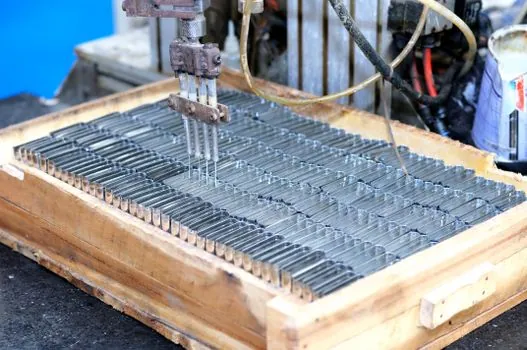
The acceptance test should be defined before the PO, not after. A realistic test runs at least one full shift on production-grade cartons with production-grade labels and production-grade adhesive, and measures placement tolerance, reject rate, changeover time, and code-read rate, not just nominal throughput [S3][S7]. The first three failure modes on a parts line are label misregistration on underfilled cartons, double-label pickup on dusty or low-friction surfaces, and false rejects from optical sensors on foil or clear polybag stock, all of which are predictable and addressable at the spec stage [S6][S8].
Confirm commissioning, documentation, training, remote assistance, and spare-parts availability in the PO, because a labeling cell that sits idle for two weeks waiting for a registration sensor is more expensive than a more expensive machine that does not [S3]. For plants already running an integrated packaging cell with capping and sealing upstream, lock the same supplier on the labeling cell to reduce the integration risk on protocol and HMI convergence.
Track the next data points: Q4 2026 OEM guidance on DataMatrix grade verification at Tier-1 goods-in, and any revision to the IATF 16949 traceability clause that touches in-line marking. Both will reshape the spec gate on 2D-code verification and reject handling within the next two model years.