Picking a rebar coupler for bars that are already cast, bent, or partially embedded is a different problem than picking one for fresh stock on a rebar bench. The two families that dominate that decision are shear-bolt (also called bolt-on or lock-shear) couplers, and threaded couplers in either parallel or taper-thread form, and the gap between them in field prep, capacity, and code acceptance is wide enough to swing a project schedule [S2][S3].
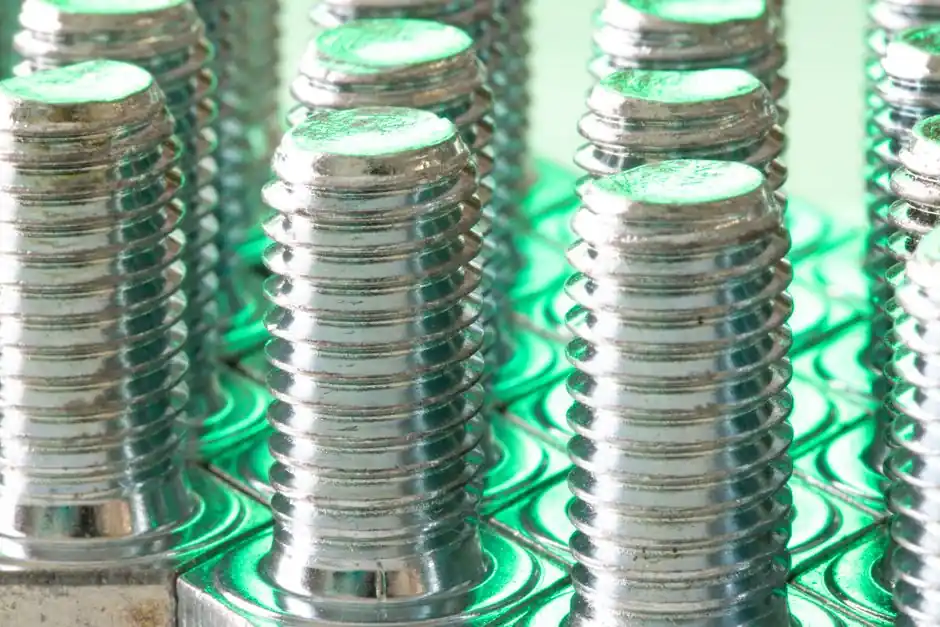
Shear-bolt couplers are a steel sleeve with internal serrated rails and a row of lock-shear bolts, typically six to eight per side. The bar is slid in, the bolts are tightened with an impact wrench or ratchet, and the bolt heads shear off at a calibrated torque, embedding the serrations into the rebar surface [S3]. Threaded couplers, by contrast, require the bar end to be cut square, cold-upset, and either taper- or parallel-threaded to match the sleeve, with a typical thread length of about two bar diameters per side [S4][S6].
Field Prep: What Each System Demands on an Existing Bar
Shear-bolt couplers are the only practical option when the bar end is already fixed, corroded, or inaccessible to a threading machine, because the system only needs a clean, square-cut end and roughly 2× bar-diameter of insertion length [S2][S3]. Threaded couplers demand a controlled bar-end prep sequence, clean square cut, cold forging of the end to restore cross-section, and CNC thread rolling or cutting, which is why most threaded systems are deployed on fresh stock coming off a rebar cutter and threading bench rather than on a retrofit [S5][S6].
For renovation, column extensions, and bridge-widening splices where the existing rebar cannot be rotated or moved, the shear-bolt path is the default, and it is the system most often called out in retrofit guidance for that reason [S3]. The trade is a slightly larger outer diameter sleeve to fit the bolt array, and the need for a calibrated impact wrench on site to guarantee the bolts actually shear to the rated torque [S2].
Capacity, Ductility, and Code Class
ACI 318-19 clause 25.5.7.1 requires mechanical splices in tension to deliver higher performance than a lap splice, with Type 2 mechanical splices typically specified to develop at least 125% of the specified yield of the bar [S3]. Both families can meet that threshold, but they reach it by different routes, and the test regime is set by ISO 15835, which covers both static tensile and cyclic slip performance for rebar splices [S5].
Threaded couplers on cold-upset ends preserve the parent bar's full cross-section at the thread root, which is why they are the system most often qualified to develop 100% of the bar's ultimate tensile strength, with some product lines rated up to 700 MPa ultimate on grade 500 stock, giving a true bar-break failure mode outside the splice [S5]. Shear-bolt couplers rely on the serrated rails plus bolt shear to transfer load, and their rated capacity is typically expressed against bar yield rather than ultimate, so they are commonly specified as Type 1 or Type 2 splices depending on the manufacturer and bar size, with cyclic-slip performance verified under ISO 15835 [S2][S3][S5].
For seismic detailing, threaded couplers retain more ductility at the splice because the failure plane stays in the parent bar; shear-bolt couplers are widely used in seismic zones but require closer QA on bolt-shear verification to guarantee ductile behaviour [S3][S5].
Decision Matrix for the Specifier
The cleanest way to choose is to score the two systems against the criteria that actually drive field outcome on existing-bar work. [S2]
Bar-end preparation: shear-bolt needs only a square cut and a de-burred end, threaded needs CNC prep on an upset end. Installation access: shear-bolt works with as little as a few centimetres of axial clearance and a wrench envelope, threaded needs the bar to be axially aligned and, for taper-thread systems, free to rotate; for non-rotatable cases a parallel-thread or positional coupler is needed, which the nVent LENTON range explicitly covers [S1]. Capacity class: shear-bolt commonly lands at 125% of bar yield (Type 2), threaded routinely reaches 100% of bar ultimate on properly upset ends [S2][S5]. Equipment on site: shear-bolt needs an impact wrench or ratchet and a torque verification method, threaded needs a rebar bender and threading bench that is usually kept off-site, which is why retrofit work nearly always tilts toward shear-bolt [S3][S6].
For brand-new columns, walls, and mega-columns where bars are still loose and the threading crew is already mobilised, threaded systems win on capacity, slimmer profile, and cleaner QA paperwork. For existing-bar splicing, retrofit, repair, or any case where the bar cannot be rotated, the shear-bolt system is the correct default, and specifying a parallel-thread or positional coupler is a fallback only when a higher ultimate capacity is contractually required.
Use-Case Recommendations and Failure Modes
Specify shear-bolt couplers when the bars are already embedded, the access is one-sided, the work is on an existing structure (bridge widening, slab extension, column jacketing), or the schedule cannot accommodate shipping bars back to a threading shop [S2][S3][S4]. The failure modes to call out in the QA plan are under-torqued bolts that do not actually shear, misalignment greater than the chamfered entry of the sleeve allows, and reuse of a coupler on a different bar after partial installation, all of which the spec should prohibit explicitly [S2][S3].
Specify threaded couplers when the splice is on a new bar, the member is in a high-tension or seismic-critical zone, the design requires a Type 2 splice at or above 125% of yield, or when the project is using epoxy-coated or galvanised bar where thread corrosion protection must be controlled at the factory rather than in the field [S3][S5][S6]. Common threaded-system failure modes are stripped threads from over-torque, contamination of the threads before make-up, and reduced root area on bars that were threaded without prior cold upsetting, all of which the MOMENT guidance flags as the reason cold forging of the bar end is a non-optional step [S5].
Sourcing, Standards, and What to Ask the Supplier

Every splice on the project should be traceable back to its raw-material and production batch, and the spec should require ISO 15835 test reports and either CARES or CREAM certification before a brand is accepted, the same baseline MOMENT lists for its JoinTec line [S5]. For seismic projects, ask for cyclic-slip data under ISO 15835 Class N or S as applicable, and for the specific upset process used, because cold forging is what restores the thread-root area and is the single biggest determinant of ductile bar-break behaviour outside the sleeve [S5].
On the tooling side, the rebar straightener and threading equipment on a new-build site should be CNC-controlled so thread geometry matches the coupler across batches, since manual tapping introduces a level of variability that threaded splices cannot tolerate [S5]. For more on the broader rebar tool ecosystem that supports both prep paths, including cutters and benders sized to the bar diameter being spliced, the engineering team at the coupler supplier should be looped in at design stage, not just procurement [S5]. Trackable signals to watch over the next quarter are any project-specific updates to ISO 15835 revisions, additional CARES approvals on shear-bolt systems for grade 550 and 600 stock, and growing adoption of positional threaded couplers on congested column splices where the bar cannot be rotated [S1][S5].
For related coverage, see Rotary vs Line Laser Price Gap: 2026 Spec Decision.